Preface: If you are a “tl;dr” kind of internet user, I’ll save you some trouble and hopefully still salvage a bit of your attention by informing you that the first massive chunk of this blog is anecdotal, while if you scroll down, you will find a handily succinct (well, not that succinct) one of those internet lists the kids are all about these days. Skip to the list if you are so inclined. And comment with your own insights if you are so inclined!
Okay.
You know, when I lived in Japan I was not much for Monster Hunter. Monster Hunter players were all around me trying to convert me.
“You gotta get into this game, Greg,” one friend of mine would say. “I’ve logged 1700 hours on my file. I haven’t slept for days.”
“But I like sleep. I like sleeping for days,” I would reply.
My friend’s fervor was, conversely, an intimidating turn-off for me. Doing the math, I discovered that 1700 hours equated to approximately 71 full days, meaning just under two and a half months of doing nothing but play Monster Hunter Portable 2nd G, and to be clear, the game hadn’t even been out a year at that point.
At first, I didn’t even believe him. “Surely you added an extra two zeros.” The longest I had spent on any one game, to my knowledge, was about 75 hours on Okami for the PlayStation 2. It was the longest by a significant margin.
Then there was my other friend. “Greg, you gotta get Monster Hunter Portable Second G,” he said. “I NEED YOUR HELP,” he said.
“What? Why?”
Previously I had helped this friend, a fellow expat, do things like order food and navigate the insidious bureaucracy of our prefecture’s immigration office, so I assumed he needed help, say, reading the in-game text or something.
“The monsters. They take like forty minutes to fight, and then I just get killed anyway and it sucks. You should get it.”
“Hey yeah, I’ll get right on that. Let me just push this stack of fun games aside. You butt.”
My two friends had failed to sell me on the game, and I want to emphasize this point, because we all know that Monster Hunter is a game that, let’s say somewhere between 80 and 100 percent of the time, people are sold on by their friends, and we also all know that in Japan this has happened successfully enough times that in the last eleven months alone, at least 4.1 million people have bought a copy. A new copy. And don’t take that extra 0.1 million for granted—that’s one-hundred-thousand people. Some of you may also know that I’ve devoted half my life (ages fifteen to thirty) to studying Japan, trying to grasp its language, society, and culture to the fullest extent, and despite all of the above, when my real-life friends suggested that I at least try what was in essence THE Japanese game, I was immediately like, “Shut up, no.” A further reduced some/sum of you may also also know that I now have absolute faith in the Monster Hunter series and am an avid player. I think it is one of the smartest, coolest games around today. So I want to emphasize my friends’ failure to sell me on it, because now that it is literally part of my job to sell people on it, I empathize deeply with those friends and think I have a good idea of why they—and to an extent, I, as the recipient of their pitches—failed. If nothing else, I kind of regret calling my one friend a “butt.”
To further emphasize the same point, it wasn’t until sometime in the middle of 2011, after getting a job at Capcom and receiving three different versions of the game for free that I was finally willing to even give the series a chance, and even after that it took hours of experimentation with all three of those versions as well as rigorous tutelage from various styles of mentor (the tough lover, the coddler, the dragger) before the game actually sunk in and became something…wait for it… enjoyable.
So here’s what I think happened. In Japan, I was hearing all these disjointed bits and bobs of information about the Monster Hunter series, many of them wholly subjective: “It’s grindy.” “It’s popular.” “It takes for-freaking-ever to kill a monster.” “It’s a PSP game.” “It’s only really worth playing if you have friends with whom to play it.” “It ended my marriage.”
Above all else, it seemed complicated. And I already had a glistening stack of blissfully simple Sega Saturn games to devour. “Give me one good reason why I should forsake this extravagantly expensive copy of Radiant Silvergun for a game that sounds like work,” I would say with indignance. “And get off my lawn.”
The problem was, though, that I was filling in all the gaps between these info-bits with assumptions. “Oh, it’s grindy? I bet the combat is pretty boring and mindless. Oh, it’s popular? It’s probably artistically uninspired and filled with lowest-common-denominator tropes. Oh, it ended your marriage? I bet it’s the kind of thing that requires you to play it obsessively and not have any other hobbies or wives.” All of these assumptions were pretty much the polar opposites of the truth. This truth becomes clear to you as you play the game for awhile (maybe two, maybe ten, maybe twenty hours, depending on how you play it), and you realize that these vague descriptions of the game serve only to wrongly pigeonhole it into the same category as more insipid action-adventure or action-RPG games that have things like mindless grinding, arbitrary gradation of “levels,” and a creatively bankrupt aesthetic. On an abstract, fundamental level, everything about Monster Hunter makes a lot more sense when likened to—here we go now—Capcom’s very own STREET FIGHTER.
It was Action Button Entertainment’s Tim Rogers, my personal favorite writer on the subject of video games, who I first saw describe Monster Hunter as the “Son of Street Fighter,” but I believe any observant Capcom fan or person who is thoughtful about game design will notice the two series’ parallels, provided enough time with both. The following is a list of some ways I think Monster Hunter does indeed make at least a convincing nephew to the fighting game series. They may not strike all of you as particularly groundbreaking or revelatory, but I do think this is at least a more empowering way to describe the series, if you must describe it through comparison of what came before (when in reality, Monster Hunter, like Street Fighter, sort of marks the birth of a new genre. I wonder what people compared Street Fighter to back when it was new).
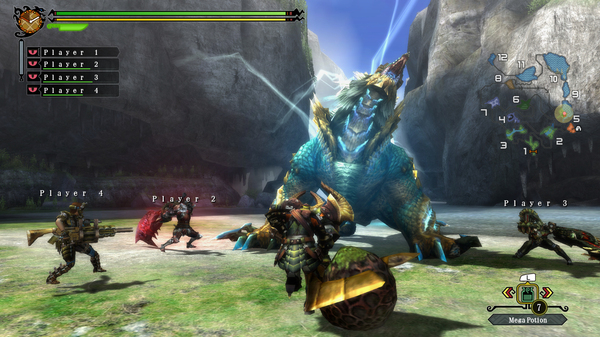
1. It is a casual game if you so choose. It is a hardcore game if you so choose.
This I take from Rogers’ write-up linked above:
“It is a ‘casual game’ and a ‘hardcore game’ at the same time; it is easy to play, it is difficult to master, the level of strategy involved is as deep as the combined imaginations of as many as four simultaneous players; and, most importantly, the title of the game (minus the three modifier words, which we’ll get to later) tells you exactly what you’re going to spend all your time doing.”
The gameplay experience in both Monster Hunter and Street Fighter is parsed out into little bite-sized gameplay units, known in one as “quests,” the other as “matches.”
It is the easiest thing ever for me to jump into a match of Street Fighter with, say, my brother, play five matches, and then shut it off and take him out for a kebab. Gradually, though, these casual instances add up. I myself have without a doubt logged more cumulative hours playing Street Fighter matches than I ever logged in Okami, probably by a significant margin, all without ever noticing. If someone asked me if I were a “Street Fighter player,” though, I’d be like, “Not really. I play once in awhile casually,” when in fact it is, however nonchalantly, one of my most-played game series. It’s because it can be consumed so casually, in such clearly defined, bite-sized doses, so amidst the other activities of your life, that the number of hours played is hardly significant. Compare it to the number of hours you’ve played baseball or soccer or basketball or ping-pong, or brushed your teeth in your life. You probably don’t know how many that is, but it’s probably a lot. But are you a “hardcore athlete”? Are you an “avid toothbrusher”?
Of course, for those who dare, the game offers the potential for “high-level play.” One certainly can be a hardcore Street Fighter player, just as one can be a hardcore ping-pong player.
Monster Hunter shares this impeccable duality. Most of my friends play it in brief spurts, often while conversing about unrelated things. Some of my friends play it studiously, feverishly, unlocking every piece of equipment and mastering every monster. I will probably never own a set of Bumblepumpkin-flavored armor. But you can.
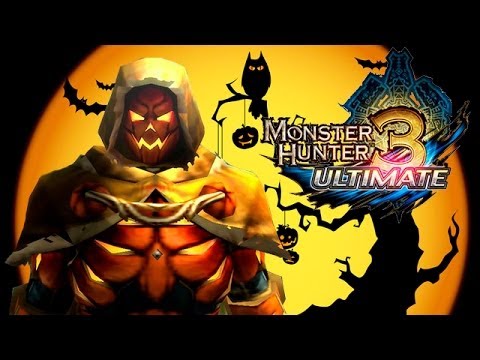
2. It is pure in its intentions. It is practically a simulation.
In a weird and unexpected way, Monster Hunter is a sort of simulator. It’s easy to take for granted the fact that you are hunting monsters without really letting it sink in that you are a Hunter. It is your occupation, your role in this universe. The game is surprisingly thorough in its presentation of that lifestyle. You acquire the individual parts to create your hunting tools. Many of those tools you create yourself, physically crafting them in real time out of items you’ve physically gathered in real time. Other tools you pay a blacksmith with money you earned from your occupation to forge for you. You don’t just fight monsters—you actually hunt them. You track them. You learn their behavior. You set traps for them. These are all integral elements of your role as the Hunter, and they are what makes Monster Hunter the definitive hunting video game.
When Street Fighter was unleashed on the world, there were already a lot of video games that included fighting–even fighting people on streets. But few, maybe no games offered the same degree of control over a character’s body that Street Fighter did. Street Fighter was really about fighting. I believe that anybody who has studied a martial art can see the psychological and emotional parallels. You play mind games. You play footsies. You read your opponent. It’s no different in Street Fighter. Street Fighter even offers special move inputs that simulate the experience of learning and unleashing martial arts techniques. Performing a sonic boom isn’t literally as hard as performing an advanced martial arts technique, but it does require that extra little bit of precision, practice, and proper execution. Some moves, like the spinning pile driver, even try to emulate the on-screen motion of the character with the player’s finger motion. Street Fighter may well be the closest thing we have to a “fighting simulator.”
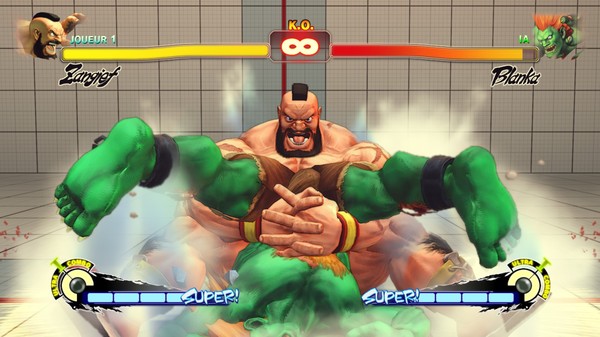
3. Progress is defined by the player.
That is, not by some arbitrarily numerated system. As Rogers emphasizes repeatedly in his piece, Monster Hunter isn’t a game of numbers, it’s a game of skill. Think about it—there’s no such thing as Experience Points in these games. You “Level Up” (that is, raise your Hunter Rank) when and only when you actually get better as a player. You cannot “grind” your way up. You can “cheat” by getting help from your friends, but that rank up ceases to have any meaning when your friends aren’t around and you’re just as helpless as you were before you commissioned them. After all, getting a Rank Up in Monster Hunter just allows you access to further challenges to your skill.
Street Fighter has no real level or rank system, but it, too, is purely a game of skill. There is no grinding to win. There is no arbitrary or false sense of progression. Your progression as a skilled player is proportional to your progress in the game. Isn’t that neat?
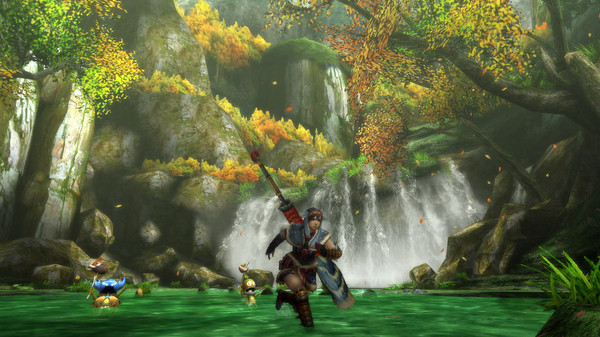
4. Combat is all about space and time.
With a lot of actiony games, you are afforded quite a bit of leeway to sort of play on “auto-pilot.” You’ll find yourself just mashing away, taking the occasional hit at little consequence. Monster Hunter and Street Fighter are both games that demand constant diligence. Players must know the opponent— respect the opponent—or face swift and brutal reprisals. To get anywhere in either game, you must have an understanding of animations, their durations, and how they connect with one another. It helps (a lot) to have an understanding of hitboxes and how they interact with one another. You don’t have to be a scientist; much of this understanding comes organically, subconsciously. But to be sure, these are games of precision, timing, and spatial awareness.
The series producer, Ryozo Tsujimoto, made the comparison himself in a recent musing on how Western hunters are unexpectedly careful.
“There are a lot of fighting game fans in North America, and because those games are based on a lot of the same kind of things Monster Hunter is—observing your enemy’s behaviour and trying to react against that—maybe it makes sense that that’s the way they play, because they have a fighting game culture as well.”
Indeed.
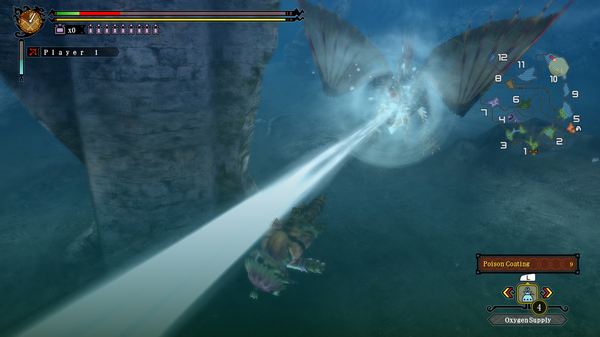
5. The weapon types are like a character roster.
I’ve heard it said more than a few times that each weapon class in Monster Hunter is like a character in Street Fighter. Each weapon is distinct in its feel, with its own unique strengths and weaknesses. Your weapon choice completely sculpts the fundamental way in which you interact with your opponent. The difference between a Lance and Dual Blades is at least as significant as that between, say, Zangief and Yun. But like Street Fighter, there’s no real commitment. Tired of a certain weapon? Switch weapons the next “match.” You are encouraged to experiment and find a weapon for which you have an affinity. And when you do? The same kind of rewarding depth offered by fighting game characters is there. Just check out this gunlance tutorial.
==========
Okay. I sure hope somebody out there found this insightful. Next time you try to introduce Monster Hunter to someone, try thinking of it in those terms. Or don’t! But I sure will. Thanks for reading! And if you don’t agree with me, well, technically Yuri’s our Monster Hunter guy. I just work here. =PPPPPPPPPPP <3









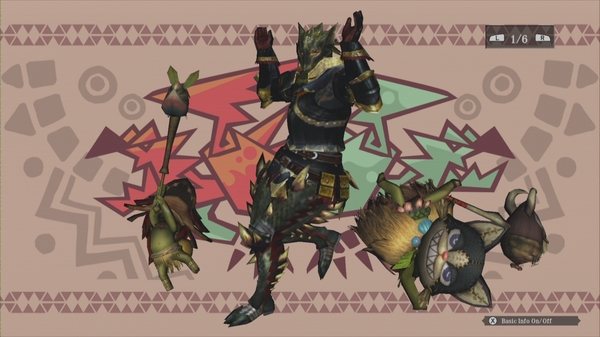
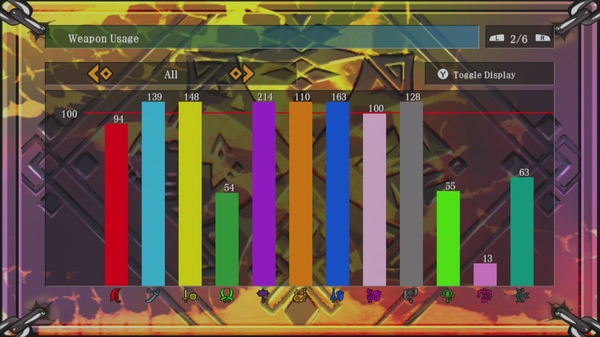
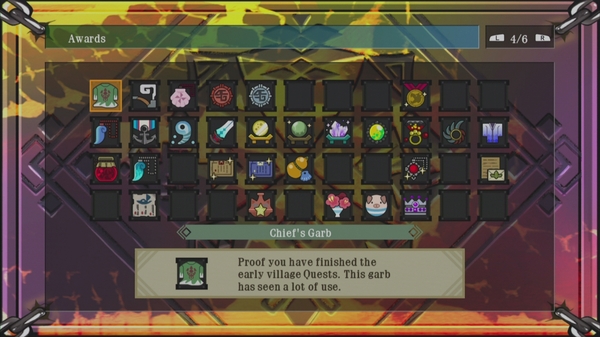 See? I have a wardrobe full of Poogie clothing, and it’s totes adorbs!