Search Results for: "webcomic"

EN

Journey to the West: The Search for the Kingdom of Khura’in

Aug 20, 2016 // Janet Hsu

Hallo, hallo! This is Janet Hsu, localization director of Phoenix Wright: Ace Attorney – Spirit of Justice, back with another behind-the-scenes entry! Join me as the dev team and I journey towards finding the look and feel of the Kingdom of Khura’in. Are you ready? Because here we go!

When last time we met, Mr. Yamazaki and Mr. Fukuda talked about how they slowly made their way towards the game’s overall theme and plot. But they weren’t writing the game in a bubble of their own! No, sir! They had to work with all types of artists to figure out what this new, fictional country would look like and what kinds of people would inhabit it.

Picking up from Kellen’s excellent write-up of Rayfa, I’m happy to say that the art director and co-director of Spirit of Justice, Mr. Fuse, was kind enough to tell us a little about her rough-and-tumble, and very humble beginnings.

———————————————-

 Rayfa’s Beginnings

Hello, I’m Takuro Fuse, art director of Ace Attorney: Spirit of Justice. I’m sad to say that I’ve been rather busy working on some art after the release of the Japanese version of the game, so I haven’t had the time to write much. However, I’d like to share a little with you today about how I went about designing Rayfa Padma Khura’in during the game’s development.

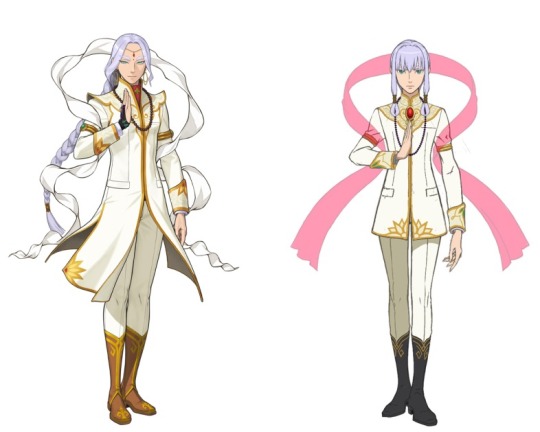
Around the time it was decided that there would be a sixth mainline game, but before we had decided on the theme of “courtroom revolution,” or even that the game would be set in a country called the Kingdom of Khura’in, we knew we wanted to include a teenage girl as a key character in this game. This is one of Rayfa’s initial designs back when we were toying with the idea of setting the game in an underground court – one that would deal with cases no normal court would dare take on because they involved the seedy underbelly of society.

Because the only thing we knew about her at the time was that she was going to be an Asian girl, there was nothing especially special or unique about her design. But we were thinking that we wanted her to be a shady character who liked to meddle in various affairs.

This initial design is something I pulled out of my drawer of ideas, so I feel like it’s rather easy to see my design aesthetics through it. The final version of Rayfa doesn’t really resemble this initial Rayfa… Although, now that I really think about it, I guess maybe she did serve as the model for Rayfa’s final design.

In time, once we decided to go with the theme of “courtroom revolution” and set the game in the Kingdom of Khura’in (a deeply religious country where the core tenants of its beliefs are rooted in spirit channeling), Rayfa’s character changed into that of a spiritually powerful priestess who was to dance a sacred dance during a special rite. Her design went through a number of drafts and revisions, and we tried out all sorts of different looks for her, but unfortunately, I’m going to have to leave it here for today…

Until we meet again, everyone!

———————————————-

Wait, that’s it?! *gasp!* Oh, don’t you worry, Mr. Fuse. I know where you sit. I will chase you down for more juicy stories later, you can be sure of that! Mwahahaha!

…*ahem*

I mean, thank you for taking time out of your incredibly busy schedule! I won’t be by again later to ask you more about character designs on the sly…

In the meantime, I’ll go and see what lead background artist Mr. Ishikawa is up to.

———————————————-

 Far and Away in the Kingdom of Khura’in

Hi, everyone, I’m Takanori Ishikawa. On the heels of Ace Attorney: Dual Destinies, I’m back once again as the lead background artist on Spirit of Justice .

When I first heard we were making this game, a number of thoughts ran through my mind: “All I have to do is do what I did for Dual Destinies! With my experience and the in-game assets I created last time, this is going to be a cinch!” But just as I was thinking these things…

“Wait, what?! This game’s going to take place in a foreign country?! A spirit channeling-based country call the Kingdom of Khura’in …?!”

It would seem that Spirit of Justice was to take place in a foreign land, and it would seem that the many, many months of work it would take to create the look of such a mysterious country from scratch were waiting right there, just for me!

This new country is said to lie on the western edge of the Far East – a far, far, faraway land. And yet, the name “Khura’in” made me think of something really familiar. That’s right, it reminded me of everyone’s beloved Kurain Village. It would seem that Khura’in is connected to our Maya’s hometown of Kurain Village somehow.

So, exactly what kind of country is it, I wondered. Little by little, the team came to a consensus on a few key aspects of the kingdom.

  • A scenic landscape featuring a chain of tall mountains and blue, clear skies
  • A country with a unique culture that was developed as a result of how secluded they were due to the lay of the land
  • A land where the art of spirit channeling still thrives today, to the point where they’re even using it to conduct trials in court
  • And a place where a cute priestess performs a sacred dance

It sounded like a truly mystical country… I wondered if I could draw such a locale.

These are two of the initial pieces of concept art I drew.

Everything was so ginormous! I daresay these were more on the scale of something an ancient civilization would’ve built. But, while it may have looked cool, it apparently didn’t match up with what we had all agreed on. Honestly, though, I think it would’ve been fun if we could’ve had a big adventure in a place like this. Phoenix could’ve climbed up that giant stone statue, slipped past some traps in the ruins, fought with some people over the same ancient treasure… by which point, I guess this game would’ve become something out of a totally different genre.

I even created this wonderfully gigantic statue, but…

…sadly, it has been lost to the sands of time.

Aaaargh! It was so hard! Try as I might, I couldn’t figure out what kind of country the Kingdom of Khura’in should be. I kept on drawing and drawing, but the answer wouldn’t come to me.

“I don’t know… I really just don’t know…! Where the heck is this ‘Kingdom of Khura’in’ we’re looking for?!” I yelled inside my head.

And then, for some reason, I drew a courtroom that sits atop a pyramid-like structure… and then I drew yet another giant statue… You can tell just how lost I was by this point. But if you take a look at that white thing in the bottom right corner of that picture, you’ll see the beginnings of a “ magatah’man ” or “soul bun,” which appears in this game! Yup, it was around this time that the idea for those buns Ahlbi carries around with him was born.

As I was drawing this “soul bun,” I began to wonder, “Does this thing even taste good? What kind of people would make these? What kind of people would eat these? And what kind of face would they make when they do?” That’s when I realized I had forgotten to consider something important: the citizens of Khura’in!

I was so caught up in coming up with all these designs for this country that I’d completely lost sight of the most important thing of all – that of course I can’t create anything without knowing who was going to inhabit this landscape first. The truth had finally dawned on me.

It’s not me who creates the Kingdom of Khura’in; it’s the people of Khura’in who will create their own country.

A few months pass… and finally, the Hall of Justice is complete.

This is the courtroom that the Khura’inese people built.

In its solemn splendor, it looks more like a temple than a courtroom. Those intricate ornaments, the vibrant colors, all that incense-laden smoke, and there behind the judge’s bench is the sacred symbol of Khura’inism (the religion that is practiced throughout Khura’in), the mark of a butterfly that carries the souls of the dead to the Twilight Realm. It was a struggle to get to this point, but I think I managed to create a courtroom with a completely different feel from the one back home.

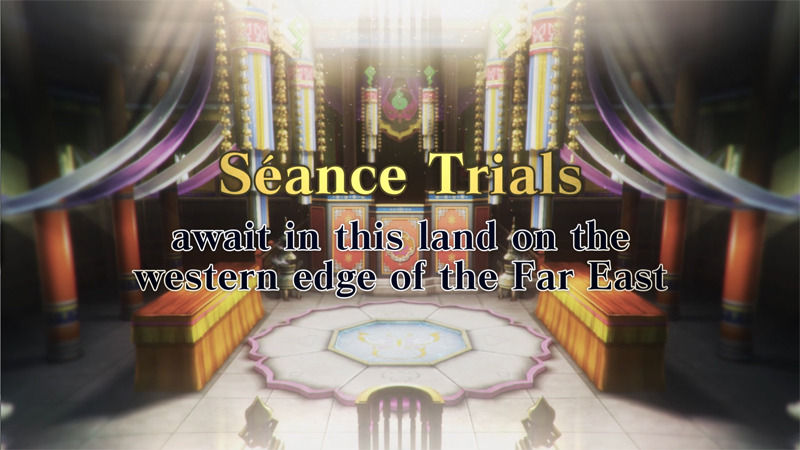
Even though this courtroom does have the usual benches and witness stand, I also created a space here for the Royal Priestess to perform her duties. That’s right, I’m talking about the Pool of Souls in the middle of the room. As the Royal Priestess, Rayfa usually stands in front of the pool during a trial, and as she performs the Divination Séance, she projects the final memories of the dead into it.

By the way, if you look really closely at the detailed ornamentation, you’ll see that a number of them feature flame-like shapes called “ magatama ” and Khura’inese butterflies. I hope you’ll look for these motifs throughout the game.

Just what kind of hard battles will be fought in this unusual courtroom? And what sort of truths will be revealed?! Sadly, I can’t tell you here, so you’ll just have to play to find out!

———————————————-

Thank you, Mr. Ishikawa! It really does sound like it was a lot of hard work! After all, you can’t conduct investigations in a new country without locales to visit, and that courtroom looks spectacular.

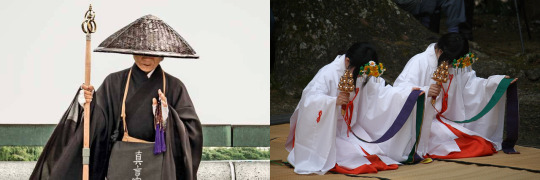
Actually, if you’ve never seen the inside of a Buddhist temple, they do look an awful lot like that Khura’inese courtroom in certain regards. Different sects across different Asian countries have slightly different looks, but there are definitely some common traits they all share, which make this courtroom feel new and unique, yet strangely familiar to someone like me.

Speaking of someone like me, I guess now would be a good time for me to share just how the look of the Khura’inese language came about in the English version.

 ———————————————-

 Khura’in vs. Kurain: Bringing the Khura’inese Language to Life

Much like everyone else on the team, my first thought upon hearing that the game was going to take place in a foreign country was, “Uh… So I have to come up with how to represent this new country’s language in Roman letters???” But I quickly got over my shock as it dawned on me that my language nerd skills were finally going to be of some use! Because, you see, there’s a whole discipline in the field of linguistics devoted to how to Romanize languages that don’t use Roman script (or what we English speakers call the alphabet) in a process called Romanization .

But why was I all nervous in the first place, you may ask. Why didn’t I just simply Romanize the Japanese source text and call it a day? Well, if I did that, then the Khura’inese language would really be little more than a Romanization of the Japanese language, and I couldn’t do that! Just as the designers had created a visual look for each letter of the Khura’inese alphabet and even some single-character words like Prosecutor Nahyuta Sahdmadhi’s interjection “ Satorha! ”, I knew that Khura’inese had to have a distinct linguistic look and identity of its own.

Is the mean ol’ prosecutor picking on you again with a word you don’t know?
Welcome to Phoenix’s world.

The dev team drew their inspiration from a number of Asian cultures in designing the look and culture of Khura’in, which is exactly what my team and I did as well in designing the look of Romanized Khura’inese. Being a Taiwanese-American with 2.5 languages under my belt (Mandarin Chinese listening and reading = passable at best, my kindergartener-level speaking and writing skills = brings nothing but great shame on my ancestors) and a medium level of familiarity with East Asian religions and culture, I had a rough idea going in of how Khura’inese might eventually look.

The Kingdom of Khura’in is situated somewhere on the western edge of the Far East. Combined with the many tall mountains you often see in the backgrounds, this effectively places the small country somewhere in the purple zone below.

It’s a little like playing “Where in the World is Khura’in?”

In our real world, there are hundreds of languages and dialects in that purple region alone, but narrowing it down to the most prominent languages and dialects, including Tibetan , Nepali , Hindi , Pashto , and Urdu , reveals commonalities in how the writing systems of that region are Romanized.

Without getting into too many details (oh, I’ll go into full-on Linguistics Ema mode in a few paragraphs, trust me), at a glance, it looks like there are a lot of h’s and apostrophes used in the Romanization of these languages. But just knowing what they looked like wasn’t enough for me. All those h’s and apostrophes weren’t there just to look pretty, that’s for sure; they’re tied to how those words are pronounced. So what I needed to do next was to mesh how Romanized Khura’inese would look with pronunciations provided by the original Japanese source text. This is where the distinction between the real Khura’inese pronunciation and the Japanized and Anglicized pronunciations of Khura’inese words come into play.

Wait, what “real pronunciation,” you might ask. Well, let’s consider a real-life example.

Take one Mr. Johann Sebastian Bach – classical composer of German origins. It’s pretty easy for an English speaker to pronounce his name, and for the most part, they’d come pretty close to how a native German speaker would pronounce Mr. Bach’s name because we have similar sounds in the English language (English and German being relatives of each other linguistically). But for a Japanese speaker, they will never be able to accurately replicate the sounds for “Bach” if they are using the Japanese syllabary. That’s because that final “ch” sound simply does not exist in the Japanese language. Instead, they must render the name Bach according to their rules like this:

Bach ⇒ バッハ (bahha)

Sounds more like a laugh than his actual name, doesn’t it?

Now, going in the other direction, how well can a Romanization system really represent the sounds of a language like Chinese or Japanese? In the case of Chinese, rendering the word for “small” (小) as “xiăo” doesn’t even come close to looking like its actual pronunciation. But using “shăo” wasn’t an option since there is another, very similar sound that’s already monopolizing the “sh” Romanization, making shăo (少) a totally different word that means “less”! (Ironically, that one is pronounced more like “shr”…) So yeah… Roman letters are not so great at representing a language like Chinese.

As for Japanese, it’s also kinda terrible too, in some instances. Take for example, everyone’s favorite letters, らりるれろ. Are these “ra, ri, ru, re, ro” or “la, li, lu, le, lo”? You often see words like “ramen” spelled with the letter “r,” but when you listen to a native, the sound is best described as a “dla” where it’s a strong “l” sound said with your tongue touching the top of your mouth like you’re saying “d” instead.

Romanization can also fail when it doesn’t tell the reader how to parse a word correctly. Take the name “Junichi.” Is his name really pronounced as “ju-n-i-chi” or is it “ju-ni-chi”? At least for this problem, there is a solution: we can use an apostrophe to show what the original Japanese intended. In this case, the former parsing could be Romanized as “Jun’ichi” for clarity.
I think astute linguists among you are beginning to see how all of the puzzle pieces are coming together, so let’s return to my original dilemma: How do I mesh the pronunciation of Khura’inese words as provided by the Japanese source text with the Romanized text aesthetic I’ve devised for the Khura’inese language? Let’s take the word “Khura’in” itself as an example, shall we?

Japanized spelling: クライン (Japanese Romanization: kurain, pronounced: “koo – dla – een”)

Romanized Khura’inese spelling: Khura’in (pronounced: “khoo – RA – een”)

As you can see, the apostrophe is there in order to bring out the separation of the last two syllables so that the pronunciation remains as similar as possible to the Japanese, and (hopefully) prevents them from getting mashed into one syllable that sounds like the English word “rain.” But that’s not its only function in Khura’inese – the apostrophe can also denote a glottal stop, which slightly affects the pronunciation with a small, voiceless “hiccup” as it were.

As you can see, in the case of “Khura’in” and some of the other Khura’inese words you’ll come across in this game, I did take a few liberties when adapting the Japanese into the Romanized Khura’inese. Sometimes, I imagined a longer vowel sound that doesn’t exist in Japanese to exist in the original Khura’inese, like a longer “ah” sound or a “short i” sound like in the word “kin,” which is not perfectly replicable in Japanese (it comes out sounding more like “keen” in Japanese). These adaptations are similar to the Bach example, where I’m trying to “deduce and extract” the original “real” Khura’inese pronunciation from the Japanized spelling.

But don’t worry! At least Khura’inese looks like how it sounds, unlike Tibetan

As for words that were originally meant to be puns in the Japanese source text? Well… you’ll just have to see what sorts of puns they’ve been adapted into for yourself next week when the demo is released on August 25th!

Yes, you heard that right. The demo can be yours NEXT WEEK!

You know what else can also be yours next week? Another trip with me through the development of Spirit of Justice! Next Friday, we’ll explore the creation and localization of the user interface, or “UI,” and the magical visual effects that were used to add that extra layer of mystery to the land of spirit mediums and channeling.

Until then!

Catch up on previous blog entries here!

EN

Join the Umbrella Corps in an encore free demo weekend

Aug 19, 2016 // Kellen Haney

Update: Steam is hosting another encore weekend to celebrate the Capcom Publisher Sale ! Download and play Umbrella Corps for free on Steam, now through Sunday (August 21st) at 1 PM PT. And don’t forget, you can grab the game for 33% off on Steam through Monday, 10am PT!

Did you miss the last free weekend for Umbrella Corps? Not to worry, there’s another free demo weekend event on the way, allowing everyone to join the corps on PS4 starting at 12:00am PDT on Saturday, August 13th, through 11:59pm PDT on Saturday, August 13th (00:01 GMT Fri Aug 12th – 23:59 GMT Sat Aug 13th). Both existing owners and demo players will be able to play together during the demo period. So, if you’ve picked up the game already or are curious about what the game has to offer, hop on this weekend for some intense 3 vs. 3 online match-ups in maps that draw from different locations in the Resident Evil universe.

In addition to close-quarters matches in settings from various Resident Evil games, Umbrella Corps adds another twist that keeps you on your toes. Enemy players aren’t the only threats – zombies, infected villagers, and other menacing creatures also wander the battlefield. As long as your Zombie Jammers are intact they’ll ignore you, but if your Jammer takes damage in the crossfire, you’ll have your hands full!

This feature-rich demo offers a chance to try the online modes and maps from the game. Explore RE locations in a whole new way such as the Kijuju map from RE5, the Village from RE4, and even the original mansion from the first RE. In case you missed it, here’s more on the free Spencer Mansion DLC for Umbrella Corps: click here .

The demo begins at 12:00am PDT on Friday, August 12th, and runs until 11:59pm PDT on Saturday, August 13th. Get online, join the corps, and watch your back – you never know who (or what) is behind you!

UPDATE: The North America demo for Umbrella Corps will be available 12:00 AM PST 08/13 to 11:59 PM PST 08/13. The article has been updated to reflect this. Our apologies for the inconvenience!

EN

Save on select Capcom titles in the latest PSN flash sale!

Aug 19, 2016 // Kellen Haney

There’s a PSN Flash Sale going on right now through August 22nd in North America, and that means you’ve got just a few days to pick up some great Capcom titles at crazy low prices! We’ve got a SSSmokin’ Sick Sale price for DMC4SE: Demon Hunter Bundle – which includes both the game and DLC – for just $14.39 , with even more great stuff on sale right after the jump!

PS4

DMC4SE: Demon Hunter Bundle

$35.99

$14.39

PS3

Dragon’s Dogma: Dark Arisen

$29.99

$7.49

Dungeons & Dragons Chronicles Of Mystara

$14.99

$4.49

Okami HD

$13.99

$4.89

PSP

Monster Hunter Freedom Unite

$19.99

$4.99

Power Stone Collection

$9.99

$3.99

PSOne Classics

Breath of Fire IV (PSOne Classic)

$5.99

$2.39

Cyberbots Full Metal Madness (PSOne Classic)

$5.99

$2.39

Mega Man Legends 2 (PSOne Classic)

$9.99

$3.99

EN

New map, 4 Survivors mode, and additional gear now available for Umbrella Corps

Aug 19, 2016 // Kellen Haney

Veterans of Resident Evil 6 will be familiar with the twisting, chaotic streets of Lanshiang, which has just been added as a new, free battleground in Umbrella Corps! This new map can be accessed in both One-Life Match and Multi-Mission Mode, and is sure to result in plenty of tense firefights. Be sure to coordinate with your team as you navigate both the streets and the creatures lurking within.

This update also brings along an additional game mode: 4 Survivors. While the different modes of Umbrella Corps have favored fast-paced, 3-on-3 team battles, 4 Survivors mode provides a unique, battle royal approach to the competitive formula with lowered lighting and a tense, survival-themed tone. In 4 Survivors, four solo players start out armed only with a handgun, knife and flashlight. A quick click of the flashlight can reveal a healing herb or a valuable weapon, but can also act as a shining beacon for other players to home in on and close in for the kill. Points are gained for every second alive, but any player who’s taken out drops all their current points on the ground for other players to pick up. Securing an ink ribbon will allow players to “cache” their current points, keeping the banked points safe from other players even upon death, but there’s only one typewriter – and every player knows where it is. A single death can change everything, so you’ll have to constantly be on your toes in this new mode.

If that’s not enough, new equipment, I.C.O.N.S., and customization items have also been added, allowing you to alter your appearance even more. Additional gameplay enhancements have been made to improve the overall experience as well. This new update is available now and is completely free, so be sure to fire up Umbrella Corps on PlayStation 4 or Steam to check out the new map, mode, and items!

For the full patch notes, click here .

EN

Save big with the Capcom Publisher Sale on Steam!

Aug 18, 2016 // Kellen Haney

It’s that time again – fire up Steam, because the Capcom Publisher Weekend is here! From now through August 22nd, save up to 80% on Capcom titles, including some great bundles! Street Fighter V Deluxe Edition , Dragon’s Dogma: Dark Arisen , a special Dead Rising bundle (including Dead Rising 1 pre-order!) and Umbrella Corps are just a handful of the awesome deals you can find! Head to the sale page on Steam for the full list, or hit the jump for even more info!

Special Offers

 Special Bundles

Dead Rising Collector’s Pack Bundle – $48.67
Save an additional 15% on top of individual sale prices!
Includes Dead Rising 1 pre-order!

2016 Capcom Collector’s Bundle – $66.30
Save an additional 61% on top of individual sale prices!
Includes Dead Rising 2, Dead Rising 2: Off the Record, DmC: Devil May Cry, Resident Evil 6, DLC packs, and more!

Resident Evil Collector’s Pack Bundle – $57.86
Save an additional 37% on top of individual sale prices!
Includes Resident Evil 4, 5, 6, Revelations, Revelations 2, and DLC packs.

Resident Evil 4/5/6 Bundle – $29.64
Save an additional 14% on top of individual sale prices!
Includes Resident Evil 4, 5, and 6 .

Devil May Cry 4 Special Edition “Demon Hunter Bundle” – $22.12
Save an additional 11% on top of individual sale prices!
Includes Devil May Cry 4: Special Edition and DLC packs, including additional costumes for Lady and Trish.

Devil May Cry 4 Special Edition “Demon Hunter Bundle” + DmC Complete Pack – $29.56
Save an additional 18% on top of individual sale prices!
Includes Devil May Cry 4: Special Edition, DmC: Devil May Cry, and DLC packs for both games!

EN

Watch the Umbrella Corps Gamescom ESL Tournament on August 19!

Aug 18, 2016 // Tim

Update:  Congratulationsto MAD III on their victory in the Umbrella Corps Gamescom Showdown!

Gamescom 2016 has begun in Cologne, Germany. Amidst all the exciting new announcements (such as this awesome new Resident Evil 7 gameplay trailer ), four teams are mentally preparing themselves to give their Umbrella Corps skills the ultimate test. On Friday, August 19, players from across the world will compete for a cash prize in fast-paced 3v3 shootouts set in the Resident Evil universe, teeming with deadly creatures.

The Umbrella Corps Gamescom Showdown, brought to you by ESL and Capcom, is a single-elimination event. For the Semi-Finals, teams will go head to head in the high-stakes One-Life Match and the team to win best of three will continue onto the Grand Finals. The Grand Finals will switch to a best-of-five showdown. The winning team will walk away with $15,000 cash and all the fuzzy memories that come along with a free trip to Gamescom 2016 ( earned by placing in the Qualifier Cup )

Be sure to tune into the Umbrella Corps Gamescom Showdown on ESL’s Twitch channel , which will be airing on August, 19 at 1:00 am PDT. Don’t worry if you can’t watch at that time; we’ll be sharing an archive of all the exciting action in the near future.

Also, Capcom-Unity is livestreaming Umbrella Corps and more Resident Evil action today (8/18) at 2:00pm PDT on our Twitch channel . We’ll also begiving away codes for Resident Evil games, so drop on by!

Time to meet the teams!

Team Tomodachis

Members: raJa Kadapt Deman

Team WeMainMei

Members: redMerc Susy HitBoxMe

Team U-Eu

Members: Syluxxx bioNic  ,  Ulric Von Karsing

Team MAD III

Members: elTunisiano Secretly ShooTeX

EN

Ace Attorney Character Profiles: Maya Fey and Ahlbi Ur’gaid

Aug 18, 2016 // Kellen Haney

In the second of our series covering just some of the many characters in Phoenix Wright: Ace Attorney – Spirit of Justice, we take a break from our protagonist and newly introduced royal priestess Rayfa to focus on the return of Phoenix’s long-time friend, Spirit Medium (in training), and Ace Assistant, Maya Fey! We’ll also be discussing the capable (if not overzealous) new character Ahlbi Ur’gaid, a young monk who also works as a tour guide. Turns out these two have a bit more in common than one might think.

Maya made her first appearance in Phoenix Wright: Ace Attorney as part of a twisting and gloomy case that implicated Maya as a murder suspect. Despite Maya being initially accused of the crime – an accusation that Phoenix quickly clears after taking on Maya’s case himself – Maya soon joins forces with Phoenix to find the true murderer and bring them to justice. Following the sad circumstances that resulted in Phoenix and Maya inheriting the Fey & Co. Law Offices, Maya soon decided that she wanted to take on the role of Phoenix’s assistant. This new friendship born out of tragedy resulted in not only the offices being rebranded as the Wright & Co. Law Offices, but also helped lift Maya’s mood, soon bringing her back to her naturally cheery self. Maya’s unique ability to channel the spirits of the dead (which causes her physical appearance to change as a result), alongside her natural intuition and optimistic outlook, helped Phoenix through many of his early cases – though her channeling sometimes caused her more problems than it solved!

Not that she did herself any favors.
(From Phoenix Wright: Ace Attorney Trilogy )

Eventually, Maya returned to her home in Kurain Village to continue her training as a Spirit Medium and perfect her usage of the Kurain Channeling Technique in order to become the eventual Master of the mystical art – though it seems that she kept in touch with Phoenix all the while. Leading up to the events of Spirit of Justice, Maya has spent the last two years in the Kingdom of Khura’in to increase her spiritual energy and complete her training so that she can be recognized as the head of Kurain Village – though it’s hard to tell if she’s been taking her training all that seriously. It is Maya, after all.

A more mature(?) Maya.
(From Phoenix Wright: Ace Attorney – Spirit of Justice )

Despite the many years between when we last saw her and now, she really seems like the same old Maya – just as spirited, just as big of a fan of the Steel Samurai and other heroes of justice, and just as ready to take jabs at Phoenix’s hair every chance she gets. Despite all her training, it seems like she hasn’t changed in the slightest – right down to her love of hamburgers and getting into all kinds of trouble where Phoenix may need to offer his legal aid.

(From Phoenix Wright: Ace Attorney – Spirit of Justice )

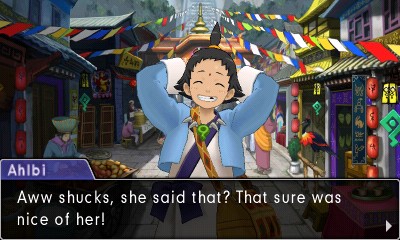
That’s at least one thing she has in common with Ahlbi Ur’gaid, a young monk who also works as a tour guide to show foreigners around the Kingdom of Khura’in. An industrious and energetic boy who loves to tell people about Khura’in with an eager “Allow me to explain,” Ahlbi puts everything he has into everything he does – particularly his highly detailed explanations of Khura’in’s history, which can take upwards of a few hours! More often than not, Phoenix has to put a stop to Ahlbi’s history lessons before they can get started, though it seems as though Ahlbi likes to talk about the places he showed “Miss Maya” during her time in the Kingdom of Khura’in, too.

(From Phoenix Wright: Ace Attorney – Spirit of Justice )

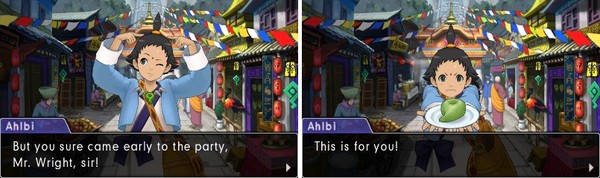
Aside from showing foreigners the sights and greeting people with the traditional Khura’inese greeting “hap’piraki,” Ahlbi also carries around the tools of his trade in the gigantic bag he has on his shoulder, including a sweet cake known as a magatah’man , or “soul bun.” Seems like he offers it to everyone he shows around the Kingdom. I wonder what else is in that bag of his, anyways? H-hey… was it just me, or did it move just now?

(From Phoenix Wright: Ace Attorney – Spirit of Justice )

It’s hard to believe that this earnest boy could harm anyone, which is why it’s such a shock when he’s accused of both the theft of his homeland’s holy relic and the murder of a guard at Tehm’pul Temple! Even so, when Phoenix jumps in to defend him, Ahlbi’s friendly attitude suddenly changes when he finds out Phoenix is a lawyer. It seems the people of Khura’in really do hate lawyers, but Ahlbi’s resistance to Phoenix’s help makes things that much more difficult. How do you defend someone who doesn’t seem to want you to defend them?

(From Phoenix Wright: Ace Attorney – Spirit of Justice )

That’s all for today, but next time we’ll be taking a trip back to the Wright Anything Agency to catch up with Apollo Justice, and learn more about the globetrotting international prosecutor, Nahyuta Sahdmadhi. See you then!

EN

Frank’s Files: Frank West

Aug 18, 2016 // Jeffery Simspon

To celebrate the 10th Anniversary of the Dead Rising franchise , and the release of Dead Rising , Dead Rising 2 and Dead Rising 2: Off the Record on PS4, Xbox one and Steam we are taking a look at some of the characters who play a major role in the early games in the Dead Rising series with “Frank’s Files”.

Today we begin with Frank West himself.

  • Name: Frank West
  • Job: Photojournalist
  • First Appearance: Dead Rising (2006)
  • Appears In : Dead Rising (2006), Dead Rising 2: Case West (2010), Dead Rising 2: Off the Record (2011), Dead Rising 3: Super Ultra Dead Rising 3′ Arcade Remix Hyper Edition EX + α (2014), Tatsunoko vs. Capcom: Ultimate All-Stars (2010), Ultimate Marvel vs. Capcom 3  (2011), Lost Planet: Extreme Condition (2007), Lost Planet 2 (2010), Project X Zone (2012), Dead Rising 4 (2016)
  • Abilities: Frank West has good instincts, both for a story as well as how to operate in most situations. Physically strong he is capable of taking care of himself in a fight and while he claims to have never shot a gun at another person before, he is handy with a fire arm. Most of all Frank is able to use almost anything as a weapon against an onrushing zombie, no matter how outlandish and unlikely.

Not much is known about Frank West’s life before he arrives in Willamette Colorado looking for the “scoop of a lifetime”. He admits to having covered wars as a journalist, though he’s not specific about which ones. What is clear is that West works freelance, doing whatever it takes to get to the bottom of the story in hopes of reaching not only the truth but fame and money when he sells the truth to the highest bidder.

Hiring a helicopter and pilot Frank flies beyond a military blockade to Willamette Colorado, believing that something is going on in the small town. There he finds America’s first zombie outbreak and a handful of survivors that have barricaded themselves in the local shopping mall.

Now working with Jessica McCarney, Brad Garrison and Otis Washington, Frank is trying to help those who have survived while uncovering a government conspiracy and dealing with more than just the zombie menace. Frank must manage to uncover the truth behind the outbreak, stop the zombie infection from spreading.

[Edited By Moderator]

EN

New “found footage” surfaces for Resident Evil 7 biohazard

Aug 17, 2016 // Kellen Haney

Something’s strange at the old plantation house. Nobody’s heard from Jack or Marguerite Baker in quite some time, with rumors flying around about what might have happened to them. Check out the trailer above for some new gameplay footage of Resident Evil 7 biohazard – complete with a video tape aesthetic you might recognize if you’ve already played the Resident Evil 7 Beginning Hour demo . Read on for new information!

While Beginning Hour acts as a teaser for the main game to provide a sense of the tense atmosphere that awaits you, this latest video shows a “found footage” segment that will appear in the final game. While it may look a little fuzzy, don’t worry – that’s not representative of the entire game’s final graphics. What you see here is a filter that simulates the battered tapes that you’ll be “watching” and playing through in the full game, similar to the tape you can find of the “Sewer Gators” film crew in Beginning Hour. This time, you’ll get a sneak peek at a different tape, one that both shows new areas of the house, and perhaps more importantly, another member of the family – Marguerite.

New screenshots, also just released, provide a closer look at the plantation house itself and what you may come across within its derelict corridors. Check out the full set of images at our Facebook gallery for a glimpse into the old mansion.

Who is the young woman in the video tape, and what does Marguerite want with her? And, perhaps more importantly, will she be able to escape? You’ll have to wait to find out all this and more!

In the meantime, if you haven’t already, you can experience the horror yourself with the Beginning Hour demo , now available on PS4 for PS Plus members! Welcome to the family.

Evil comes home with Resident Evil 7 biohazard, available January 24th, 2017 for PlayStation 4 (fully playable in PlayStation VR mode), Xbox One, and Windows PC (Steam and Windows 10 Store).

EN

Ace Attorney Character Profiles: Phoenix Wright and Rayfa Padma Khura’in

Aug 16, 2016 // Kellen Haney

With a recently announced September 8 th release date, Phoenix Wright: Ace Attorney – Spirit of Justice is now less than a month away! The sometimes serious, often goofy, but always loveable cast of the Ace Attorney series has grown significantly over the years, so today we’re kicking off the first in a series of character profiles to tell you about what some of the returning characters have been up to, and introduce some of the characters they’ll meet along their journey in the upcoming game. Today we have the legendary attorney himself, Phoenix Wright, and series newcomer, the Royal Priestess and Princess of the Kingdom of Khura’in, Rayfa Padma Khura’in (and I thought “Chief Prosecutor” was a fancy title…).

Phoenix Wright, currently head of the Wright Anything Agency, has been around since the very beginning. That’s probably not a surprise to most, even if you’re not familiar with the series. His name’s right there in the title after all. Phoenix has been through quite a lot since his early days as a rookie attorney, when he first took on a case defending his childhood friend, Larry Butz, against a murder accusation. Thanks to the help of his boss and mentor, Mia Fey, and his own deduction skills, Phoenix cemented his ability to turn the case around when he was on the brink of defeat, ultimately proving Larry’s innocence.


Phoenix Wright as he appears during his first case in Phoenix Wright: Ace Attorney .
(From Phoenix Wright: Ace Attorney Trilogy )

While Phoenix got a lot of aid from his mentor during that first case, many more “Not Guilty” verdicts that followed can be chalked up to Phoenix’s relentless pursuit of the truth and his unwavering belief in his clients. This isn’t to go without crediting his “ace assistant,” Maya Fey, a spirit medium-in-training and sister to Mia Fey, who offered quite a bit of help via her unique gifts. We’ll talk more about Maya soon (promise!) but among her aid as an assistant, Maya also gave Phoenix another important gift: a magatama. The magatama was later charged with spiritual energy, which allows Phoenix to see Psyche-Locks, which are visual representations of how strongly a person wishes to keep something secret in their heart. These locks can only be broken with irrefutable evidence.


You never know where a Psyche-Lock might show up!
(From Phoenix Wright: Ace Attorney Trilogy )

When we catch up with Phoenix in Spirit of Justice, he’s just arrived in the Kingdom of Khura’in to visit Maya and celebrate the end of her long spiritual training. Despite being a foreigner in a foreign land, Phoenix can’t seem to stay out of trouble, and soon finds himself representing his tour guide in a murder trial in Khura’in’s court system. In this precarious situation, he’s not only putting his credibility on the line, but also his life due to a local, unforgiving law known as the Defense Culpability Act. Phoenix is in for the legal battle of a lifetime – literally!


A much more experienced Phoenix takes on the court system of Khura’in.
(From Phoenix Wright: Ace Attorney – Spirit of Justice )

As if this challenge wasn’t great enough, Phoenix must deal with the Royal Priestess of Khura’in…


(From Phoenix Wright: Ace Attorney – Spirit of Justice )

Rayfa Padma Khura’in, at just fourteen years old, carries a surprising amount of weight on her shoulders. Not only is she the Princess of the Kingdom of Khura’in, but she is also the Royal Priestess and must perform various ceremonies including the elegant Dance of Devotion each day for the dedicated Khura’inist monks at Tehm’pul Temple. In the courtroom, Rayfa’s powers of Spirit Communion also allow her to guide the soul of the victim to a large reflecting pool in the center of the hall, a practice known as the Divination Séance. With this, the pool will display for all to see the last moments of the victim’s life, and with Rayfa’s insights based on these scenes, judgment is then passed.


(From Phoenix Wright: Ace Attorney – Spirit of Justice )

While this might seem unusual elsewhere, for over twenty years, Khura’in has not had lawyers – in fact, the legal system seems to be based almost exclusively off of the Divination Séance and Rayfa’s insights and interpretations of the crime as it happened. Since these visions show the last moments of the victim’s life, including the senses of sight, taste, touch, hearing, and smell, there’s little room to question Rayfa’s interpretations of events, leaving defendants with little recourse. Once Rayfa has passed her judgment, the court’s Judge follows suit. Rumor has it that since the séance trials began, not a single person has been proven innocent….


(From Phoenix Wright: Ace Attorney – Spirit of Justice )

Despite her myriad duties and roles, Rayfa keeps a surprising sense of calm about her. Well, maybe calm isn’t quite the right word. It’s more of a… frosty air of superiority, often using her position of power to take jabs at anyone who would dare question her insights or the court system. Then again, maybe that’s just part of being the princess – after all, she’s still only a teenager. Maybe there’s more to Rayfa than her royal attitude problem initially suggests?


(From Phoenix Wright: Ace Attorney – Spirit of Justice )

We’ll leave that for you to find out when Spirit of Justice is available for Nintendo 3DS on September 8! In the next edition, we’ll cover Maya Fey, the spirit medium almost-no-longer-in-training, and Ahlbi Ur’gaid, the young monk who likes to (over-)explain everything to travelers visiting his homeland. See you soon!

EN

Street Fighter V Development Update Vol. 3

Aug 15, 2016 // haunts

Hey Street Fighters!

We are back with another developer update blog for Street Fighter V. The big news in August is that we have another update focusing on Rage Quitters to help further reduce the amount of players who disconnect before a match has concluded.

Beyond that, we will be introducing Double Fight Money days along with a slew of additional feature updates in September. We would like to share these details with you today, so hit the jump button to check it out!

SERVER MAINTENANCE

Server maintenance will be performed on 8/16 from 1PM PT to 7PM PT. During this time online features of Street Fighter V will not be available. Thank you for your patience.

AUGUST UPDATE

Rage Quitting Penalty

We are aware of the Rage Quitting issue, and this update will continue our efforts toward resolving it. We will make a second update to the existing Rage Quitting system with stricter guidelines for players who disconnect before the match is over. Players who are penalized will lose League Points and be locked out of online matching for a set time. The update will be implemented after the maintenance on 8/16.

Since the initial Rage Quitting system rollout, we have seen a rapid decrease in rage quitting players, and we believe that this new update will reduce that number even further. That being said, we’re still working on implementing a new, more robust system that will address the issue more completely by early next year.

SEPTEMBER UPDATE PREVIEW:

We have another big update containing new features in the pipeline for next month, so we wanted to give you a sneak preview of all the cool things to come in September!

Double FM Event

Double Fight Money is happening! We appreciate your support for Street Fighter V, so we’re giving you the chance to double your FM earnings in Ranked Match! We will hold our first Double FM Event on the weekend of September 2-4 th . Please stay tuned for more details!

Additional Features

The next September update will include:

  • VS CPU Option
  • Daily Targets
    • Daily challenges with Fight Money rewards!
  • Fighter Profile Updates!
  • Free colors for Season Pass holders
    • Colors 3-10 for Default and Battle costumes of the 6 DLC characters
  • Premium costumes will now include colors!
    • Colors 3-10 of the purchased premium costume
  • Color bundles available for purchase via FM or Real Money
    • All 22 Characters’ Default & Story Costumes Color Pack 3-10
  • And more to be announced!

That’s all the news we have for you today, but be sure to stay tuned as we have even more detailed info in our next blog. For the latest updates follow us at @StreetFighter on Facebook and Twitter. Until next time!

EN

Conceptualizing and Writing the Heart of Phoenix Wright: Ace Attorney – Spirit of Justice

Aug 14, 2016 // Janet Hsu

Hello again to long-time Ace Attorney fans, and nice to meet you to new folk who have just joined us on our outrageous legal adventure! I’m Janet Hsu, localization director of Phoenix Wright: Ace Attorney – Spirit of Justice .

Is everyone having a great 10th anniversary year of Ace Attorney?! It’s hard to believe that the first game was released almost 11 years ago now in the west, but here we are! In fact, we’ve actually caught up to the events of the first game’s timeline – *gasp* the future is now!

Is anyone replaying the games in real time? If so, then you know there’s a nice gap right between episodes 2 and 3 of the first game to slot in a playthrough of Phoenix Wright: Ace Attorney – Spirit of Justice , which is coming out on September 8th ! I, for one, am looking forward to non-stop Ace Attorney fun through the end of the year.

Speaking of Spirit of Justice , well, I’m sure you can guess why I’m back blogging on Capcom Unity. Yup, it’s time for dev and loc blogs once again! So now, without further ado, I bring you the first in a number of installments in which we’ll explore the various facets of how we, the development team and the localization team, created a little game called Phoenix Wright: Ace Attorney – Spirit of Justice .

At the heart of every Ace Attorney are the strong stories and characters that keep you playing until you’ve gathered every piece of evidence and unraveled every mystery. So naturally, the director Mr. Yamazaki and one of our writers, Mr. Fukuda, would have the best insight into how the story of each episode and the game as a whole was put together. So, take it away, Mr. Yamazaki!

———-

The Theme of Phoenix Wright: Ace Attorney – Spirit of Justice

Hello and hap’piraki everyone! This is the director of Ace Attorney: Spirit of Justice , Takeshi Yamazaki. ( Hap’piraki is a standard Khura’inese greeting.) I’m here today to talk a little about the main theme of this game.

When work started on AA: SoJ, my very first order of business was to decide on a theme, because we certainly wouldn’t have gotten very far without one. The theme of the previous game, Ace Attorney: Dual Destinies, was the destruction of the court. Based on this key concept, we wrote about the dark age of the law, the literal bombing of a courthouse, and even a prosecutor who was also a convicted felon. Thanks to all of these impactful elements, the then-newest mainline entry was able to captivate people anew after a long, seven-year hiatus for the series.

And then, it came time to make its sequel – this game.

Like any long-running series, Ace Attorney lives or dies by each game’s ability to go beyond its predecessor. The same is true for the themes of each game. This meant that the core concept for AA:SoJ had to be even more impressive than the destruction of the legal system itself! Like Apollo and his Chords of Steel exercises, I found myself yelling, “HOW THE HECK AM I SUPPOSED TO PULL THIS OFF?!” at the top of my lungs as I sat there at my desk, trying to come up as many ideas as I could to overcome this giant wall in front of me.

“The birth of a court system!” “The evolution of a court system!” “The incineration of a court system!” “An ancient court!” “An underwater court!” “A space court!”

No, no, no! What I needed was a catchier, more impactful key concept – something no one had ever done before. I was lamenting to myself with my head in my hands when Mr. Eshiro, the producer, came over to me with a giant grin on his face.

Eshiro: Hey, you still stuck on the game’s theme? Let’s see what you’ve got already. ………Ugh! What the heck are these?

Yamazaki: Sorry… I’m trying my best, but nothing’s coming to me.

Eshiro: Man, I guess this is about all the talent you’ve got, huh? Well, I neverexpected much from you to begin with anyway. So what now? You gonna give up? There’s loads of other people who can take over for you, you know. *big grin*

Yamazaki: (C-C-Curse you, old man!!!)

That’s Mr. Eshiro for you: a producer who’s willing to abuse his power to bully and oppress his own team members. I wanted to yell at him – to tell him how I’ll never forgive him for treating us like beasts of burden. In my head, I was screaming, “I can’t take this anymore! I have to do something! I’m gonna revolt against this tyranny!!! …Wait, revolt…? Revolution…?”

And that’s how I hit on the theme of “courtroom revolution” for AA: SoJ.

…Just kidding. But this is more or less how Mr. Eshiro and I are with each other for real. And actually, I did come up with a bunch of duds while I was brainstorming my head off. The important thing is to not give up and keep working at it until a truly good idea comes to you.

***************************************

Now, then. Once I had my key phrase of “courtroom revolution,” I quickly presented it to Mr. Eshiro, who quickly approved it with a, “That’s the one!” Riding high on the approval I’d received, I presented my idea to the rest of the team. I gathered everyone in one of the company’s meeting rooms and announced from on high:

Yamazaki: This game’s theme will be “courtroom revolution”!

Team Members: ………What?

Everyone stared at me, agape, and I could see a giant question mark floating over each of their heads. A suffocating silence hung over that meeting room for a few moments before everyone simultaneously burst into question after question for me.

“I don’t see how trials and revolution are related…”
“But the idea of ‘revolution’ isn’t something a Japanese person will readily get.”
“What in the world would undergo a revolution in the first place?”

The only answer I had for all of their concerns was:

Yamazaki: I don’t know yet. That’s what I have to figure out!

“You talentless hack! I’ll revolutionize your face!” one of the team members yelled as the lot of them knocked me onto my back and beat me to a pulp. My face swelled with the punches it received until I looked like a completely different person.

…Just kidding. But that’s more or less how the team and I are with each other for real. And actually, I didn’t just randomly pick “courtroom revolution” as the theme. I did have my reasons, and I did properly explain them to the rest of the team, who were then on board with the idea, too.

At its heart, the concept of “revolution” is all about a weaker group’s struggle to overthrow their stronger oppressors, which implies a turning of the tables. Therefore, a revolution is basically one really gigantic turnabout – a theme that serves as the foundation of this series. It’s the very reason Ace Attorney stories and gameplay are so fun and interesting in the first place!

So, you see, I really did put a lot of thought into it.

***************************************

Even still, just because we now had a theme didn’t mean I had any concrete idea of what the game was going to be about, and so, the long struggle of figuring out how to turn the phrase “courtroom revolution” into an actual story began.

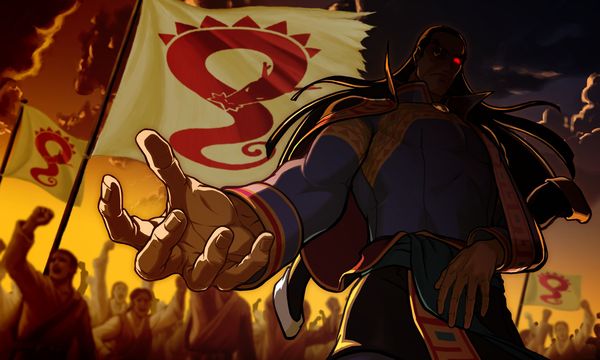
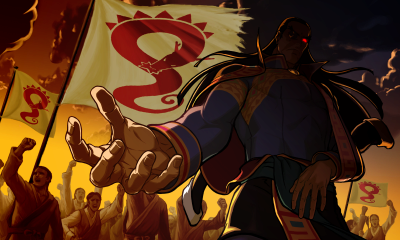
What does it mean to revolutionize a court system?! What exactly would Phoenix and company even be overthrowing?! I honestly had no idea. But I had one of our artists take this nebulous idea and create this piece of concept art for our design document.


“Our revolution starts now!”

What do you think? It kind of looks like a preview pic for the final instalment of a manga where nothing definitive is being conveyed, right? You can definitely tell how hard of a time the artist had in coming up with an illustration to represent such a vague concept.

But with this picture in hand, the team and I worked hard to flesh out the theme and make it relevant to the Kingdom of Khura’in (which serves as the story’s setting), and write a grand tale starring both Phoenix and Apollo as its main protagonists. It’s all really thanks to the help and hard work of the other team members that it all came together so well.

In the end, AA: SoJ came into its own and really grew into something much bigger and better than that original flash of inspiration I had. I know I joked about and exaggerated a few bits here and there, but the fact that it became such an amazing game is 100% true.

So how did our courtroom revolution turn out in the end? You’ll just have to play for yourself to find out. I’ll see you there!

Thank you for your insight, Mr. Yamazaki! I have to say, I wasn’t sure what Phoenix and Apollo were going to revolutionize either when I first saw that picture in the design document myself, but you and your writers didn’t let me and my wild imagination down!

Speaking of the writers, Mr. Fukuda was kind enough to share with us how the writing team went about the long process of creating the story and script for this game!

Writing AA: SoJ – The Secret Process Revealed!

Hello, I’m one of the writers in the game design section, Hironao Fukuda. Nice to meet everyone. I was told to talk about the story of AA: SoJ, but I was worried I’d spoil something by accident if I did; so instead, I’m going to tell you about how we write Ace Attorney stories.

Witness now, hitherto untold secrets behind how the AA: SoJ team writes our stories!

Actually, I wonder if it’s really all right for me to reveal so much to the public…

The very first thing we did as a team under Mr. Yamazaki’s direction was to come up with the theme, story plots, and settings, which included some world-building, for the game.

“How about something related to the Olympics?”
“Let’s have Phoenix take on some cases in a shady underworld court!”
“Let’s turn the victim into a zombie and have them testify on the stand!”

All of us writers took turns throwing out various ideas during our initial brainstorming sessions. No one was to shoot anyone’s ideas down. In fact, we were encouraged to build and expand on them until they became too embarrassingly far-fetched for us to continue. After all, the best of ideas are sometimes born of what were initially the dumbest.

But it’s not as simple as just coming up with fun-sounding ideas. When writing for a sequel, how well you can fulfill – and then, go beyond – your fans’ wants and wishes while staying true to the flavor and legacy of the previous titles determines whether your game is a success or a failure. Basically, we were tasked with creating something extraordinary and new while retaining the spirit of everything that had come before. As you can imagine, with a long-running series like Ace Attorney, it’s pretty darn hard to keep all that in mind while writing new plots!

That’s why we didn’t just go back and review what we did with AA: DD – we went through all of the previous games, studying and analyzing their stories and characterizations in great detail. We also made sure to keep the feedback we got from players in mind as we fleshed out this game’s theme and overall concept.

“What exactly makes an AA game feel like an AA game?”
“What about the games really excite players?”

We asked ourselves these and other questions, as we sought to gain new insight into the series from the ground up.

Once we as a team had agreed to a rough idea of what the main elements of the game (like its theme and setting) were going to be, it was finally time to think about the plots of each individual episode. But we didn’t just sit down and immediately start writing the game’s dialogue script from beginning to end. Instead, we first wrote what we call a “prototype” script. Think of them as rough blueprints for a game’s story.

Being that Ace Attorney is not just a story, but a game as well, we had to also really focus on creating thrilling moments, such as when a player exposes a witness’s lies, and gratifying moments, like when a player defeats the true culprit at last.

Basically…

• From a traditional “game level design” perspective, how should we design each episode in terms of difficulty or pacing?
• What kind of development or surprise should occur when? What kind of dramatic elements should we include?
• When should we have the story draw the player further in with a tender or surprising moment?

These are the sorts of things we plotted out when we created our prototypes, and it helped us get a good overall idea of how the game will go. It also made it objectively easier to control the story’s quality.

Once we finished making these prototypes, everyone on the team read them over and reviewed them. We writers then analyzed the feedback, held in-depth discussions with people about any problems that were pointed out, and tried to fix up anything that we could. We iterated on our prototypes like this until we finally had something everyone truly believed was fun and interesting.

Sometimes, our intense discussions lasted long into the night in our company’s meeting rooms. And sometimes, I would catch Mr. Yamazaki trying to work through an idea by walking around and around inside the R&D building as though he were the philosopher Kitaro Nishida himself, taking one of his daily strolls along the Philosopher’s Walk in Kyoto. We had some seriously “sardines-in-a-can” level of densely packed days of discussions for a while there.

With the prototypes completed, we could finally move on to writing the actual game dialogue. This is the step in which each writer’s strengths become obvious. Some of us are better at coming up with tricks for a mystery story, while others are better at writing dramatic dialogue, while still others are better at writing comedic scenes. That’s why, once we were each done writing our parts, we traded them with each other for further feedback. Fast as a chemical reaction, we were able to greatly improve the overall quality of the script at such an unbelievable pace thanks to this step in the process.

After this rewriting process, we finally had our completed script. Now, you might be tempted to think that because we had our script, we were done, but it was actually just the beginning. That’s because the next step is adding all of the other visual and aural elements to it in order to truly bring it to life.

When it comes to the adventure game genre, we are insanely picky about how Ace Attorney stories are presented. Therefore, programming each episode’s dramatic presentation is an incredibly important step for us. In this step, we take the base dialogue script and add illustrations, backgrounds, character animations, background music, and sound effects at specific moments to make the story soooooooo much more interesting. But just how good the dramatic presentation can be is dependent on how much potential there is in the base story to begin with. I think I’ll leave the details of how all of this was accomplished to Mr. Onishi, who headed up the presentation scripting team.

And that’s basically how we wrote Ace Attorney: Spirit of Justice. The process is quite orderly and methodical, don’t you think? With Mr. Yamazaki at the helm, you get the impression that the AA: SoJ team is super logical when it comes to making the game. That’s because in order to make an interesting, gripping story, there must be some degree of discipline and form in the process. Just as there are forms called “kata” in karate, there are certain kata for writing stories that writers must master as well. In essence, you can use an organized and methodical process to create something artistically interesting. But we’re not out to make some sort of cheap, mass-produced game – we’re out to create a totally unique piece of entertainment. Therefore, we can’t use only logic to create moments of surprise or drama for players. We also need our flashes of inspirations and our intense passion for creating truly fun experiences. These two things are the real stars of the creative process.

Now, we come to the real question: At the end of this long process, how did the story turn out? Is it actually interesting? Well, I think that depends entirely on you, the players. That’s why I’m so nervous right now, imagining all the ways you’ll react to it, and wondering if you’ll enjoy it. But I will say this: I wish the game would come out already so you can experience it for yourself! That’s all that I want right now as a creator.

…And well, honestly speaking, I just want to say that AA: SoJ will be just as lighthearted and fun as the rest of the Ace Attorney series. After all the long days and sleepless nights we’ve put into the writing and re-writing of the script, I can’t wait for when the game finally launches and for you to finally play it!

———-

Thank you for that peek into the team’s writing process, Mr. Fukuda! I can’t wait for everyone to play this game, either! I have to say, the process does sound quite methodical, but it’s true that even creative endeavors require some sort of framework to build off of, whether it’s the standard I-V-vi-IV chord progression in a piece of music, the vanishing point in a perspective drawing, or the linguistic scheme in the perfect punchline.

Join me next Friday as I explore how we came up with the look and feel of the Kingdom of Khura’in. What was it like for the background artists to create the locales of an entirely fictional country? And how do you even localize a fictional language to begin with? These topics and more when we next reconvene!

Until then!

Catch up on previous blog entries here !