Search Results for: "rival-schools"

EN

One Grand Finale – Weddings, Rakugo, and Succession

Oct 01, 2016 // Janet Hsu

Hello, and welcome to the final development and localization blog for Phoenix Wright: Ace Attorney – Spirit of Justice. It’s been a wild ride, and these last 8 weeks have been a blast! And what better way to end than with the release of the full-length Special Episode, “Turnabout Time Traveler?” I don’t want to say too much about it since Mr. Eguchi will be telling you all about it in a bit. In addition, we’ll have some final words from Mr. Yamazaki, and then I’ve got some extra cultural info for all of you regarding Episode 4 and rakugo ! Are you ready? Because here we go!

First up is Mr. Eguchi, the main writer of the Special Episode. If you haven’t played it yet, I hope his summary will convince you to check it out!

 ——————————————————

 Welcome to the Special Episode: “Turnabout Time Traveler”!


Hello to all you Ace Attorney fans out there! I’m Masakazu Eguchi of Mr. Famous fame!

What? You have no idea who I am? Oh, sorry…

As fate would have it, I was able to write for the Ace Attorney series this time for Spirit of Justice. The Ace Attorney series features a different kind of charm and style from what I’m used to, so writing for it made me face a variety of writing challenges that are very different from the RPGs I am used to writing, so my experience on this title was invaluable to me.

Yup, I sure faced a lot of things during my time on this title. Even though I made sure to go on a run every morning and managed to lose 10 kg (22 lbs), once things got really busy, all I had time to eat was tsukemen (ramen in dipping sauce). So before I knew it, I’d regained 7 of those 10 kg (15.5 lbs)… And when all I needed was for the doctor to remove a polyp, I ended up getting hospitalized for the first time in my entire life….

All that’s coming to mind right now are things completely unrelated to Ace Attorney… Oops. I’m sure you’re not here to hear about my personal life, so I’d better get to my three-part detailed thoughts and analysis on what I’ve learned through my two years of writing for Ace Attorney!

…What? You don’t want to hear that much, either?

Then I’ll talk about the main game. There are so many interesting things I’d love to share… Hmm… What should I start with…?

…What? No spoilers? So that’s no good either?

All right, then what can I talk about? Hmm…

How about the DLC Special Episode “Turnabout Time Traveler”…? Yeah! I can talk about that! I can talk about the Special Episode that was released yesterday! You really must get it! I put everything I had into writing it, so I’m counting on you to catch my hot fastball!

So, would you like to know what kind of story it is? Yeah, I bet you do!

…What? But without any spoilers?

All right, and don’t worry – I joke around a lot but I’m actually a really tight-lipped person.

Now then, let’s talk about the true ending of “Turnabout Time Traveler”…!

…I kid, I kid!

OK, OK, I’ll get serious now, so please stop giving me that death stare!

All right, let’s start again with a little about the Special Episode!

***********************************************

…But before that, I just want to warn you that you have to clear Episode 1 “The Foreign Turnabout” before you can play “Turnabout Time Traveler.”

**********************************************

Now first, an overview of the case.

The crime takes place inside a wedding banquet hall, but it’s no ordinary banquet hall – it’s actually located on an airship!

This is completely unrelated, but as an aside, it was really tough working on this episode because sometimes I would type ã‘ã£ã“ã‚“ ( kekkon ) with the intention of producing the kanji for “wedding” (çµå©š), but I would wind up with the word “blood spatter” (è¡€ç—-) instead. You really have to watch out that you’re selecting the right kanji when writing for the AA series.

[Note: When you type in Japanese on a PC , the most common input method is to type the word you want in romaji (Roman letters), and then hit the space bar to convert it into the kanji you want. But oftentimes, your OS will remember which kanji you chose the last time instead of picking the more logical kanji for the sentence and set that as the first option. So if you’re not careful and just hit “Enter” to accept the conversion, you could accidentally choose the completely wrong word.]

The defendant this time is the bride of the ball, Ms. Ellen Wyatt, and – get this – she claims to be a time traveler!

So, this case involves a murder in a flying banquet hall, and the defendant bride is also a time traveler…! Yes, the whole thing already smells a little suspect, doesn’t it?

Well, the one defending Ms. Wyatt will be our beloved Phoenix Wright, while the prosecution will be handled by his eternal rival, Miles Edgeworth!

I bet that got your blood pumping!

But that’s not all! After all that time away in Khura’in, Maya Fey will finally be back on her home turf as Phoenix’s assistant! Plus, when something smells, you know who’s sure to be lurking nearby… That’s right – Larry Butz also makes his long-awaited return!

Sorry for yet another aside, but I’ve gotta say that Larry is one crazy guy. He got into all sorts of trouble in the previous games, but boy does he get up to stuff in “Turnabout Time Traveler,” too. But you’ll forgive his crazy antics since, well, it’s Larry, right? There aren’t many characters like him, are there? So, thank you, Larry for being just the troublemaker I needed you to be!

With the gang all finally reunited, it’s time to party as they fly, move, break, and mend things in their latest adventure!

And what of the time traveling mystery? Well, I encourage you to pull back the intricate veil on that and discover the truth for yourself!

Hmm… I wonder if that description was enough to convince you to download this Special Episode…?

But really! Rest assured! True love and great sadness resides in the shadows of the gorgeous wedding reception. Tears will spill and fall. And strong hatred and murderous intent will even make an appearance!

I can’t write any more without getting into huge spoilers territory, so I’ll have to leave it here. And that about wraps up our time together here today. I hope you’ve enjoyed it and I’ll see you in Spirit of Justice !

——————————————————

HOLD IT!

Not so fast, Mr. Famous! You have some things to answer for! Mainly, all that rakugo in Episode 4!

But just in case someone hasn’t finished playing episode 4 yet, let’s have a few closing words from Mr. Yamazaki first about the ending of the game and the future of the Ace Attorney series before I head into spoilertastic territory!

Take it away, Mr. Yamazaki!

—————————————————–

Fifteen-Years’-Worth of Thanks

Hi everyone, this is Takeshi Yamazaki, the director of Spirit of Justice .

This is the last installment of these dev blogs, and I want to thank you for reading each and every one of them. I sincerely hope that through these blogs, you have been able to see the strength of our devotion to Spirit of Justice and how we breathed life into the game.

This year marks the fifteenth anniversary of the Ace Attorney series in Japan, and the tenth in the West. I was but a fan of the series when I first started working on these games, and all of a sudden, ten years have passed.

Looking back on the series, the first episode of the first game featured a trial that centered on a murder that was committed in the course of a burglary. Now, in the sixth mainline game, we’ve come a long way and now find ourselves telling a story centered on the revolution of a foreign nation’s court system.

Over the course of these fifteen years, Ace Attorney has continued to evolve as a series with new gameplay mechanics, a transition from 2D to 3D graphics, and the ever-expanding cast of new characters and their dramatic stories. In addition, the dev team has changed and grown throughout the years. From the director and art director to the new people who continue to join our team, each change has brought fresh new ideas and new life to the team as a whole. Yet, despite this long history of changes, there were things that we absolutely could not change – things we as the dev team had to do our best to preserve no matter what – and these things can best be cast as the answers to the following questions:
1. What do people play Ace Attorney for?

2. What makes Ace Attorney, Ace Attorney?

When we first started working on Spirit of Justice, the team’s core members got together to re-evaluated what these “absolutes” of the AA series are by re-analyzing the core concepts behind this series of games. Over a series of meetings we laid out what these core concepts were, and we then layered what new concepts we wanted to see and work with in Spirit of Justice on top in a concept sheet like this.

What is
Gyakuten Saiban 6
(Concept Sheet)

Hmm… Just showing you a picture of the cover isn’t all that interesting, is it? But what’s written inside is the super top secret recipe to our Ace Attorney sauce, so I’m afraid this is all I can show you!

But I will share with you what one part of the concept sheet says. In the “What is the theme of the experience that we want to impart?” section, there are two key phrases: “The Thrill of Turning Things Around” and “Revolution and Succession.”
The first is obviously something you are all very familiar with, but the second is a new theme we wanted to tackle in Spirit of Justice. Ever since we announced this game, we’ve been saying that its theme is “revolution,” and yet, there was actually a second theme of “succession” we’d kept hidden behind the scenes.

I’m sure there are many of you who have finished the main game by now. How did you find it? Were you able to feel and experience the themes of revolution and succession? I would be ecstatic if you could.

================================

There is just one more thing I want to talk about regarding the ending of Spirit of Justice. I promise not to spoil anything as I talk about it though!

I struggled a lot with what kind of ending to give to this game, but there was one big thing I was sure of, and that was that I wanted the game to end in a way that would leave the series as open as possible for the future. One of the reasons for this is because Spirit of Justice is a sort of culmination of all the various threads of the Ace Attorney series.

Simply put, I wanted to leave this series in a place where, when the next installment is made, we can take it anywhere we want. I wanted to leave this game open-ended so that we could pick up the next game with whoever we wanted as the protagonist, have it be located wherever we wanted, and address any themes we wanted.

The future of Ace Attorney lies before us, its potential is as wide and infinite as the oceans. Where the series will go is up to you, the players, so please definitely let us know what you’d like to see.

Don’t worry, we’ll be sure to bring that secret Ace Attorney sauce with us into the future, too.

I sincerely hope you’ll continue to support the Ace Attorney series, and that you’ll watch this space.

Thank you for reading to the very end! Until we meet again!

————————————————

Thank you, Mr. Yamazaki! That was a really great way to end these blogs. As a player myself, I think you and your writers have accomplished what you set out to do.

Now, before I get to the next section, I must warn you that it is full of spoilers for Episode 4 “Turnabout Storyteller,” so if you have not finished it yet, read at your own risk. That being said, I just want to thank everyone who has read up to this point. Ace Attorney sure has come a long way, and it couldn’t have without all of you.

I especially want to say a big thank you to everyone I met at Anime Expo this year. It was an amazing experience seeing you all! It was a great reminder that at the end of the day, it’s all about how much fun YOU, the fans, have with this series, and I couldn’t have asked for a more fun-loving, talented group of fans than all of you.

Thank you for all your support and I hope you’ll continue to enjoy the Ace Attorney series in the years to come.

Be sure to come back to this entry after you’ve finished Episode 4, now, you hear?

Until then!

SPOILER SPACE

.

.

.

.

.

.


Okay, now, if you’re here for more background on Episode 4, have I got a treat for you!

Mr. Eguchi and I worked on a number of Mega Man titles together back in the day, so imagine my surprise when I found out he was writing for Ace Attorney! It was like saddling up with an old battle buddy again, because… well, it was! As such, he was nice enough to let me grill… I mean, ask him about rakugo and find out some info that isn’t readily available in English.

*last week at the office, Mr. Eguchi stops by at Janet’s desk after being in meetings all day*

Eguchi: You said you wanted to interview me about Spirit of Justice ?

Janet: Yes. So. Rakugo…

E: Yes? *innocent smile*

J: Why did you decide to do an entire episode based on rakugo…?

E: I’d really gotten into rakugo 2 or 3 years ago when I started listening to them during my commute to and from work.

J: Oh, and because each routine is typically around 20-30 minutes, they’re like small, self-contained podcast episodes?

E: Exactly. At the time, we had wanted to do an episode that was based around Athena, and there is this great pun regarding Time Soba (Toki Soba) that I wanted to make, and that became one of the reasons why the episode is centered on rakugo.

J: Dare I ask what pun it was you wanted to make?

E: It was a pun on 感情 (emotions) and 勘定 (counting/calculations). [*both kanji are pronounced “ kanjou.”]

J: Oh, no, you’re not talking about this joke, are you?

Athena:

“撂ソピã¨ã‹ã‘ã¾ã—ã¦ï¼ “ココãƒã¡ã‚ƒã‚“ã®ã‚«ã‚¦ãƒ³ã‚»ãƒªãƒ³ã‚°” ‥‥ã¨è§£ãã¾ã’ï¼

Is there something interesting about “Time Soba”?! We’ll find out soon enough through my therapy sessions!

ホラã€å¤-神ã-ã‚“ï¼

Come on, Simon! [Your line…!]

Blackquill:

ãƒãƒƒï¼ã€€â€¥â€¥ãã®å¿ƒã¯ã‚¡â€¥â€¥ã€‚

Tsk! …And why would you do such a thing…?

Athena:

ã©ã¡ã‚‰ã‚‚‥‥ “カンジョウã¯ã”ã¾ã‹ã›ã¾ã›ã‚“ï¼”

Because you can’t leave either thing up to kanjou (emotions/calculations)!

[*This joke in itself relies not only on the pun, but also a standard joke pattern (like how a knock-knock joke has a certain structure). For those of you who can read Japanese, here’s a longer, more detailed explanation of the exact joke structure. In the English version, this untranslatable pun was localized as the “seven ate nine” joke to keep it relevant to the Time Soba story.]

E: Yup, that’s the one. And because the Time Soba and Soba Glutton (Soba Sei) stories were featured rather prominently, they lent Episode 4 its other defining feature, soba noodles.

J: Speaking of rakugo stories, there are the famous ones like Jugemu and Shibahama , that were referenced in Episode 4, but there are also quite a few that are either very hard to find English translations for or have never been translated. Can I ask you to tell me about one of the ones in Episode 4?

E: Sure.

J: Let’s start with Soba Glutton. What’s this story about?

E: Well, this story relies on you knowing what the jagansou herb (蛇å«è‰ or 蛇眼è‰) does if you want to figure out the punchline ahead of time. This fictional herb has a certain property, you see, which is laid out in a separate story, but for our purposes, I’ll explain it as I go.

So, long ago, there was this man named Seibei who was a glutton for soba. One day, a bunch of people at a local soba shop he went to were watching him eat and bet him that he couldn’t eat 20 plates of soba. (Chilled soba with dipping sauce is served on plates , unlike the hot soba in Episode 4, which is served in a bowl of broth.) They even offered him a cash reward if he could. Seibei easily demolished those 20 plates and was paid per the bet.

The next day when he went back to that shop, the now rather annoyed customers bet him he couldn’t eat 30 plates of soba. To their surprise, he polished off all 30 plates and received double the money he had gotten the day before.

One of the customers felt bad for the others and explained, “That man, Seibei, is known as the ‘Soba Eating Machine Seibei,’ or ‘Soba Sei’ for short.”

The next time they all meet, the very, very angry customers again challenge Soba Sei, but this time to eating 50 plates of soba. Knowing that not even he can eat that much, Seibei declines and pushes the challenge off to another day as he runs out of the shop.

This is where things get interesting. While Seibei was out in the mountains, he came across a giant, python-like snake up in the trees. The snake had its sights set on a hunter, and quick as lightning, it ate the hunter and swallowed him whole. Seibei watched the snake with its overstuffed belly from afar and saw it lick at a yellow herb. As it did, its stomach began to shrink. And then, with its stomach nice and flat again, it slithered happily on its way.

Seibei concluded that this herb must have the power to aid in digestion, and thought that with this, he could go back and take on that soba challenge. So he took some of the herb with him and headed back into town.

Boasting he could finish 70 plates, he took to plate after plate of soba. By around his 50th plate, he was beginning to feel a bit stuffed, so he chased everyone out of his private booth and slid the screen door shut. Now that he was alone, he took out the jagansou herb and started to lick at it.

After a little while, the people outside of Seibei’s room began to grow restless and curious. What was going on in there? They decide to open the door to the quite room.

What they found was not a man, but a giant pile of soba dressed in Seibei’s clothes. Turns out, jagansou’s special property is not that it aids in digestion as Seibei thought, but that it’s great at digesting humans…

J: Wow, that’s a surprisingly gruesome ending! And as you said, I guess if you knew what the herb did in advance, you’d know where this story was headed once you hear that Seibei was going to use the jagansou.

E: Yes. A lot of the stories in rakugo are connected like this. They’ll reference objects or plot devices from other stories, and even use the same characters.

J: Oh, that’s right! You mentioned that Uendo’s Japanese names were all references to rakugo archetypes.

E: Yes. Ippachi (Patches in the English version), Kisegawa, and Sadakichi Isoda (Owen). These three characters often appear in rakugo stories. Ippachi is your standard mood-maker character – the always cheery and trying to keep the party alive type. Kisegawa is a courtesan type character, while Sadakichi is usually a child from a poor family who has left his home in order to work and live at a store or theater that will take him in. But he’s not an apprentice, per se – more like a child worker.

J: That’s really interesting, because those three traits come across really well in the character animations, don’t they! In English, I’m afraid I could only keep the name Kisegawa because I didn’t want Owen’s name to come out of nowhere when the player solved the karuta dying message trick. It would’ve been strange if Uendo had 3 really Japanese names, and then this English name “Owen.” I tried to give his names a little balance and provide some foreshadowing with “Patches.”

Actually, I also recall you mentioning that the reason Sadakichi has the last name of “Isoda” is because of the karuta trick.

E: The karuta trick came about as a way to lead the player and the characters to Uendo’s fourth personality. I had the message for “Soba No. 4” よんã ã„ã‚ãã° (yo n da i me so ba) spelled out, but I needed it to point to a fourth personality. The only way to rearrange those letters into something reasonable was よã°ã‚“ã‚ã„ãã  (yo ba n me i so da), and that’s how we ended up with Isoda as Sadakichi’s surname.

J: Ha ha, I guess the karuta cards were a pain for you, too. In the English version, I think I just got lucky. I knew I had to use the same 7 cards as the Japanese, and that 3 of them would be spent spelling “No 4” and “4th” so it was fortunate that as we were figuring out what to name Bucky, his last name turned out to be Whet, and that with the leftover letters, we were able to get Owen, which is a suitably cute name for a 5-year-old.

Speaking of things I couldn’t keep in the English version, there were references to two other stories that we didn’t have the space to explain in the game itself. One of references that formed the basis of the “XYZ is scary” running joke in the Japanese version of this episode was related to a rakugo story called Manju Kowai (lit: Manju are Scary). That story was famous enough for any Japanese player to get, but the other story was a stumper, even for Japanese players, right?

E: Yes, even Japanese players had a tough time with the mizu castella (水カステラ – lit: water castella/liquefied castella) reference. Some Japanese people knew that it was related to saké, while a lot of people probably just figured it out from context.

J: I see. Unlike the English version where we can directly mention alcohol and still maintain a T rating, in the Japanese version of the game, you couldn’t directly mention alcohol at all, right?

E: Right. So we used the word mizu castella instead, but this was also fortunate since it’s a reference to another rakugo story. Want to hear it?

J: Of course!

E: Long ago, a local lord wanted his entire household to stop drinking, but he couldn’t do that if they could just go out into town, so he banned the sale and consumption of alcohol in his entire region, and set up guards at checkpoints to check for smugglers.

One day, a man who desperately wanted a drink tried to smuggle some by the guard at a checkpoint near his home. The guard, doing his duty, asks what was in the urn on his back, to which the man replies, “Oh, you know that new popular castella cake thing from the West? Well, this is a liquefied version of that.”

The guard looks over at the man, half skeptical, half wondering what the liquefied version of a cake would taste like, and asks to take a sip for himself. One sip quickly turns into big gulps, until all of the man’s alcohol was gone.

“Let that be a lesson to you,” the guard said as he sent the man on his way.

A few days later, the man tries again. “Oh, it’s just some oil,” he tells the guard. Naturally, the guard is on to this man, and asks to try some of it for himself. Soon, the man is left again with nothing but his dry, empty urn and his wounded pride.

A few days after that, the man is more than mad at this guard who’s been drinking up all of his hard-earned saké. So he decides to get his revenge on the guard this time by filling up his urn with urine.

As expected, the guard asks what’s in the urn, and the man answers honestly, “Oh, just some pee.”

“Is that so?” the guard answers sarcastically. “Then you wouldn’t mind if I had a sip or two, right?” he says as he dips his cup into the urn and scoops out enough to fill it to the brim. The man watches as the guard takes a big gulp, and laughs as the look on the guard’s face twists into a grimace with the sudden realization.

“You ****! This is piss!”

“Isn’t that what I just said it was?” the man said with a smile, as the freeloading guard was forced to admit his defeat.

J: Ha ha ha! I bet that’s the last time that guard messed with that man, huh!

E: Yeah, this story is kind of like an inversion of the story of “The Boy Who Cried Wolf.” It’s really interesting, actually. Rakugo has so much to teach us about how to construct fascinating and amusing stories. Like in the case of “Kinshu Banya” (ç¦é…’ç-ªå±‹ – lit. Alcohol Prohibition Guard), the story sets it up so that the audience knows just what the guard will do that third time, and can therefore gleefully anticipate the punchline, leading to a bigger payoff when the guard finally makes that scrunched up face and chews the man out.

J: Coming around full circle, in terms of setting up the story, I know many people also wondered why this episode was only one trial long.

E: We wanted to give the player a little bit of a breather between Episodes 3 and 5, so we decided to do one fun episode that still tied into the theme of succession. In rakugo, as with a lot of arts, a performer’s stage name is a big deal. Inheriting the stage name of your master or someone you admire is a huge honor.

Furthermore, another reason we went with rakugo was because since there is no investigation segment, we needed a setting that would be easy to explain and show in just a few pictures. So a theater was the perfect place for that.

J: And what about the addition of Blackquill and his sudden love of soba?

E: We needed a reliable witness – someone who the player and Athena could count on to have no reason to lie, and Blackquill fit the bill. So because he knew Taifu in the story, he became a character who loves soba through his association with Shisho and his Toneido theater troupe.

J: Glad I kept him as a Japanophile in the localized version, then! You have no idea how grateful I am that Blackquill made an appearance in this episode!

E: Ha ha, he was helpful even for me as a character to convey information through.

J: Well, I know you’re busy, so I should let you go. Thank you very much for your time and the very funny retellings of these classic rakugo stories!

E: You’re very welcome. I hope more people have come to love rakugo as a result of Episode 4 and this interview. It’s a really fun theatrical art and the stories are all really interesting.

J: I’m hoping rakugo will take off in the West, too! Here’s to these timeless stories!

———————————

If you would like to know more about rakugo, I wholeheartedly recommend Showa Genroku Rakugo Shinju (in case you were wondering what to do with your crunchyroll subscription now that the Ace Attorney anime is over!). It is an amazing manga series with an equally as amazing anime. In fact, I think the anime has a slight advantage since you can hear the wonderful performances of each story. Here’s a pretty comprehensive list of all the rakugo stories the anime has featured so far. Their performances of Time Soba (ep. 2) and Shibahama (ep. 12) in particular are amazingly well done.

Otherwise, I know there isn’t much rakugo in English, but there are a few English performers on YouTube. As with any type art, each storyteller has their own strengths and style, so I hope that maybe you’ll find one that really resonates with you.

While we’re on the topic of Episode 4, I’d like to leave you with just a few more spoiler-filled pieces of trivia.

First, I want to go back to something I mentioned last time : the back of Bucky’s happi coat. The other reason why we had to change it was that from a game design perspective, him drawing attention to it and you being able to read what it says is meant to reinforce the idea that he is “Whet (Noodle) No. 4” or the “Yondaime” (四代目), which is crucial in making the connection between the dying message and Bucky himself believable. In deciding how to localize his happi , I thought it would be neat to create a contrast between the front and back sides of the coat, so the back side was decidedly more “American sports jersey” to go along with his orange hoodie and battered skateboard, while the front remained Japanese for that authentic soba shop feel.

Speaking of karuta cards, I bet you thought I made up Taifu Toneido’s special English cards, but in fact, English ones do really exist . They’re used as a way to teach Japanese speakers English words and even idioms! The set above is from right after WWII, when demand for English karuta cards began to really take off. There are even special events using them and special English version cards for different cities around Japan !

Lastly, I want to expand on something Mr. Eguchi mentioned about alcohol and Ace Attorney. I think a lot of people have the wrong impression that it’s only the localized version that mentions grape juice as a way to censor the game somehow, when that couldn’t be farther from the truth. As Mr. Takumi said once about “grape juice in Apollo Justice: Ace Attorney ”:

When we were making AA3, Godot was originally going to drink bourbon whiskey, but we changed his drink of choice to coffee, in part, to stay within the limits of the CERO rating we were going for. So when we made AA4, we made Phoenix’s favorite drink grape juice from the get-go because of what we learned from our experience with Godot.

Japan’s CERO rating system is far stricter on mentions of alcohol than America’s ESRB or Europe’s PEGI rating systems, and for a series that strives to maintain a B or lower rating in Japan, it has put the dev team in the unique situation of giving one of its main characters a penchant for grape juice instead of what you might assume to be wine based on the shape of the bottle he tends to drink out of.

But for Episode 4, since there was no way for me to use mizu castella in the game as a euphemism without literally 3 notebook pages of explanation, and since the mention of alcohol wasn’t going to change the rating, that’s why I decided to specifically use the word “saké” in the translation, but kept what a certain someone drinks in Episode 5 as grape juice.

—————————————————-

And now, we’ve really come to the end of these blogs.

I’ve really enjoyed translating and writing these, and sharing with you all these cultural notes about Japan. I hope they’ve inspired you to do some reading (and maybe traveling?!) of your own. As I always say, the more you know, the more the world opens up to you. So I encourage you to stay curious, learn about one another, and dream big!

Thank you again for reading and for your support of the Ace Attorney series.

Until we meet again!

Catch up on previous blog entries here!

EN

HOLD IT! A whole new DLC case for Spirit of Justice is available now!

Sep 29, 2016 // Kellen Haney

TAKE THAT! Phoenix Wright is back at the defense bench in a new full-length DLC case, available now! Download the brand new case, ‘Turnabout Time Traveler,’ and explore a whole new chapter. Taking place after the events of Phoenix Wright: Ace Attorney – Spirit of Justice, this case features the return of fan-favorite characters, including legendary defense attorney Phoenix Wright and long-time rival, Chief Prosecutor Miles Edgeworth.  Investigate a time-traveling mystery, and prepare for the ultimate showdown in the courtroom! Can’t wait to dive in? You can grab the DLC via the in-game menu for $5.99(USD)!

Long-time fans may be familiar with Larry Butz, Phoenix’s childhood friend and an extraordinary trouble magnet in his own right. While it seems at first that he’s finally found true love, poor Larry just can’t catch a break when he finds out that his bride-to-be, Ellen Wyatt, seems to already be married – and moreover, she’s a murder suspect! As if things weren’t perplexing enough already, she also claims to be a time traveler.

It’s up to the recently reunited team of Phoenix Wright and Maya Fey to help prove the innocence of Ellen the bride-to-be (or is she a bride-already-was?) in this new full-length case. Search for clues and interrogate witnesses aboard an old-timey airship to untangle the time-traveling murder mystery, then head to the courtroom for the ultimate blast from the past – a showdown with Phoenix’s long-time rival, Chief Prosecutor Miles Edgeworth!

The DLC is available now and can be purchased directly through the in-game menu for just $5.99(USD), so don’t HOLD IT! See what this new case has in store.

If you can’t get enough Ace Attorney, you can also grab two additional “Asinine Attorney” short stories, each bundled with its own 3DS pixel art theme, for just $3.99(USD) each.

(From the “Apollo Justice: Asinine Attorney” DLC)
(Apollo Pixel Art theme)
(From the “Phoenix Wright: Asinine Attorney” DLC)

(From the “Phoenix Wright: Asinine Attorney” DLC)

(Phoenix Wright Pixel Art Theme)
EN

Frank’s Files: Stacey Forsythe

Sep 27, 2016 // Jeffery Simspon

To celebrate the 10th Anniversary of the Dead Rising franchise , and the release of Dead Rising , Dead Rising 2 and Dead Rising 2: Off the Record on PS4, Xbox one and Steam we are taking a look at some of the characters who play a major role in the early games in the Dead Rising series with “Frank’s Files”.

This week we look at Dead Rising 2 ‘s Stacey Forsythe.

  • Name: Stacey Forsythe
  • Job: Zombie rights activist and head of Citizens for Undead Rights and Equality (C.U.R.E.)
  • First Appearance: Dead Rising 2  (2010)
  • Appears In: Dead Rising 2  (2010), Dead Rising 2: Off the Record (2011)
  • Abilities: Compassionate and politically capable Stacey is driven by a deep empathy for others. She is able to care for Katey when Chuck Greene must leave his daughter to investigate the Fortune City outbreak.

Driven by the loss of her sister to the zombie infection Stacey Forsythe wants to protect all those who have been infected by the zombie plague, even those who have turned. Seeing zombies not as flesh eating monsters, but rather as former humans like her own sister who are simply sick with a disease she wants to keep them from being used as props in the TV show Terror is Reality. Rather than slaughtering zombies she wants the government to make the zombie cure Zombrex more available across America. She is in Fortune City protesting the Terror is Reality event that Chuck Greene takes place in prior to the Fortune City outbreak.

She is evacuated to the emergency bunker once the outbreak starts, meeting Chuck and his daughter Katey. Her compassion for others makes her agree to not only help Chuck and Katey but to keep Katey’s infection secret from the others least the father and daughter be expelled from the safety of the bunker. Her interest in helping Chuck reveal the truth behind the outbreak increases when C.U.R.E. is blamed.

EN

Cloaks and Scarves – Gorgeous 3D Models in Fluid Motion

Sep 24, 2016 // Janet Hsu

Hello, and welcome to this week’s behind-the-scenes look at the creation and localization of Spirit of Justice! As a number of you finish the main game, I hope you’ll give the two Asinine Attorney parody shorts a play – they even come with these adorable pixel themes for your Nintendo 3DS!

This week, we’ll be looking at how the character models were created and animated with the two section leads, Mr. Ueda and Mr. Fujii! As I’m sure many of you have noticed, Spirit of Justice features even prettier models and even more fluid animation than its predecessor, and after you hear these two men’s tales, you’ll see why!

And with that, here’s Mr. Ueda!

——————————————————————

Soft Models, Strong Joints

Ugh. It’s still hot as anything, just like every summer in Japan. I’m Keiji Ueda, the model lead who’s bad at staying healthy in the summer and is always on the verge of a cold each and every year. As with Dual Destinies, I’m here to share a little about character modeling for Spirit of Justice. I hope you’ll join me on this little journey.

â—†From easy-peasy to despair

There were all sorts of challenges and struggles all throughout the development of Dual Destines as we transitioned from 2D sprites to 3D models, but I thought that since we’d more or less made all of the models already, and that since the art style wasn’t going to change, it would mean that Spirit of Justice was going to be a piece of cake. Little did I know that it would take more than twice the work of last time to create everything for this game… But just why did it have to be this way?! Well, here’s just a brief list of just some of the things we decided to do this time that we didn’t do in Dual Destinies .

 Full-body character close-ups!

 • Moving cameras that would show the characters from a variety of angles at key points of the story!

 • Tons of soft, flowing materials such as cloth!

  A cutscene where a character could be shown from any angle, including their back or full body

I know you may think this sort of camera work is pretty commonplace in games that use 3D models, but Ace Attorney hardly ever uses any fancy camerawork, which is meant to allow you, the player, to take your time and look at everything onscreen to your heart’s content. However, this makes any tiny thing that’s even slightly off really stand out. For example, if a character’s wrist or shoulder is positioned just a little strangely in one of their fixed poses, then it might lead you to think, “These models look a bit cheap” or “This model is bugging out.” And therein lies the rub: the instant that sort of thought crosses your mind, it will take you out of the story and make you think of the characters as simply a bunch of 3D polygon models.

Me and my section’s guiding principle for making Ace Attorney 3D character models came from when we were working on Dual Destinies. The producer, Mr. Eshiro, told us to basically do the impossible: create 3D models that were so good, you’d forget they were models to begin with. Add on top of that the additional caveats for this game, and we were faced with a truly desperate situation:

We had to create 3D models of characters whose designs feature a ton of flowing, moving parts like cloth, and will be shown from head to toe as they moved about – all without any noticeable oddities.

“Hold your horses, Mr. Fuse… Are you trying to kill me?” I thought.


â—†Making cutscenes really shine

Because the decision to include Rayfa’s performance of the Dance of Devotion was made early in the game’s development, we based the quality of all of Spirit of Justice’s cutscenes on this dance. How we achieved this higher quality was to first have the presentation and camera work done using the regular Rayfa model, and then to make detailed adjustments to her model.


Rayfa gets even more detailed eyelashes than usual in these super close-up scenes

If there are any places where a model is sagging or sticking out, we’d go in and fix it by hand. In fact, the things that required the most attention from us were certain articles of clothing that characters like Rayfa or Andistan’dhin would wear. We made sure to pay even more attention to any model clipping this time than in Dual Destinies. Mr. Fujii will talk a little about this, too, but there were just a lot of cloth and other flowy bits that could cause clipping in this game!


Wow, that’s one saggy cloak…

Don’t raise your arms like that, Rayfa!

Because things like cloaks sit right on top of a character’s body, the character’s model tends to clip right through them when the character moves. And since Rayfa would be in constant movement during the entirety of the Dance of Devotion, we quickly requested that she always remove her cloak before she begins. That may or may not be the reason why there are a lot of characters that remove some piece of their clothing half-way through!!

And after we would make our adjustments, the animation section would work until their fingers bled to make sure there wasn’t any additional clipping in a single frame! Talk about handmade craftsmanship! We had to add a lot of wireframe joints, specifically to pieces of clothing and other moving parts, in order to achieve such perfection. And because there are also a lot of scenes featuring people’s hands in this game, we added a lot of joints to the characters’ fingers, too! And then, there are the joints we added to their faces in order to make them more expressive!! We modelers added so many joints this time around that we might’ve actually gone overboard because each model has, on average, a ton more joints than the models of Dual Destinies .

Anyway, we went through a lot and we might’ve put too much effort into all sorts of things, but if you think the characters look better for it, then that’s more than enough for me.

———————————————–

Thank you, Mr. Ueda for that look into character modeling! If there’s one thing I noticed, it’s definitely the number of joints in each lawyer’s finger! I don’t think those final dramatic finger points have ever looked or felt better!

You can tell, too, once you hear Mr. Fujii’s account of how the animation section put those joints to work when animating those glorious models Mr. Ueda’s section made.

———————————————–

The Devil’s in the Details

Hi everyone! I’m lead character animator Ryota Fujii. I’d like to share with you the little things we animators really paid attention to in the characters’ animations in Spirit of Justice .

â—†Obsessing Over Details in the Characters’ Presentation

We created the characters for Spirit of Justice as 3D polygon models, but in the end, they are displayed on a Nintendo 3DS screen. This means that even though we pose and create animations for the characters with a 3D rendering tool, sometimes, the characters wind up looking a little different once we see them on an actual Nintendo 3DS. For example, compare the two versions of Andistan’dhin below.

If you look real closely, especially at his face, I think you can quite easily tell that Andistan’dhin’s face in â‘¡ is a bit off.

Poor man! We couldn’t leave him in such a sorry state!!

Which is why, in cases like these, we make adjustments to a number of things, such as a character’s position in 3D space, until we get a much cleaner result as shown in â‘ , because no matter which character it is, we want to present them all at their very best.

â—†Obsessing Over Details in the Animation of Flowy Objects

The things we spent the most time on in this game were the animations for the many flowy objects in this game. What do I mean by “flowy objects”? I mean things like…

 
…Nahyuta’s floating scarf and his hair…

…and the cloth connected to Rayfa’s wrists, her hair and the ribbons in it… Oh, and her cloak, of course.

Now, you may be thinking, “But you can leave these kinds of things to a physics engine nowadays, can’t you?” but no, we can’t, because it wouldn’t look cool at all if we did.

Every aspect of a character is an important part of them, so the animations of even these flowy parts have to match the character themselves. We animators have our own ideas of what would look cooler or feel better in motion, and if we left it up to a physics engine, for better or worse, the animations would look too realistic, making it harder for us to give these flowing parts that nice anime touch they need to make them look like they belong on an Ace Attorney character.

That’s why the animations for the various flowy things on the many different characters were all painstakingly done by hand, but…! Mr. Fuse… Why are there so many characters with flowy bits on them this time around in the first place?!

*You’ll have to play for yourself to see just what kinds of characters appear in Spirit of Justice!

…So as you can see, Spirit of Justice’s character animations are also full of all sorts of detailed work. It would make me truly happy if you could spare even a second to take a look at the animations while you play!!

And with that, I’ll have to leave it here for today.

————————————

Thank you, Mr. Fujii! It sounds like you and Mr. Ueda both had quite the tough time with the many, many flowy things in Spirit of Justice. I hope you were able to get your revenge on the person who designed all of those characters and gave them their floating scarves and flowing hair! (I kid, I kid!)

Now, for those of you who have been playing through Spirit of Justice, I just wanted to share a few tales from the localization trenches. Admittedly, I didn’t do much outside of barking orders at Mr. Ueda and Mr. Fujii and giving feedback on their work. (Hey, I know I can’t draw, but I still had to do my job as localization director…!)

First up, I’m sure long-time fans noticed that Ema’s precious Snackoos bag got a redesign!


MUNCH MUNCH MUNCH MUNCH MUNCH


The Snackoos bag didn’t look so bad in the original DS version when we simply removed the Japanese lettering, but when Ema and her bag of snacks became all pretty in HD for the Nintendo 3DS, well, it looked a little sad and lonely with nothing written on the front label, so I asked Mr. Ueda to design and create the Snackoos bag you see in the game today. Taking inspiration from American packing design, he made it lively and colorful while keeping it simple by featuring the Snackoos front and center. He even designed it so that the word “Snackoos” is still visible when Ema is behind the witness’s stand! (How cool is that!)

Another reason I jumped at the chance to create a new Snackoos bag was because since we are now working with polygon models, all Mr. Ueda had to do was create one new texture and the rest of the animations would happen naturally. This modern method of animation is certainly a lot easier than re-drawing each frame of Ema’s sprite animation back in the day, which made this a much more feasible task for Spirit of Justice .

Without spoiling anything, next up is a character from Episode 4, “Turnabout Storyteller”: Bucky Whet.

 
Japanese version on the left, English version on the right

I think it’s pretty obvious why we had to change the back of his happi coat (it’s no fun if you can’t read what Bucky’s so proudly pointing at!), but there is sort of an Easter egg on the front that some of you sharp-eyed fans have already spotted.

Bucky’s name is spelled “Whet” in English, but if you look really carefully at the top two kanji characters on his right collar, you’ll see that they’re slightly different from the ones on his Japanese model. Just as how some foreign names have been anglicized throughout history, Bucky’s Japanese last name 上戸 (Ueto) turned into “Whet” at some point in their family’s history. Maybe when Whet Noodle No. 1 came to America, the immigration officer made a mistake? Or maybe the locals started using this spelling because it was easier? Who knows. But it’s certainly a great, big coincidence that his great-great-grandson is such a saké lover… or is it? (The same kanji 上戸 pronounced as “ jougo ” (ã˜ã‚‡ã†ã”) also means someone who loves alcohol.)

Actually, there’s another character in Episode 4 who has kanji characters for his localized name. It’s onscreen for less than a second, but I encourage you hardcore fans out there to find it and thank Mr. Eguchi of “ Mr. Famous ” fame for it. *grin*

Speaking of Mr. Eguchi, he will be here next week to talk about the full-length Special Episode that will be available starting next Thursday, “Turnabout Time Traveler,” and what you can expect from it. In addition, I’ll be holding him accountable for the insane premise of Episode 4, “Turnabout Storyteller.” If you haven’t finished Episode 4 yet by next week, consider this an incentive to do so. That way, you can read all of the supplementary info I’ve wrung out of him in a special one-on-one exclusive interview! We’ll also have a closing from Mr. Yamazaki about the secret “secondary theme” of Spirit of Justice. So be sure to stop by one last time next week!

Until then!

PS: I reeeeeally wanted to talk about this guy here, but since he’s in episode 5, I didn’t want to spoil anything. But I will say that Mr. Ueda and Mr. Fujii had their hands full re-doing some parts of his models and animations, especially those related to his now-horizontal-and-triangular nameplate… (I’m so sorry for being such a nitpicky pain in the behind, Mr. Ueda and Mr. Fujii!!! Please forgive meeeeee!!!)

PPS: That texture was Mr. Ueda’s idea of a placeholder – just a little something to remind himself to come back and redo the model and textures for this particular, um, vehicle. Some people on the dev team actually thought this was the real, finalized localized version for a while… Oh, Mr. Ueda. Your idea of a joke… hit a little too close to home for this American…

Catch up on previous blog entries here!

EN

Street Fighter V – September Update Out Now!

Sep 23, 2016 // Harrison Young

Hey everyone, there’s been a lot of exciting announcements for Street Fighter V this month. In case you missed anything, click the jump for a quick recap of the content that is now available with the September update.

Urien

  • The Vice President of the Illuminati is now available! Get ready to bust up the competition with some Aegis Reflectors, Metallic Spheres, and Chariot Tackles. Urien is available to all Season Pass holders and will include his Premium Costume. Urien can also be purchased using real currency via Steam and the PlayStation Store or with in-game Fight Money. Be sure to check out our previous blog post for additional information on Urien. 

Daily Targets

  • As promised, Daily Targets are now available. Be sure to log in frequently for new Daily Targets to cash in. The following is a list of some of this week’s Daily Targets and rewards for completing them.
  • Use a V-Skill 10 times: 100FM
  • Fight in a Ranked Match: 1,000FM
  • Clear Cinematic Story Mode: 500FM
  • “Sakura’s important Errand”: 5,000FM

Necalli Costume

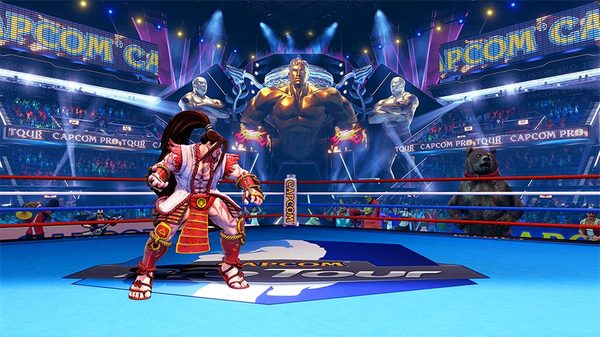
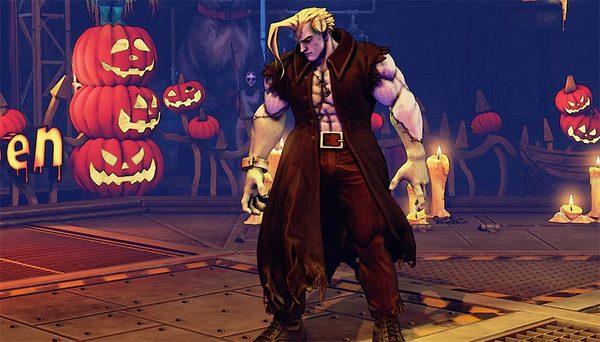
  • Necalli’s brand new Japanese Warlord costume, hand selected by the 2015 Capcom Cup Ultra Street Fighter IV Champion Kazunoko, is now available for purchase in the PlayStation Store.

Help support the Capcom Cup and its competitors in style by decimating your opponents in this awesome new costume. For more information on The Capcom Pro Tour and additional Capcom Pro Tour DLC, check out our latest PlayStation Blog post.

We’ll have more information to share soon, so be sure to follow us on  Facebook  and  Twitter  for all things Street Fighter V .

PC USERS:

The new anti-crack/anti-cheat solution  prevents memory access certain ways, so perhaps this is creating a false-positive situation that may trigger either the anti-virus software or Windows DEP.

Couple of things to try:

  • Add StreetFighterV.exe to the antivirus exception list.
  • Add StreetFighterV.exe to the Data Execution Prevention (DEP) exception. More info on DEP  here [www.softwareok.com]

    If you receive the “You cannot turn off DEP for this program” error message, temporarily disable  DEP altogether to validate if it’s DEP that’s preventing the game from launching.

    If the game still fails to launch after disabling DEP, the problem lies elsewhere such as the aforementioned antivirus software false-positive situation. Turn on DEP again and continue troubleshooting.


EN

Frank’s Files: Rebecca Chang

Sep 22, 2016 // Jeffery Simspon

To celebrate the 10th Anniversary of the Dead Rising franchise , and the release of Dead Rising , Dead Rising 2 and Dead Rising 2: Off the Record on PS4, Xbox one and Steam we are taking a look at some of the characters who play a major role in the early games in the Dead Rising series with “Frank’s Files”.

This week we look at Dead Rising 2 ‘s Rebecca Chang.

  • Name: Rebecca Chang
  • Job: Television reporter for Channel 6 Action News
  • First Appearance: Dead Rising 2  (2010)
  • Appears In: Dead Rising 2  (2010), Dead Rising 2: Case West (2010), Dead Rising 2: Off the Record (2011)
  • Abilities: Determined and motivated reporter with a nose for a good story who knows how to handle a gun. Brave in the face of a zombie outbreak.

Like Frank in the original Dead Rising Rebecca Chang sees the Fortune City zombie outbreak as her chance to promote her journalism career. Ambitious, Chang is in town to cover the controversy that surrounds the Terror Is Reality zombie killing event, she is excited to find what could be the scoop of a lifetime land in her lap when it becomes obvious that there’s more to this most recent outbreak than it first appears.

At first Rebecca’s coverage implicates Chuck Greene as having caused the zombie outbreak, suggesting that he is in league with C.U.R.E., however she quickly comes to believe that there is more to the story than it at first appears and joins with Chuck to get to the bottom of it.

EN

Live Q&A with Dead Rising Devs, Wednesday 09/21

Sep 19, 2016 // Jeffery Simspon

Wednesday we’ll be holding a special Unity-exclusive Q&A with Capcom Vancouver developers, who’ve worked on the Dead Rising series since Dead Rising 2 , talking about the series and its recent 10th Anniversary . Since the team is working on finishing up Dead Rising 4 , we’ll be holding this in the afternoon for those on the west coast, at 1PM PST . That’s 4PM EST or 9PM GMT .

To participate, simply go to this thread and set your view mode to “Live View” as I explain within the thread. It’s a rare opportunity to interact with some of Dead Rising ‘s dev team, so don’t miss out!

EN

Crime Photos and Singing Monks – A Spectacle of Sight and Sound

Sep 17, 2016 // Janet Hsu

 Welcome to another development and localization blog for Spirit of Justice! Is everyone having fun with the “Phoenix Wright: Asinine Attorney” mini-episode and its accompanying pixel art theme? I really love both of these side stories (Apollo’s is available next week!) for their over-the-top insanity and silliness, but I’ll let you be the final judge of that!

This week, I’ve got Mr. Horiyama and Mr. Fuzii on deck. They’ll be sharing stories about their work on the sound design and 2D illustrations of this game. And then, I’ll be sharing a little about how we localized their work into the final version you see in the game.

And now, here’s Mr. Horiyama!

After the Morning Dance of Devotion~⒪

Hi, everyone. I’m the sound director of Spirit of Justice, Toshihiko Horiyama.

From Noriyuki Iwadare’s to the Capcom Sound Team’s work on this title, there is a virtual cornucopia of gorgeous music and sound effects that they created for the American and Khura’inese courtrooms that I would love to point out to you, but the most trying, the most enriching, and the most memorable bit of work was when we poured our hearts and souls into the creation of the sound data for each and every one of Pees’lubn Andistan’dhin’s singing testimonies in Episode 1.

My work on creating that large amount of sound data started around the time when the game designers came to me and asked if they could somehow have Andistan’dhin’s testimony display in time to the music. I received a sample of a typical Andistan’dhin testimony from them, and treating it as a set of lyrics, I created A, B, and sub-melodies, turning the sample testimony into a stock song – a sort of base to draw on later. Many of Andistan’dhin’s testimonies consist of five or six text windows, so what I did was take one of the base melodies I’d created and adapted it so that each statement of the testimony would sound like that melody’s original lyrics. In the event that the text (lyrics) and melody wouldn’t mesh, I would change the text slightly without changing its meaning until it fit just right.

Next, I placed markers that corresponded to the lyrics within the wave data of the completed melody. These markers were for the game’s programming so that it would know when to display what bit of the “lyrics” on the screen as the song was playing. For example, for the line “After the morning Dance of Devotion”:

Marker 1 – Af

Marker 2 – ter

Marker 3 – the

Marker 4 – mor

Marker 5 – ning

Marker 6 – Dance

Etc.

Here’s an example of how I went about marking the sound data.

With this sound data in hand, the scripters were able to then insert the scripts necessary into the text of the testimonies to make the letters display when they’re supposed to in time with the music. The presentation lead, Mr. Onishi, touched on this a little in his entry about scripting . Once this was all done, we implemented the sound data and scripts into the game and tested it out. We fiddled with and adjusted some things a number of times to get the text and music to line up correctly, but as things started falling into place, we were able to basically lock down and mass produce all of the sound data we needed for Andistan’dhin’s singing testimonies.

There are a number of these singing testimonies – in fact, there are 41 of them to be exact. I made 41 unique pieces of sound data (and melodies) for these lines of lyrics.

“It was that muggy, hot summer of last year when

Day in and day out, I made songs for Andistan’dhin”

——————————————–

Thank you, Mr. Horiyama for this in-depth look at how you were able to bring us such a unique style of giving testimony!

It’s funny that the Japanese version started with the lyrics and Mr. Horiyama composed around them, because in the English version, we had to do the exact opposite and write lyrics that didn’t change the meaning of the text and that still fit the music! Naturally, we also had to redo the scripting since English consists of syllables of multiple letters rather than individual kanji and kana characters. I thank my fellow localization team members for all the work that went into THAT unique and daunting challenge!

Speaking of another daunting challenge, do you remember how many 2D illustrations you saw throughout Spirit of Justice? Well, here is Mr. Fuzii to share a little about all the hard work that goes into drawing all of them!

—————————————————-

On Drawing 2D Illustrations


Hi everyone! I’m Norihide Fuzii. This is my third outing on an Ace Attorney game, the other two being Apollo Justice: Ace Attorney and Gyakuten Kenji 2. I was in charge of making character models, drawing 2D and mini-character illustrations, and a whole bunch of other things.


Today, I’ll be sharing a little about my 2D illustrations work.


On the Ace Attorney team, we call the 2D illustrations that we use at key points in the story “event cuts.” These include pictures of things like in-game photos, letters, and other story-supporting elements, to major things like illustrations of the exact moment of the crime or of a certain thing we’d like you the player to be able to clearly visualize.

Illustrations like these…


…and this…

…and even these pictures in the Mood Matrix are a part of what I do.

And now we come to the meat of my story: without spoiling anything, I’m going to show you how I draw these illustrations with an example from Episode 1: the Crime Photo.

2D Illustrations from Start to Finish

  Step 1

A request arrives from the game designers. With it is a detailed diagram with notes regarding when and how the illustration will be used in the story and, in the case that the illustration is part of a puzzle, any guidelines and stipulations on things such as what I can and cannot show in it.

Illustrations that serve as in-game photos are almost always heavily tied to the story or one of its puzzles, so it’s always a real challenge to create them because of how many conditions I have to keep in mind.

Step 2

I draw a rough version of the illustration based on the request order while paying particular attention to the perspective of the people, backgrounds, and any other objects within the frame and the illustration’s overall composition.

Everything slowly comes together as I fine-tune and adjust each element of the picture.

  Step 3

As I work on the illustration, the game designers and the art director Mr. Fuse check on my progress to give me feedback and to make sure we’re all on the same page. After all that, surely I’m really close to being done, right?

But no! During the process of tuning the game’s difficulty, I suddenly received a request for me to fix something in the picture!

“The gun and the scroll are too hard to see in the picture, so please make them stand out a little more,” I was told.

This type of adjustment work is super important as it’s tied to how difficult the game, and therefore, how fun or frustrating the game will wind up being.

There! Fixed! Next!


Step 4

I’m finally done!!!!!

…Or so I thought. But no! This time, there was a request to change a real fundamental aspect of the illustration!

“We need you to please change the positioning of his left hand and the blood on it,” I was told.

Ah, there’s a discrepancy between what the game wants the player to point out and what the picture actually shows. These kinds of fixes are a really, really big deal.

Step 5

I’m finally done for real this time!!!

Brushed the picture up a little more for artistic reasons, and now, it’s perfect!

 –FIN-

And there you have it! I think you can see just how much time and work goes into creating just one of these illustrations.

Because the character models and animations in Spirit of Justice are even better than they were in Dual Destinies, those of us in the “event cut” section were determined to not lose to them, so we worked extra hard on our illustrations, too! This time, we didn’t draw just secondary illustrations for things like crime scene photos and other pieces of evidence, but lots and lots of important and dramatic scenes as well.

I would be truly honored if there were any illustrations among them that resonated with you.

Thank you for your support of the Ace Attorney series, and I hope you’ll continue to enjoy the series for years to come.

———————————————–

Thank you, Mr. Fuzii for that great example of how you and your section members draw the many, many gorgeous illustrations in this game.

Mr. Fuzii mentioned that among the illustrations he worked on were the ones for the various pieces of evidence. I’d like to share a story of one of the things we had to localize for Spirit of Justice. Without spoiling anything, I’d like to use an example from the beginning of Episode 3.

In Episode 3, The Rite of Turnabout, Phoenix gets a guidebook from Ahlbi as soon as the episode starts. Here are the thumbnails and illustrations for that piece of evidence.


Japanese versions on the left, English versions on the right.

Because the guidebook is for English-speakers in the localized version, the book had to first be reversed in the thumbnail, as the Japanese version is laid out as a right-to-left book (it didn’t have to be – the majority of books in Japan are actually left-to-right nowadays – but it’s what the dev team chose).

After the layout was reversed in the thumbnail (thank you Ms. Kobayashi!), Mr. Fuzii took it as a rough outline of how he should lay out the detailed illustration.

Aside from the obvious editing of the Japanese to English, there is one other thing you may have noticed that changed. I’m sure you can figure out by context what it is, but imagine if you had just this illustration to work off of in the final version of the game.

At one point, this was going to be the final version, but as we playtested it with some members of our localization team, a few people were unsure what the cross with the N on top meant (if they could even read the N on the lower screen). That’s when it hit me: this is a Japanese style compass and I had grown so used to seeing it in Japan that I didn’t even need the N at the top to know what it was!


Japanese maps often don’t even label the N or 北 ( kita ) since it’s common knowledge what this “4” shaped thing is.

But in the context of an English map, with all those English letters flying around, the compass became this odd cross that’s just in the upper right corner for no apparent reason. A quick internet search shows that in the West, one essential component in the design of a compass is the presence of a circle or at least the suggestion of a circular shape (by including NE, SE, SW, and NW, for example). It’s one of the ways we recognize something as a compass.

That’s when I made an adjustment request of my own to Mr. Fuzii to add the circle to the cross, and to make sure that the N was more visible and stylized differently so that it wouldn’t get lost in the diagram. After all, it wouldn’t be fair to you, the players, if you had to figure out something that wasn’t actually supposed to be one of the puzzles in the game!

Join me next Friday for a look at character model creation and animation! As Mr. Fuzii pointed out, I think you’d agree that the models and animations this time have really been spectacular, so stop on by next Friday after some Apollo Justice: Asinine Attorney fun for a behind-the-scenes discussion!

Until then!

Catch up on previous blog entries here!

EN

Street Fighter V Update Coming September 22nd!

Sep 16, 2016 // Harrison Young

Hey World Warriors,

For those of you that couldn’t make it to Tokyo Game Show, there have been a lot of exciting announcements for Street Fighter V.  The new update will be released on September 22 nd and will deliver boatloads of new content including some additional goodies for Season Pass holders. Hit the jump to check out everything the new update has to offer.

Urien

  • As mentioned in our blogpost earlier this month Urien will be blasting on the scene with this new update. The Vice President of the Illuminati can be purchased with Fight Money or via the Steam and PlayStation store. Season Pass holders can hop into a match with him as soon as the update goes live.

Daily Targets

  • New Daily Targets will be available to help you earn extra Fight Money to purchase additional content. Fight in a ranked match to earn 1000 Fight Money. Spend a little time playing in training mode to earn an additional 500 Fight Money. Each Daily Target has a time limit so don’t forget to log in and cash in on these. Rewards will range between 100 and 5000 Fight Money.

Vs. CPU Function

  • Versus CPU mode will be added as another option to standard versus mode. Now you can slug it out with the AI of varying difficulty and sharpen your skills before challenging friends or others online.

Fighter Profiles

  • Fighter Profiles will also be updated and stat tracking will go live! Now you can dissect your gameplay to find and eliminate bad habits or simply show off your skills to friends.

Colors 3-10 for Season Pass holders

  • Colors 3-10 on default, and battle costumes for all confirmed DLC characters will now be included for all Season Pass holders.

Premium Costumes now include all colors

  • Existing and future premium costumes will now include colors 3-10 when purchased. This will be retroactive for those that have already purchased the premium costumes.

Color bundles now purchasable

  • Color bundles will be available for purchase with Fight Money or via the Steam and PlayStation stores. Check out the following list for content and pricing.


  • All 16 Original Character Default Color Pack (3-10) – 85k FM/$4.99
  • All 16 Original Character Story Color Pack (3-10) – 85k FM/$4.99
  • All 6 DLC Character Default Color Pack (3-10) – 40k FM/$1.99
  • All 6 DLC Character Story Color Pack (3-10) – 40k FM/$1.99

New Environmental Stage KO’s

  • New environmental stage KO’s will be added for the list of stages below. If you loved blasting other players through doors and dropping bowls of noodles on their heads, just wait until you see what we have in store with this update.


  • Shadaloo Base
  • Hillside Plaza
  • Underground Arena
  • Forgotten Waterfall
  • Union Station
  • Kanzuki Estate
  • City in Chaos
  • Apprentice Alley
  • Lair of the Four Kings

Bug fixes

  • The issue which added an additional frame of lag to PlayStation 4 fight sticks on PlayStation 4 has been identified and patched. Now input time is unified across PlayStation 4, legacy controllers and PC.
  • Juri’s V-Reversal was unintentionally able to hit downed opponents under specific circumstances.  Juri’s V-Reversal was corrected so that it cannot hit downed opponents.
  • Juri’s invincibility during her V-Reversal was unintentionally short. This was corrected by setting the invincibility on Juri’s V-Reversal to 14 frames after the hit box of the move disappears.
  • When Ibuki was hit during a crouching fierce, she would unintentionally go into a standing state damage animation. This has been corrected so that when hit during a crouching fierce, Ibuki goes into a crouching state damage animation.
  • The light version of Yoga Sunburst would fire regardless of whether the player was holding down punch or not. This has been corrected so that when the charge portion of L Yoga Sunburst is guarded, holding down LP will maintain the charge motion.
  • When the tip of jumping LP hits an opponent or is guarded during Dhalsim’s V-Skill, the Critical Art gauge would increase rather than the V-Gauge. This has been corrected so when a jumping LP hits an opponent or is guarded during Dhalsim’s V-Skill, it now builds V-Gauge.
  • When Dhalsim performs an airborne Yoga Teleport against an opponent on the edge of the screen and performs a jumping attack afterwards, the jumping attack would be performed in the opposite direction of the opponent. The directional determination after Dhalsim appears from an airborne Yoga Teleport has been corrected, making it more difficult for this to occur.
  • Under certain circumstances, moves that only hit opponents in a standing state would unintentionally miss during certain standing states. This has been corrected. The hurtboxes on characters recovering from getting hit out of the air, allowing moves that are designed to hit standing characters to properly hit. Additionally throw attacks that normally miss on crouching characters will no longer be able to connect on characters recovering from getting hit out the air as they transition to a crouching state.
  • After the attack frames of Birdie’s jumping LK ended, Birdie’s hurtbox would unintentionally remain absent in his recovery frames until he landed. This has been corrected by setting a hurtbox to Birdie’s jumping LK recovery frames, until he lands.
  • Currently, the game counts a disconnect between the “Another fight is Coming Your Way” screen until you pass-through the results screen by selecting “find another match” or “exit to main menu”. The range a disconnect penalty will be assessed will be changed to be between from when “Another Fight is Coming Your Way” to after League Points (LP) and Fight Money (FM) have been calculated on the “Results” screen.


We’ll have more information to share soon, so be sure to follow us on facebook and twitter for all things Street Fighter V.

EN

Dead Rising 4: Return to the Mall

Sep 16, 2016 // Jeffery Simspon

“ARGH. Food court zombies are the worst!”

Frank West is back and in cracking form, as today Microsoft and Capcom Vancouver revealed the new gameplay trailer for Dead Rising 4. Titled “Return to the Mall,” the trailer brings fans back to Willamette Mall, where a recon mission quickly goes awry. From cleaving through zombies in the food court to pausing for a few creative selfies, Willamette Mall is a key piece in Frank’s search for the truth behind a government conspiracy responsible for the outbreak. Check out the action for yourself in the video above!

Dead Rising 4 marks an all new chapter of one of the most popular zombie game franchises of all time. All the classic hallmarks of the ground breaking zombie series return, including a huge array of weapons and vehicles players can combine to combat the horde ranging from the practical – to the practically insane. With intense action and an unmatched level of weapon and character customization, Dead Rising 4 delivers a heart-pounding experience as you explore, scavenge and fight to survive in an open world sandbox on the brink of the next zombie apocalypse.

Dead Rising 4 will be available worldwide for $59.99 on Xbox One and Windows 10 PCs beginning December 6. If you haven’t already, pre-order your copy of the game to receive incentives from participating retailers worldwide.

Let the Slay Ride Begin!

EN

A new Resident Evil 7 biohazard trailer is out now with a demo update on the way!

Sep 15, 2016 // Kellen Haney

“Welcome to the family, son.” In June, countless PS Plus subscribers heard this instantly memorable line in their attempt to escape a mysterious plantation house when the Resident Evil 7 Teaser: Beginning Hour demo was first released. Today, we’ve got a bunch of new information to share about Resident Evil 7 biohazard, including a new trailer, an update to the Beginning Hour demo, and more!

First things first; we’ve just released a new trailer that gives you a peek at what you can expect in the full game, which you can check out above. Starting off with a mysterious recorded message, get a look at some of the visceral combat that you’ll experience, as well as an unforgettable feast with the Baker family.

In addition, the Resident Evil 7 Teaser: Beginning Hour demo has hit a huge milestone, with over three million people having downloaded the demo worldwide! For those of you who have explored every nook and cranny that the dilapidated house has to offer, we’ve got something special in store for you. A new Twilight version update for the demo is on the way, and will be available starting tomorrow, September 15th. And while Beginning Hour has previously only been available to PlayStation Plus members, when the update goes live tomorrow, all PS4 owners will be able to download the demo and experience it for themselves. If you haven’t played the demo yet, it will be a great time to investigate the dilapidated corridors and uncover the mansion’s mysteries.

We also have some exciting news to share about the digital deluxe version of the game for North America. Previously offering the game and a season pass for two additional story episodes for $79.99 in North America, we’ll be upgrading the digital deluxe version with an additional playable story episode starting tomorrow. This will also shift the price to $89.99 to account for the additional content. However, if you’ve already pre-ordered the digital deluxe edition on the North American PlayStation Store, your pre-order will automatically be upgraded at no additional charge. Plus, all pre-order customers of either the standard or deluxe versions will get a number of bonuses, including the Survival Pack: Recovery Set, consisting of consumable healing items to help you withstand the mansion’s horrors. Don’t worry; these consumables are available again each time you start a new game. Also included are a mysterious in-game Lucky Coin, and access to the incredibly difficult Madhouse mode (normally unlocked after completing the game once). As if that wasn’t enough, all pre-orders on the NA PlayStation Store will also instantly receive a dynamic PS4 theme. Be sure to head over and pre-order today!

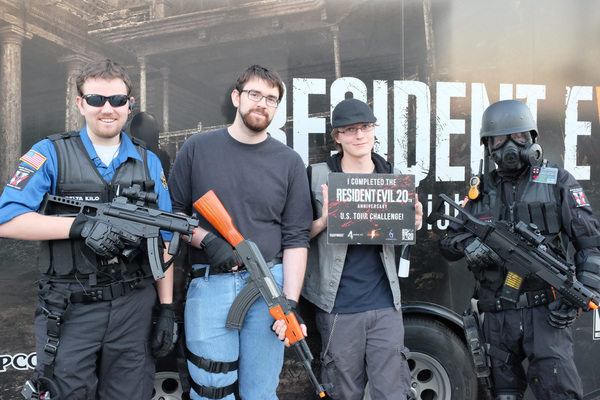
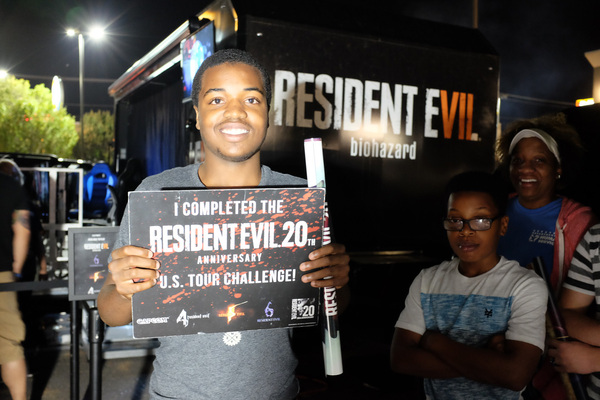
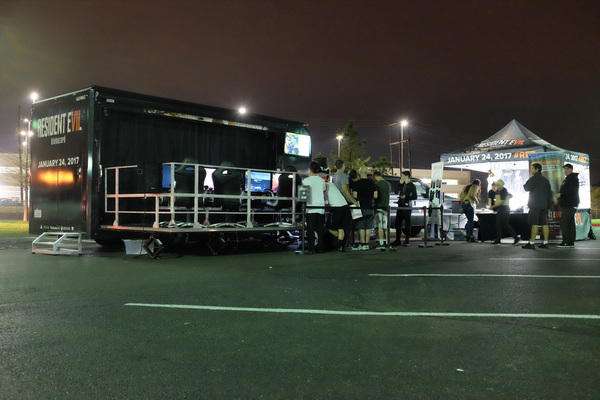
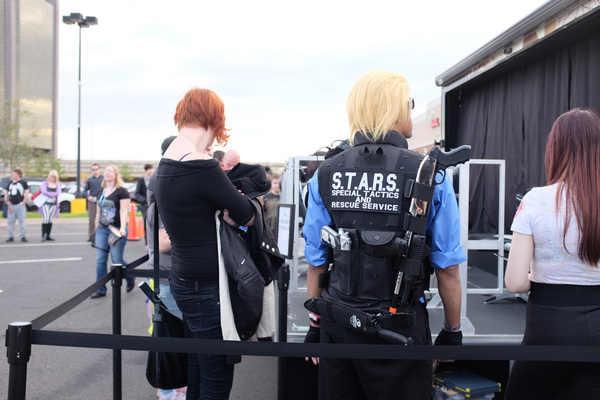
Finally, don’t forget that Resident Evil 7 biohazard will be fully playable with the included optional PlayStation VR mode when fear comes home on January 24th, 2017. If you can’t wait that long, keep an eye out on the Resident Evil Twitter and Facebook accounts to get the latest on the Resident Evil 20th Anniversary U.S. tour list to see if RE7 and PlayStation VR will be brought to a location near you! Plus, check out additional images below!

EN

Dead Rising memories from Capcom Vancouver

Sep 14, 2016 // Jeffery Simspon

When we celebrated the 10th anniversary of the release of the original Dead Rising in 2006 the development team here at Capcom Vancouver started to reminisce about our memories of the game that launched the series that has come to define the studio.

While the original Dead Rising was developed in Japan, we’ve had the honour of working on Dead Rising 2 and have made the franchise our own since. Yesterday Capcom released special 10th Anniversary editions of Dead Rising , Dead Rising 2 and Dead Rising 2: Off the Record . As we near completion on Dead Rising 4 and the return of iconic hero Frank West, we wanted to share our memories of the game that started it all.

Game Designer Brian Boog’s list of Dead Rising Credits is extensive, starting on Dead Rising 2 and touching on everything including the crazily named Dead Rising 3: Super Ultra Dead Rising 3′ Arcade Remix Hyper Edition EX + α . For Boog it’s the original game’s gold club that he remembers most.

“Seeing it in the trailers for the original DR game was the reason I bought an Xbox. Watching Frank line up his shot, and headshotting a zombie became my equivalent for a hole in one. I spent days with my friends playing ‘The Willamette Open’,” he explained.

Brian’s favourite part of working on the series was the development of jump scares in Dead Rising 2 . He remembered, “We took co-workers unaware into an audio room and had them play a level without knowing about the jump scare feature. We recorded many of them as they jumped out of their seats. Their reactions solidified our faith in the feature, and we still use it today.”

Roy McCombe was also a designer on Dead Rising 2 and remains with the series to this day. He remembers working at another big local game studio, when a co-worker brought the original game in.

McCombe recently told the story on our Twitch channel explained, “Early in my career a friend of mine forgot his copy of Dead Rising , it was Friday. I stayed at work playing it until he came to pick it up on Sunday (yes I had a shower). I had no idea that right around the corner fate would happen to take me to a new job at a company that ended up getting a shot making Dead Rising 2 ’s prototype.”

It was that sense of anything and everything being possible in Dead Rising that lead Roy and the team at the studio here to create Combo Weapons for Dead Rising 2 .

When asked his favourite memory working on the series Roy said, “As a huge fan of the original Dead Rising I really wanted to create more over the top interactions vs. zombies. At one point I wanted to lift a zombie up in the air with a gun and blow it apart but I kept getting hung up thinking that it would break the gun… then I thought, well if we attached a pitchfork to the gun that might make sense. That ended up being the pitchfork shotgun, the very first Dead Rising combo weapon we shipped.”

Dee Jay Randall is a Technical Director at Capcom Vancouver and worked on the co-op backend on Dead Rising 2 . When discussing the original Dead Rising he said that his favourite moment in the first game was, “Triple-booking Adam’s mini chainsaws in the first Dead Rising and walking around Willamette like a boss.”

Dead Rising 4 ‘s Project Development Director Lindsey Williamson Christy remembered almost losing her husband to the zombie hordes of Dead Rising , “When my husband and I were first dating DR came out on the Xbox and it consumed him. He was already a rabid zombie fan and this to him was the ultimate zombie experience. He would play it all night long and I would fall asleep on the sofa to the sound of zombies and that annoying cellphone. He would wake me up when he burst out laughing at something Frank West said or to show me some crazy outfit.”

Thankfully things worked out for the best for the zombie slaying couple as she explained, “It’s 10 years later, we are married and have a kid who now also loves zombies and can’t wait until he’s old enough that I will let him play Dead Rising , since he’s only 6 it’s going to be awhile. And my husband who is a game designer is incredibly jealous that I get to work on his most beloved franchise and Frank West.”

Dead Rising , Dead Rising 2 and Dead Rising 2: Off the Record have been re-released with upgraded HD graphics and 60 fps framerates . Play these classic games again today and celebrate 10 years of zombie slaying with us.