Search Results for: "webcomic"

EN

When gameplay and narrative get along

Oct 05, 2014 // GregaMan

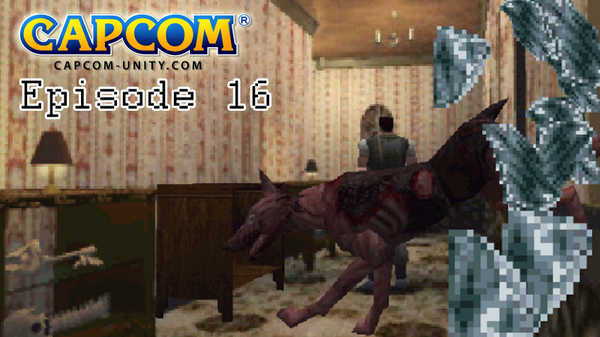
Hey guys: remember Resident Evil on the original PlayStation? Let’s talk about it. 

In its time, Resident Evil was considered groundbreaking for placing both player and character in a highly restrictive scenario with very true-to-life rules and consequences. Characters—and players—were required to keep track of and maintain supply of their ammunition, healing items, and more as though they were real-life commodities. It may be hard now in this age of narrative-driven, realistic games to fathom that that was ever a remarkable thing, but remember that RE came at the tail end of an age where virtually all video games were action platformers instilled with zany dream-world logic, where items were intangible icons obtained by running full-speed at them and bullets were giant yellow balls that spewed endlessly from your guns with perfect, unwavering trajectory and impossibly fast firing rates. 

↑ We used to just not ask questions.  

In Resident Evil, bullets came in bullet boxes. If you wanted to fire bullets from your gun, you had to find boxes of bullets, stop, pick them up, load them, and then properly ready your gun to be fired. Furthermore, shooting an enemy in the head would produce a different effect than shooting it in the torso, would produce a different effect than shooting it in the legs. It was up to the character—and player—to aim the gun at the desired body part for the desired effect. All of these things were groundbreaking in that, despite the preestablished lunacy of the video gaming medium, they all made logical sense. Given the narrative scenario presented by the game, even (nay, especially) someone who had never played a video game before might have assumed that any or all of these elements would be in play. 


↑  Nothing  could top this level of realism.

And so it was in this way that Resident Evil was, for many video gaming enthusiasts of the 1990s, the most immersive game ever, placing players more thoroughly in the shoes of a protagonist (two, actually) than any game they had experienced before it. Whether players were conscious of it or not, Resident Evil marked a new milestone in what would come years later in certain erudite circles to be known as ludonarrative resonance. 


I understand if you find that word to be daunting—even the word processing software I’m using to write this, whose sole job is to process words, didn’t recognize it. Likewise, I understand if you think the word is pretentious: “I ‘on’t never needed no lu-do-na-ree-tive resomacation to teabag your momma last night!” you may be thinking. Rest assured, there is a whole separate essay to be written on the teabagging phenomenon. But also rest assured that ludonarrative resonance is just a fancy—and handily succinct—way of saying “that thing where the game gives you a good reason for doing the stuff you do instead of just arbitrarily slapping rules and objectives together.”

If you’re unfamiliar with this idea, I recommend you check out this essay by Escapist forum-goer Jezixo. But I’ll try to summarize it here as succinctly as possible. 

The “ludo” aspect of a game is its “gameplay”—the things you can and can’t do as the player; the ways you interact with the game, as dictated by its rules, including its control scheme. Virtually every piece of interactive entertainment has this, however simple. The “narrative” is the greater context provided for those rules and actions, be it through cutscenes and text, or simply the “skin” of the game itself&mda**** graphics, sounds, and music. Mega Man, for example, without its “narrative,” is just a game about a square hitbox rising, falling, and shooting out little pellety hitboxes at other square hitboxes that disappear after contact with X number of pellets. With its narrative, which is primarily conveyed via simple graphics and sounds, it’s about a noble robot boy jumping around and blasting other robots created by a mad scientist bent on world domination. In Mega Man’s case, the narrative is simple, but pretty crucial to the player’s motivation. Otherwise it’s just a convoluted set of arbitrarily rules you have to memorize. 

“Ludonarrative,” then, is the combined interaction of these two elements of games, and “ludonarrative resonance” is when those two elements are in harmony—that is, in Jezixo’s words, when “the player is allowed to do things and given a strong reason why they should do them.” This is the opposite of the more oft discussed “ludonarrative dissonance,” which is when, to again borrow Jezixo’s words, “the player is allowed to do things which they are only given reason not to do, or disallowed from doing things they are only given reason to be able to do.”

If, for example, a game’s cutscenes portray the protagonist as someone averse to physical violence, but the “gameplay” segments encourage you as that protagonist to murder dozens of people, the so-called ludo and narrative elements are dissonant with one another. How much that matters is of course up to each player to decide, but I do feel that this dissonance is often what’s at work when people describe a game or aspect of a game as “video gamey.” It seems to be something that avid gamers just accept about games, but that can alienate people less familiar with the medium. “They just spent ten minutes of exposition establishing you as a noble samurai and now you’re beating up the locals and taking their money!”

 
↑ “You told me these wings were legendary, and now I find you dying horribly?!”

Nowadays, most games are made up of ludo and narrative components that are sometimes resonant, sometimes dissonant. Returning to the Resident Evil example, consider how the game goes to great lengths to establish a very real-world philosophy toward possessions: namely, that they are finite commodities that take up space, are exhaustible, and scarce. This is both an aspect of the Resident Evil narrative (i.e., Jill and Chris, trapped in a mansion, must scavenge for supplies and be selective in which ones they carry) and an integral gameplay system (i.e., you must scavenge and be selective). In this sense, the ludo and narrative are resonant—the player has a convincing reason for doing the things he or she is required by the game to do. After all, Jill and Chris only have so many pockets. And it’s not like they knew there would be zombies here when they packed their equipment. 

At other times, however, players are required to suspend disbelief. Certain “safe rooms” scattered throughout the game contain item-storing chests. Inexplicably, an item stored in one of these chests can be retrieved later on from a separate chest in a separate room, as though the chests are all connected via some magical item vortex. As far as I’ve witnessed, most players seem okay with this. The game is convincing enough overall, and this this one concession the game offers is such a boon to the player, that it proves to serve the greater good with no substantial drawback. The designers might have been able to come up with a more convincing narrative for the system if they’d tried, but given the technical limitations of the time and the unobtrusiveness of the simple box system, albeit magical, they probably just bit the bullet. I’m no pro designer, but I can’t think of a better system that would have worked on the tech and preserved the solitary atmosphere of the game. Besides, the box has since been embraced by the Resident Eviling community as one of the “video gamey” charms of the earlier games. 


↑ The item box may have been a crack in RE’s realistic facade, but it’s hard to complain when it’s so damn helpful. 

At any rate, I think that sort of shows how games can have a combination of resonance and dissonance between their “gamey” and narrative elements. Sometimes games are gamey, and that’s okay! But I do think the video gaming medium is at its most interesting and admirable when those two elements are in harmony.

Thinking about it, Capcom has actually explored this harmony in some interesting ways over the years, both big and small. The following is a list of cases some colleagues and I thought up, but I wholeheartedly encourage you guys to contribute your own in the comments!

  1. Devil May Cry 4 – The Red Queen.


    If you haven’t played Devil May Cry 4, I hate you. Just kidding. But I do recommend you play it. Nero, the game’s newly introduced protagonist, wields a sword called the Red Queen, which unlike most swords, can be revved like a motorcycle engine. Revving the sword with perfect timing during an attack causes it to power up the subsequent attack, which can in turn be revved to power up the next attack, and so on. To rev the sword, players press the L2 button or Left Trigger as Nero in the game does pretty much the exact same thing, flicking the sword handle’s trigger. This is reflective of a recurring element I have noticed in Capcom design, which I call “tactile resonance” or “haptic resonance.” I’m not sure if there already exists another term, but what I mean is that the actual control input, the action the player literally does with his or her hand—which, to be sure, is part of the “ludo”—is designed to resonate with the on-screen action, which is an element of the narrative. As an example of ludonarrative resonance it may not be as deeply integrated as Resident Evil’s survival concept, but it’s a pretty neat idea. Consider how rare it is for a controller input to have any meaningful correlation with the character’s in-game movement. On a PlayStation controller “X” is usually Jump, but that’s a tradition rooted more in ergonomics than in a desire to mimic the act of jumping on a controller. In other words, no game’s narrative ever gives you a “good reason” that a button with an “X” on it should represent jumping.

    New innovations in input methods such as motion and touch control have led to something of a proliferation of this concept, but I feel it’s still rare for a game to do it as classily or with as much respect for precision as Devil May Cry 4. 

    Recent shooters have adopted a tradition of using a controller’s “triggers” to replicate the real-life sensation of pulling a gun trigger (and indeed the triggers themselves have become more trigger-like over the years), and yes I feel this would be another example of “tactile resonance.”

  2. Monster Hunter (the first one) – Attacking with the analog stick.
    The original Monster Hunter on the PlayStation 2 was a quirky, quirky game. Man was it quirky. If you’re a newer fan of the series, you may not know that you originally had to use the right analog stick to perform attacks. In the history of video games, Jet Li is the only one to do that and live to tell about it. But Monster Hunter gave it a go! The relevance here is in the fact that the stick motions sorta kinda mimicked your avatar’s weapon motions. This was most apparent with the Great Sword: tilting the analog stick upward would cause the avatar to perform an upward slash; tilting left would activate a horizontal slash. I wish I could say that the tactile resonance extended beyond that, but the many weapons of Monster Hunter were simply too complex and nuanced to be express fully with a rubber-tipped knob. I do like to imagine a world where switch axes are controlled with transforming controllers, but for now I’m happy with the reliable clickiness of traditional button inputs.

  3. Okami, Okamiden  Drawing stuff, being a deity.
    Okami on the PlayStation 2 presented another simple example of “tactile resonance” with the celestial brush mechanic, wherein players draw certain symbols with a magical in-game brush by mimicking the brush’s motions with the analog stick. The resonance was debatably enhanced even further through the use of the Wii and PS3 versions’ motion controls, such that players were able to actually wield the controller like a brush in their hand. But I feel the tactile resonance truly hit its peak with Okamiden on the DS, where players were able to literally draw the desired symbol on the screen with a stylus. We even released a brush-shaped stylus for full effect. It’s a simple idea, but another rare case in which the player and in-game avatar are performing nearly identical acts.

    More interesting still is the deeper ludonarrative resonance the brush mechanic presented on a conceptual level. Think about it: In control of a divine avatar (the “mother to us all”), the player is able to freeze time at will and manipulate the two-dimensional game world with his three-dimensional “brush” as simply as one manipulates a painting by adding new strokes to it. The player with complete cross-dimensional control over the game world is not unlike the all-powerful, transcendent deity presented in the game itself. In some sense, a person playing a game is perhaps always comparable to a deity in that he or she is exacting control on a world from outside that world’s confines, not to mention the fact that the player has the power to shut off that world at any time; but only in Okami do both the narrative and the ludo highlight that idea. 

  4. Steel Battalion – The entire freaking idea.

    Steel Battalion on the original Xbox was, it seems to me, the comically uncompromising culmination of the tactile resonance concept.I say this with utmost respect for the work and as a proud owner of that rad, rad Steel Battalion controller. But think about it: The game holds that tactile resonance with such importance that no traditional controller would do. Instead, they created a one-to-one replica of the in-game cockpit controls that cost $200 at retail and included two control sticks, multiple pedals, and about forty light-up buttons.

    According to the game’s Wikipedia article, one of the primary objectives of Steel Battalion as stated by producer Inaba-san was to show “what can be done in the game industry that cannot be done in others.” I feel that the gaming medium shines its brightest when it creates these ties between player action and narrative context, and I suspect that that belief was at the heart of Steel Battalion’s development.

  5. Street Fighter – Street fighting.


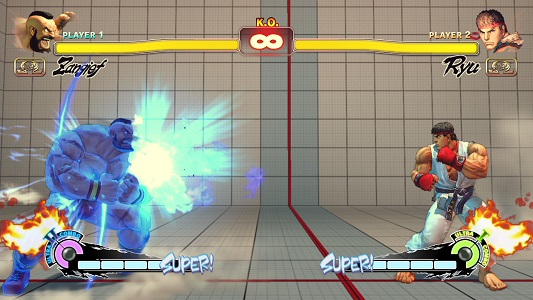
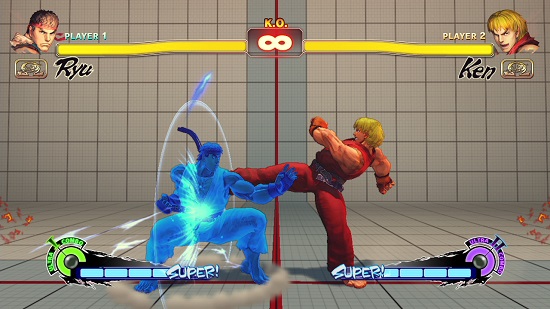
    I touched upon this in my blog about the many parallels between Street Fighter and Monster Hunter, but there’s an incredibly clever bond in the Street Fighter series between the in-game narrative context and the psychological experience players have when at the helm against a human opponent. On a psychological level, Street Fighter matches are incredibly similar to the experience of actually engaging in a martial arts bout, and I’m confident that anyone who’s partaken in both will agree. Just as Ryu and Ken would actually have to read and manipulate one another’s psychology, so too do the players. Moreover, the special moves in the game mimic the actual experience of practicing specialized martial arts techniques that require precise execution in order to be effective. It’s simple and it’s brilliant: The narrative depicts two people having a fight; The ludo requires that two people have a fight.
     
  6. Dragon’s Dogma – The Ur-Dragon.

    Dragon’s Dogma is in fact full of unique examples of ludonarrative resonance, from the way its Pawn Sharing mechanic is explained narratively to the story’s cyclical nature which coincides with subsequent playthroughs. But to me the most interesting example, perhaps on this entire list, comes in the crusty, purply form of the Ur-Dragon.

    For the sake of this topic, I will talk only about the online version of the Ur-Dragon. For the uninitiated, this battle in the game differs from all others in that it is an asynchronously cooperative experience that incorporates all other online Dragon’s Dogma players. Narratively, as the Ur-Dragon phases into the dimension of a given Arisen, so too does he manifest in that corresponding player’s game, presenting a boss battle. All damage done by the player to the Dragon in a ten-minute span is tallied up, and the Dragon flies off, phasing into some other dimension (i.e., another player’s game) to face another Arisen, whose contributed damage will in turn be added to a grand total.

    Once again, the ludo aspect and narrative aspect are in resonance, which, yes, is probably an easier thing to achieve when the story deals with magical, mysterious beings since you can explain away crazy gameplay mechanics with an equally crazy narrative and no one will call foul. But the game’s acknowledgement of the existence of many concurrent Arisens spanning an equal number of dimensions means that its narrative takes into account the fact that multiple people bought Dragon’s Dogma. That, after all, is the only way that the Ur Dragon story makes sense. In fact, the more people who bought and played the game, the more damage is done more quickly to the Ur-Dragon.

    This, in my mind, goes beyond ludonarrative resonance into something I’ve never even heard of before—like, I don’t know…resonance between the game’s market success and its narrative. Weird, right? For the record, more than 420 “generations” of Ur-Dragon have lived since the game’s release in spring of 2012. That’s a whole lotta asynchronous cooperation.


    ↑ Rare footage of the online Ur-Dragon actually dead!

  7. Dead Rising – Doin’ it your way in the zombie apocalypse.
    Dude, you could write a whole essay on how Dead Rising is relevant here. In fact, I did. In short, it’s a game with a setting, but it’s “about” whatever you say it is. We love Dead Rising ‘round here. 

I know I say this at the end of every one of these mammoth posts, but phew! I, for one, am exhausted. So now it’s your turn! I want to hear your examples of times when a game’s “ludo” and “narrative” components are in glorious harmony. It could be big, integral things, or little bitty things like the way Mega Man’s charge buster is executed by holding and releasing a button as though holding and releasing the shot itself—I think that counts!

Or if you don’t have any examples but just have some feedback on this here post, I welcome that as well! Thanks for readin’! <3

EN

Tigerstripe Zamtrios screenshots from Monster Hunter 4 Ultimate’s latest event demo

Oct 04, 2014 // Yuri Araujo

Hey, you remember the Zamtrios , right? That’s the awesome new shark-looking monster in  Monster Hunter 4 Ultimate . Anyways, just wanted to give you guys a heads-up that one of our quests in our event demos is to hunt its subspecies, the Tigerstripe Zamtrios!

I don’t wanna spoil too much of the this fight – since, you know, it’ll give you a clear advantage – but I will just say this: unlike the regular Zamtrios, this guy switches modes (skinny and blown-up) pretty much any time at will!

 
Oh, and paralysis balls are a thing!


If you’ve listened to this week’s Capcom Unity podcast you should know we’re headed to New York Comic Con, where you can try out this quest. But in the meantime, you can hear from European fans what they thought of the demo – video courtesy of my UK counterpart Jake:

EN

Capcom Unity Official Podcast: Episode 15

Oct 03, 2014 // GregaMan

Episode 15 of our biweekly podcast is live, and this one’s all about  Monster Hunter!  With ten years of history already behind it, the series is stronger than ever with a very bright future. Yuri, Brett, and I took some time to reflect on how the series all began, how it’s evolved over the last decade, and where it’s headed.

Download here or via iTunes.

Community Question: Where do you see Monster Hunter in  another ten years? Let us know in the comments or in the Episode 15 discussion thread .

EN

Ace Attorney 101 with Phoenix Wright and Maya Fey

Oct 03, 2014 // Janet Hsu

Welcome one and all, and an especially big welcome to all newcomers to the Ace Attorney series! Maybe this is your first time ever looking at the gameplay elements, or maybe you’re a veteran of our recent crossover with a certain Professor Hershel Layton and his number one disciple Luke Triton – regardless of your level of familiarity with how to play these games, Phoenix and Maya are here to give you a crash course!

Take it away, you two!

——–

Phoenix: It sounds like someone’s been playing too much “Professor Layton vs. Phoenix Wright: Ace Attorney” recently.

Maya: Speak for yourself! I actually enjoyed being in the presence of a real English gentleman.

Phoenix: He’s a real something, alright.

Maya: Hey, don’t sourpuss at me just because he kept showing you up, Nick.

Phoenix: …………

Maya: But it’s good to be home! We’ve been away for so long, I’d almost forgotten how to play our own game!

Phoenix: “Our game”…?

Maya: You know! The original “Phoenix Wright: Ace Attorney” trilogy, duh!

Phoenix: Oh, right… Duh.

■ Trial Sections  ■

Testimonies and Cross-Examinations

Phoenix: Why is it every witness I face is always a huge liar?

Maya: Not all of them! Remember the one time when—

Phoenix: I know, I know. Some of them just misremember things.

Maya: At least the inconsistencies in their testimonies usually help us get to the bottom of things.

Phoenix: Finding contradictions between a witness’s words and the evidence is the only weapon we have in court.

Maya: I don’t know, Nick. I can think of at least one other thing you use more often than that.

Phoenix: …Dare I ask what…?

Maya: Your super-human ability to bluff your way through everything!

Phoenix: Hey! I back up my claims with evidence!

Maya: That’s assuming you know what you’re talking about when you do, you mean.

Phoenix: I always know what I’m talking about! Here, I’ll show you!

Maya: NO, NICK!!! DON’T!!!

Maya: Way to present your Attorney’s Badge.

Phoenix: Whoops. Umm… slip of the finger…?

Getting a Game Over

Phoenix: What are those exclamation points and that gauge in the upper right corner supposed to mean again?

Maya: His Honor’s level of annoyance at you?

Phoenix: Then shouldn’t I want to have as little of them as possible?

Maya: Just kidding. It’s actually how much patience he has left for your incompetency.

Phoenix: I’d rather you phrased it as my remaining credibility…

Maya: Same diff. It all boils down to a “game over” when you run out.

■ Investigations  ■

Basic Investigation Screen

Maya: All of these commands are pretty self-explanatory, huh?

Phoenix: Yeah, but let’s go over them anyway. The Investigation segments were totally different during our adventure in Labyrinthia, after all.

Talk

Maya: Can’t say I don’t enjoy this part of our investigations!

Phoenix: Oh?

Maya: This is where we get to talk with witnesses and other persons of interest to find more info for our case!

Phoenix: Yeah, although there is such a thing as too much info.

Maya: Some people sure do like to talk a lot, don’t they?

Phoenix: …………

Phoenix: …I can think of at least one windy old ba–

Maya: Nick! Don’t be so mean! Don’t you know you have to respect your elders?

Phoenix: I’ll leave her to you next time, then.

Maya: Right! I’ll take care of the windy old bag!

Phoenix: What was that about respecting your elders again…?

Maya: I never said anything about me — that rule only applies to YOU, silly!

Examine

Maya: Can’t say I don’t enjoy this part of our investigations, either!

Phoenix: What part of our investigations do you NOT enjoy?

Maya: Well, I especially enjoy this part because this is where we get to “borrow” stuff from the crime scene!

Phoenix: “Highly illegally remove”, you mean…

Maya: Can you really complain when it serves our case?

Phoenix: …I… I guess not.

Maya: Screens like this that have the little left/right arrows on the bottom are twice as fun because it means we can pan to the other side and back!

Phoenix: Oh, perfect. That makes for twice the number of things I have to potentially stop you from removing.

Maya: That’s “BORROWING”, Nick!

Move

Maya: Moving between locations is instantaneous, but sometimes it’s good to make a map for reference.

Phoenix: Oh, right. Every location is only linked with a few other locations, so sometimes you have to move a couple of times in a row to get to where you want to go.

Maya: That’s what I like to call “full-on immersion”! It’s like you’re really there expending energy moving from place to place!

Phoenix: …I don’t think that was meant to be a feature, Maya…

Present

Phoenix: Presenting witnesses with evidence is one way to get them to open up about things, or even just jog their memories.

Maya: And I know just the thing you always present first!

Phoenix: Yup, I make it a point to show this bad boy off whenever I can.

Maya: Too bad no one ever has anything good to say about it.

Phoenix: Yeah, well! We’ll see what they have to say when I present people with their own profiles starting with the second game!

Maya: Yeah! Like… HERE! What do you have to say about your silly ol’ mug, Nick?!

Phoenix: …Th-Thanks for the demonstration, Maya. *sigh*

Magatama and Psyche-Locks

Off in the distance: Nnghoooooooooooooh!

Maya: What was that?

Phoenix: E-Edgeworth…?

Maya: Are you sure? Because that sounded like the distressed wail of a thoroughly traumatized man.

Phoenix: That’s… probably not far off the mark…

Breaking Psyche-Locks

Maya: Hey! Why is Larry trying to hide what he knows about the night of the crime from you, Nick? I thought you guys were best buds!

Phoenix: Probably because he realized he made some mortifying mistake and is trying to cover it up.

Maya: …That sounds about right… Well, what are you waiting for! Present my Magatama and let’s pry the truth out of him already!

Maya: All right! Now, let’s see what he has to say for himself!

Phoenix: He just had to be slacking off, didn’t he?

Maya: That’s not much of a surprise, though, is it?

Phoenix: No… Well, guess I’d better hurry up and present the right evidence… Let’s see here… Just gonna scroll over to the piece I need and… TAKE THAT!

Maya: Way to shove the evidence in his face, Nick!

Phoenix: It wasn’t that hard to figure Larry out. And after I break that other one with some more evidence… There we go…!

Forensics/Scientific Investigation

From the front room: *knock, knock*

Maya: Oh! There’s someone at the door! I’ll get it!

Ema: *bursts into the office* Hi, Mr. Wright! I heard you were going to talk about forensics today and I thought I’d come and offer my expert advice!

Maya: Um, Nick… Who is she…?

Phoenix: Remember that case I took on when you went back home?

Maya: Yeah…

Phoenix: Well, Ema here was my client.

Maya: Oh! So YOU’RE Ema Skye! Glad to finally meet you!

Ema: It’s nice to meet you, too! Now, let’s get down to explaining things, scientifically!

Ema: Now, this is just one of the many forensics tests I can help you with. It’s an oldie but goodie: testing for trace blood with Luminol! All you have to do is pull out the testing fluid while examining your surroundings and spray away!

Maya: Like this?

Ema: Wow! It looks like you found some bloodstains already, Maya! Just keep spraying until you get a strong enough of a reaction for us to take a good look.

Maya: You got it! This is actually a ton of fun! But why is there blood on Mr. Edgeworth’s office floor?

Phoenix: …I’m not sure anyone actually wants to know the answer to that…

Ema: Okay, that’s enough. Now we can zoom in for a closer look.

Ema: And that’s all there is to it! Isn’t scientific investigation amazing?!

Maya: Yeah! And you said there are other tests to play around with?

Ema: Yup! New clues are always waiting to be discovered, scientifically! Well, that was fun, but I’d better get going. *walks into the other room and runs into the delivery boy who was about to knock*

Ema: Ouch!

Delivery Boy: Special delivery for Ms. Maya Fey.

Ema: Maya! It’s for you! See you, Mr. Wright!

Maya: Huh? But I’m not expecting anything…

Phoenix: You’d better go sign for it.

Maya: Yeah. *goes into the front room*

Maya: *in the distance* Why’s the sender’s name “H. L.”…? And I never ordered anything from London…

Phoenix: Um…

Maya: Oh, wow! *pops back into the room* Sorry, Nick, but something came up.

Phoenix: I knew it…

Maya: What’s with that look! I thought you’d be happy for me! After all, it’s the duty of every gentleman to ensure the wellbeing of a lady, Sir Blue Knight!

Phoenix: …………*sigh* I KNEW I never should’ve accepted that invitation from the Legal League of Attorneys.

——–

Thanks, guys! I knew I could count on you! And aww, cheer up, Pheonix! Maya’ll be back to helping you solve cases before you know it!

One thing Phoenix and Maya didn’t get around to mentioning is that you can actually yell “Objection!”, “Hold it!”, and “Take that!” if you want when prompted by a mic icon on the lower screen.

Hold down the Y Button and shout to your heart’s content!

In addition, here are a few other tips for newcomers to the series:

1) Suspend your disbelief

I once had “Phoenix Wright: Ace Attorney – Dual Destinies” recommended to me by an online site’s newsletter, saying that — and I swear this is true — it’s an “ACCURATE lawyer simulator”… which it isn’t by any stretch of the imagination. So if you’re an actual lawyer, or someone who was hoping for a more serious outing, I highly recommend you suspend your disbelief. All of it. Trust me; you’ll have a ton more fun playing if you just go with the insanity. As Mr. Takumi said : “We didn’t apply any … real life ‘rules’ to ‘Phoenix Wright: Ace Attorney’. Not one.”

2) Press every statement

When you’re playing a Trial section and you seem stuck, try pressing every statement. Sometimes, the statements that seem the least relevant are the ones that reveal the most.

3) Answer only what’s being asked

A good number of you will inevitably figure some things out in advance of when you’re supposed to. Fortunately, you can avoid the frustration of being too smart for the game by focusing on only what is being asked and looking for the piece of evidence that addresses that specific issue.

4) Examine everything, twice even!

Some locations and objects require more than one look-see, so if you seem stuck in your investigation, try re-examining places you’ve been to and re-interviewing witnesses with any new pieces of evidence you happened to have come across.

5) Groan at the puns

If you’re not groaning at the punny names, you’re not playing it right, is what I like to say. And as terrible as some of them are, remember that you are not getting any worse of an experience than a Japanese player. What that says about how puntastic the names were originally, however, is a different matter altogether…

And above all: remember to HAVE FUN!

Next week, I’ll be back with part two of Mr. Takumi’s dev blog. Will Mr. Takumi make his deadline? Catch up on part one here , and I’ll see you next week! In the meantime, I’m curious if you veterans out there have any tips for new players, or any non-spoilerific stories of when you first started playing you’d like to share! Please leave them in the comments section if you do!

Until then!

Catch up on previous blog entries here!

EN

Dead Rising 3 hits Loot Crate in October

Oct 03, 2014 // GregaMan

My Tweet Deck’s already been blowing up about our new partnership with Loot Crate , so clearly some of you have already heard the news. But if you haven’t—we’ve partnered with Loot Crate!

Loot Crate is a “Blind-Box-of-the-Month” subscription service that sends subscribers monthly boxes of geeky collectibles, from t-shirts to figures, to books—even exclusive stuff you can’t get anywhere else. A recent Loot Crate contained an exclusive Guardians of the Galaxy Groot Pop! Figure that is already getting top dollar on eBay.

Each crate is assembled around a certain theme, and October’s theme, naturally, is “Fear”—seems like a perfect time for Capcom to come on board! Appropriately enough, our first item is an iconic collectible from the zombie-ridden Dead Rising 3. Without revealing exactly what it is, I’ll just say that the item is highly detailed, functional, and is actually based on in-game 3D model data for maximum accuracy.

To get it, you’ll have to subscribe before the October deadline is up in the middle of the month. Luckily, you can get 10% off any subscription plan by entering the promo code “CAPCOM” when you sign up .  Sooo do that! We’ll have a follow-up post with more details on the item after the October Loot Crate has been revealed and shipped, but bear in mind that this October item is just the first in a whole series of amazing items we have planned, spanning a variety of Capcom series and characters. Keep an eye out for more!
EN

Rathalos and Rathian cosplay and fan art from RathaWeek

Oct 03, 2014 // Yuri Araujo

Last week we celebrated  Monster Hunter ‘s poster boy and girl with a number of Rathalos and Rathian videos, weapon and armor renders, fan art, cosplay, etc.

If you missed any of it, I encourage you to check out (and “Like”) the  Monster Hunter Facebook page and look for the updates with the #RathaWeek tag. And just to give you a little taste, here are some of my favorite fan art and cosplay pieces.

Starting with the header image… that was actually an old piece by a good friend of mine, Beto Lima , and it’s from the Monster Hunter  (PS2) era!

Oh, it bears reminding that, while I got most of the entries here from the Facebook albums, I also picked some pieces from other albums and places on the internet. All in honor of the royal couple Rathalos and Rathian. =)

Black and White (Silver?) Rathalos by Garrett H.

Matching Rathian and Rathalos shirts by Lady Clarick


Rathian icon tattoo by Deanna S.

Rathian trio by Chelswa M.

Again, you can find all other #RathaWeek fan art pieces on our  Facebook album or, if you prefer, in this  Capcom Unity gallery .

Now onto cosplay! Who doesn’t love a good cosplay set, am I right? Here’s a quick sample:

Rathalos armor by Ae Ri

Rathian armor by Enrico Gabbaneli

Rathian gunner and Rathalos blademaster by Matt Evans and Amy Bennett (classic duo!)

Triple Rathalos! by Neko Stocking

All very neat cosplay pieces… but there’s more! So you should really check out the  Facebook album or this here  Capcom Unity gallery to see tons more Rathalos and Rathian cosplay.
Hey, if we missed your work (i.e., it’s not on any of the albums or galleries), feel free to drop a comment below with a link and we’ll make sure to add it to our channels. =)

Anyways, I think #RathaWeek was quite amazing. We got to see tons of great work and share fond memories of this flying Wyvern couple. Btw, I’m still collecting all the text form fan love (memories, poetry, etc.) so expect a post about that soon.

EN

Throwback Thursdays – Viewtiful Joe Red Hot Rumble (GameCube)

Oct 02, 2014 // GregaMan

We had so much fun throwing it back with  Viewtiful Joe 2  last week, we thought we’d continue our viewtiful journey this week with  Viewtiful Joe Red Hot Rumble,  Clover Studio’s take on the arena brawling genre. We’ll be playing the GameCube version (as opposed to PSP), and you can catch the madness on our Twitch channel at 4pm PT today.

EN

USFIV Available on PS Now for PS3 and PS4

Oct 01, 2014 // ComboFiend

Good news North American PS Now subscribers! USFIV is now available to play through the PS Now Open Beta on both PS4 and PS3. For those who might not be aware, PS Now allows you to stream games directly onto your console. So head over to PS blog for more information and stream USFIV now!  
EN

Strider 2 coming to North American PSN

Oct 01, 2014 // GregaMan

Good news, guys. The elusive PlayStation One classic action platformer  Strider 2 , which includes a port of  the original  Strider for the arcade, is finally coming to the North American PSN Store next Tuesday, October 7th!  You can, and indeed should  play this jam on your PlayStation 3, PSP, or PS Vita. Spread the word!

EN

Dungeons & Dragons: Chronicles of Mystara free on PS+ in October

Oct 01, 2014 // GregaMan

Sony has just announced PlayStation Plus’s October lineup , and I’m happy to report that it includes Dungeons & Dragons: Chronicles of Mystara (PS3),   the collection containing two arcade beat-’em-up classics, Dungeons & Dragons: Tower of Doom and  Dungeons & Dragons: Shadow Over Mystara. 

Both games feature drop-in, drop-out online coop, leaderboards, customizable rules, and other extras, and set the bar for beat-’em-ups for many years. This offer begins October 7th in North America, October 8th in Europe. Don’t miss out!

EN

Footage of BSAA outfits in Resident Evil

Oct 01, 2014 // Minish Capcom

As mentioned last week, Chris and Jill’s BSAA outfits are going to be part of next year’s Resident Evil. Here’s a quick trailer showing them in action…

Sadly, Chris will not be able to uppercut any boulders, armoirs or other physical objects in the game. He must use the proper keys and items to proceed. Sorry Chris.

These outfits join us thanks to your efforts in the Raccoon City contagion . While that may be wrapped up, residentevil.net has a brand new interactive timeline that needs your personal tales of horror and woe! Or, uh, things you like about the games… that might be better.