Search Results for: "playstation-now"

EN

Classic Capcom games for cheap this week on iTunes

Nov 26, 2014 // Yuri Araujo

We have more discounts dashing your way; this time, we’re offering great deals on some of our iOS titles!
Check ’em out:

Mega Man X $4.99 $0.99
Ace Attorney Trilogy HD $16.99 $8.99
Ace Attorney Dual Destinies $14.99 $9.99

Now remember that both Ace Attorney  games offer the first case for free, but the prices listed above are for the all main cases – and if you consider that  Ace Attorney Trilogy HD is actually the THREE  games in one, that makes it quite the bargain!

This deal is in effect until  Monday Dec. 1st .

EN

Deals with Gold slashes prices of sensational Capcom games on Xbox

Nov 25, 2014 // Yuri Araujo

If you’re looking to save on high-quality Capcom action titles on the digital space, then look no further that Xbox’s Deals with Gold this week, featuring…

Resident Evil 4 (Xbox 360) $19.99  $6.49
DMC HD Collection 
(Xbox 360) $29.99   $9.99
DmC Devil May Cry 
(Xbox 360)  $29.99   $9.99
Strider 
(Xbox 360)  $14.99   $7.49

Strider (Xbox One)  $14.99   $7.49

And one more:  Ultra Street Fighter IV (add-on) is going for just  $9.99 for everyone as part of an early Black Friday deal. And with Patch 1.04 on the horizon, this is quite the steal!

These deals are live until Monday Dec 1st but you should really get them now . =)

EN

Patch 1.04 Content Information

Nov 25, 2014 // ComboFiend

If you thought our support for USFIV for was going to stop anytime soon, let me be the first to tell you that you’re sadly mistaken. Shortly after Capcom Cup, we’ll be releasing a patch full of all the things that will make your USFIV experience that much more entertaining: Edition Select online, New training mode trials, Omega Mode (online and offline) and compatibility files for the Wild costumes.  

Continue on for a more detailed breakdown of what’s to be included.


Version Number

The game will now display “Version 1.04” in the options menu after the update.

Edition Select Online

Street Fighter IV Now players will be able to test out their favorite dream matches against all challengers across the globe. For the uninitiated, Edition Select allows players to pick any version of their favorite character from any version of SFIV that they’ve been in, balance and all. We’ve also added icons per version so that players will be able to adjust their strategies that much quicker.

Which character is the strongest? Pick your best fighter and go online* to find out. I’m sure an army of Vanilla SFIV Sagats and AE Yuns will be waiting for you.

*You can now turn Edition Select ON/OFF in Custom Match search settings or when creating Custom Lobbies for Endless, Team, Tournament and Online training modes.  Edition select is only available for unranked matches only.


New Training Mode Trials

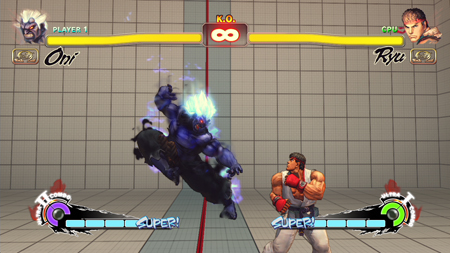
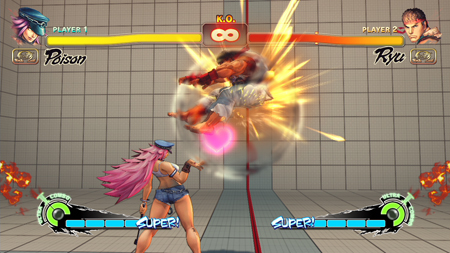
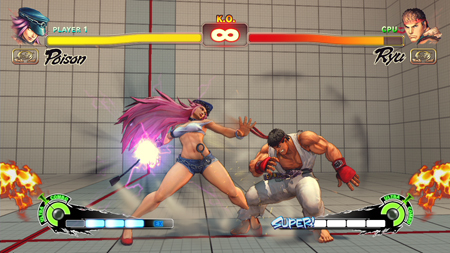
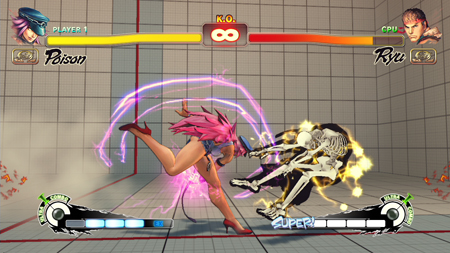
Take your game to the next level as you try to complete all the fun and challenging trials for Yun, Yang, Oni, Evil Ryu, Hugo, Elena, Decapre, Poison and Rolento! In addition to trails for these characters, you’ll also find updates for characters whose USFIV battle balance changes made a few of their previous trials no longer possible. Once you master these trials, take your newfound skills online and style on the competition.


Omega Mode Online

Are you ready to experience your favorite SFIV characters re-imagined in the all new Omega Mode*? Every character has been given new specials, as well as adjustments on their normal attacks to make them that much more fun and hype. Once you get a feel for them, take them for a spin online** and see what others have cooked up with their favorite characters.

*Omega Mode is not actually its own mode, but an edition of the characters located in Edition select.

**Please take note that Omega Mode places a larger emphasis on fun, rather than balance, and therefore can only be used in unranked matches.


Updated Battle Balance

We’ve heard your requests throughout the year and have made some changes to the cast, with the ultimate goal of making everyone viable *cough DeeJay cough cough*. 


Bug Fixes

Both the Vega and Yun bugs will addressed and fixed in this patch. 


Compatibility files for the Wild costumes

Compatibility files will also be added allowing players to be able to use the Wild costumes immediately after purchase. Speaking of the wild costumes, here’s some screens:

ADON

CHUN-LI

DECAPRE

DUDLEY

E.HONDA

GEN

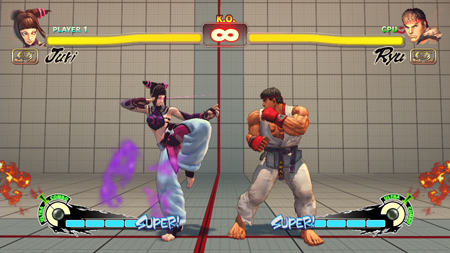
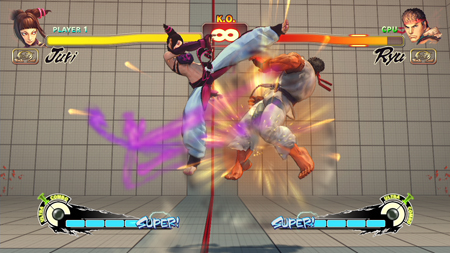
JURI

KEN

ROLENTO

RYU

SAGAT

So there you have it, the contents of patch 1.04. Our support for USFIV is still going strong, so I’ll be back in the future with a release date, battle balance notes and more information on the patch if anything new surfaces.

EN

Monster Hunter Mondays 11/24: MH3U live at 3pm PT

Nov 24, 2014 // Yuri Araujo

Hunting fearsome monsters today at 3pm PT on  twitch.tv/capcomunity . Come watch or even join us on  Help D Lobby 10 (Monster Hunter 3 Ultimate)… and let me know if you have any monster requests. I’ll try my best to accommodate =)

EN

Capcom Unity Official Podcast: Episode 18

Nov 22, 2014 // GregaMan

Another podcast is hot off the mixer, and this one’s all about what we here at Team Unity do! Spurred directly by recent comments and forum posts, Brett, Yuri, and I lay down what it means to be a community manager at Capcom, and what it means to give  community feedback. 

Listen here or through iTunes , and don’t forget to rate and/or review us!

Community question: What would you like to hear more of on the podcast in the future? 

One star commenter will receive this incredibly rare illustration of Ryu, SIGNED by Capcom legendary artist Daigo Ikeno. Holy cow. 

EN

Localization and Ace Attorney

Nov 21, 2014 // Janet Hsu

Question: If you were going to localize a comical game with a lot of Japanese humor where you play as a lawyer and you have to defend some pretty zany characters, how would you do it: 1) direct, literal translation from the Japanese 2) some localization — maybe change some names and some of the material 3) total localization — including making changes to some of the graphics if you have to — to the point where it’s no longer recognizable that this game is from Japan.

That was just one of the questions I was asked at my interview for this job that I have now held for 9 full years, and one that I have asked myself every time I sit down to localize any game, but especially an Ace Attorney. My answer then is still the answer I would give today — it would largely depend on the story and how it plays out — but since then, I have added one more general criteria: it also depends on how much the localization would contribute to the overall enjoyment of the game, because crafting a solid yet nuanced localization is no less important or daunting of a job as a level designer crafting a stage for you to fight your way through. Given how complex games have become with HD graphics and elaborate voice overs, localization touches every aspect of a game, from its story to its user interface to its audio tracks and its visual design, which is all tied together through its programming. I covered some of the technical details in my “ making of Dual Destinies ” blogs, so today, I thought I’d cover some of the more theoretical and academic aspects and concepts of localization. For the sake of this discussion, I’m very broadly defining localization as “any tweaks or changes made to the source material and/or the process by which source material is adapted for the purpose of making it more relatable to a target audience”.

I joined Capcom Japan’s fledgling localization team in mid-November, 2005. By then, the first Ace Attorney had already been localized. Because of the time zone difference trick in the first episode, there was a need to decide on where the game was going to take place. Thus, the localization team of PW:AA had already picked the direction of the localization for me — total localization. And while that decision has left me with a teeny-weeny dilemma for every game after that, I still feel that moving the setting to AU Los Angeles was the right choice to make because I think it helped make the characters and their dialogue more relatable to a wider audience. But not only did it make them more relatable, it also made it easier to convey the same emotional experience that a Japanese player has while playing Gyakuten Saiban to a Western player playing Ace Attorney. I’ll go into more depth about what I mean by “emotional experience” in a bit.

For now, let’s take a step back and start with something that I think should be pretty obvious: No translation can ever be 100% the same as the original – by the very nature of converting one thing into another, all translations are the product of someone’s interpretation. In fact, I encourage you to try it out for yourself with this little thought experiment.

How many different ways can you summarize what is about to happen to Phoenix in this scene?

Out of everything you came up with, which ones sound like something a criminal would say? Or how about a soccer mom? Now, take the variation that sounds most like how you would say it, and write another version that sounds like how your best friend would say it. Even though you and your friend are probably of the same background and culture, you might still say things slightly differently, right? But are either phrasing wrong? Do you think the way you phrased it would be the same as how the original artist would have phrased it?

In essence, translating between languages is like that experiment – translators take a shared experience in another language and try to put it into words another person who speaks a different language will understand, but because of differences in the way people perceive things and their life experiences, different people will phrase things in different ways. That’s not to say that inaccurate translations are acceptable, because translations that convey completely different information are never acceptable; it’s just that there are many ways to express the exact same thing in equally accurate ways.

So if even translations themselves are not without translator bias (and even some reader bias when the translated text is read and digested in the reader’s mind), how can a translation, let alone a localization, without any interpretation possibly exist? Which leads me to the heart of the matter: if all translations already involve some degree of interpretation, then what is localization? What is the point of it?

Remember when I said earlier that inaccurate translations are never acceptable? Well, that’s one of the big ways in which translations and localizations differ. Translations are not concerned with how the reader will feel or react to the information. The primary objective of a good translation is accuracy. However, as a piece of entertainment, the stories in games are primarily concerned with the feelings and reactions, or the “emotional experience”, of the player in its original language, and therefore, any localization must strike a balance between what is “textually accurate” and what is what I call “emotionally accurate”. Let’s take an easy example from last-last week’s blog .

Mmm… Grilled chicken skin on sticks…

Recall the bit about grilled chicken skins on skewers (torikawa/ã¨ã‚Šã‹ã‚) and how Mr. Takumi wrote about it as if it was the most normal thing in the world. Most Westerners would balk at me if I offered them grilled chicken skin and either think “Eww, gross!” or “Okay… Not something I would eat but…” But to Japanese people, it really is as every-day as it sounds in that segment. So even though I translated the blog more literally by preserving the yakitori reference, did it give you the reader the same emotional experience as a Japanese reader? Probably not. In other words, that blog was translated to be “textually accurate” regardless of how “emotionally inaccurate” some parts of it may have been to the reader.

“But what about games like the Persona series?!” I can hear some of you already asking. While I think they do a wonderful job of localizing the series, I personally feel that because their primary audience is people who are already more familiar with Japanese school life than the average Westerner, the localization is closer to the translation end of the scale than the full-on localization end. The degree to which they localized the setting and text is probably something the Persona localization team thought long and hard about before they decided on their current direction (because the very first Persona was a very different beast !). Still, as someone who has played Persona games in Japanese, even I can’t say I feel super nostalgic at the same points as my Japanese friends because I didn’t go to school in Japan — even if I can intellectually comprehend why those things would feel nostalgic to them.

Case in point: What is this?

If you answered, “A kindergartener’s name badge!” then congratulations! You know a thing or two about Japanese schools! If you answered, “Oh wow, that reminds me of kindergarten!” then congratulations! You probably went to one in Japan and are feeling nostalgic now! If you answered, “ Tofu on fire !” then congratulations! You probably have no idea what this thing is and are probably not Japanese. As these articles point out, Japanese netizens had a good laugh at the description “tofu on fire” for this simple emoji that they took for granted to mean a kindergartener’s tulip-shaped name badge, with some people expressing nostalgia at just seeing a picture of one.

Funny enough, in that emoji link, you can see that Microsoft took the liberty of localizing the emoji into something a Westerner would very easily identify as a name badge! (For some bonus background on why a lot of your smartphone’s emoji are super-Japanese, check out this nifty article .) And what about that chicken skin example from earlier? If I had “localized” that into a food like pork rinds/pork scratching or maybe even fried calamari, Westerners would’ve probably had a similar, if not the same range of reactions to it as the Japanese audience to grilled chicken skins.

So now comes the big question: Who cares? Why bother to make the overseas versions “emotionally accurate” at all? Well, if you are a player who doesn’t care about experiencing the game in the same way as a Japanese player, then I suppose a nuanced localization isn’t as important to you. But for most people, I think there are a number of big benefits to be found in a more full-on localization, including broader appeal, immersion, a sense of enjoying the game in the way the creator intended for it to be enjoyed, and a more meaningful experience overall.

First up: broader appeal. I don’t think I need to say much more than “What creator wouldn’t want as many people as possible to enjoy their game?” and for that to happen, the game has to be something people can just relax and play for fun. For fans, broad appeal is a good thing because that means it will be easier to convince others to get into your favorite games and play, thereby creating more fans with whom you can talk to.

Some of you may not believe me when I say this, but when I sit down to localize a game, I really do think of all of you fans — a range of people that goes from purists to expats living in Japan to people in their 30’s and 40’s living in anywhere but Japan with kids who are asking them to play AA games on their iPhone with them. Yes, that is quite a large variety of fans, which is why emotional accuracy will pretty much always trump textual accuracy in determining whether something needs to be localized or not for broader appeal. Broader appeal also grants the benefit of allowing people to feel more fully immersed in the game because the game world will seem more relatable to them.

With each new entry into the series, I’ve had to do some world building in my head to keep things consistent. One thing you learn as a writer is that internal consistency in your world is a very important factor in how cohesive and believable it is. So even though in the real world, spirit channeling is not real, it certainly fells real enough in the Gyakuten Saiban/Ace Attorney worlds by the time you’re playing the third game to have a real emotional impact because the rules for that aspect has remained constant all throughout the series.

Having said that, I’ve never really had the chance to talk at length about the localized version until now, but I realized very quickly after Dual Destinies that I needed to address the issue of immersion, which is why I wrote about it a few weeks ago. To me, the world of Ace Attorney is as much of a game mechanic as yelling “Objection!” into the microphone for this series. If the lore behind the world was not being properly conveyed and was interfering with people’s enjoyment of the story, then I felt I had to address it like any other gameplay flaw in any other game. However, with AA being the lighthearted series that it is, there will probably never be a chance for me to directly state the exact conditions of the alternate universe that I’ve been working off of in the games themselves. Still, a number of things can only be possible in a world where Japanese people were allowed to own land because the California Alien Land Law of 1913 was never passed… Or I guess if Japan took over America or if America lost WWII, but why does everyone jump to such negative thoughts when an alternate universe can come from the alteration of any factor you choose, including the negation of discrimination…? Which leads me to another thought: I wonder if people who start playing Ace Attorney after they’ve seen the movie version of Big Hero 6 will have an easier time accepting Japanifornia simply because they’ve seen something else that features a similar mash-up of cultures…?

Anyway!

Another benefit to a good localization is that it will be truer to the intentions of the original creators than a strict translation by allowing a Western player to be entertained by it in the same way the creators intended their Japanese players to be entertained by the original – you’re laughing at the same points, and crying your eyes out at the same points, too.

Nothing is worse than going to a Japanese movie theater with a group of Japanese friends and being the only person to laugh at a joke that no one else in the group (or the entire theater, for that matter) gets because the joke doesn’t translate at all, even with subtitles. Trust me, all expats have experienced this at one point or another, and it makes me a little sad sometimes at just how much my Japanese friends are missing out on when they watch a Hollywood film.

In fact, this feeling of “missing out” is something Japanese developers have come to realize over time as they play games localized into Japanese. Compared to Japanese to English localization, English to Japanese localization is still in its infancy, and it shows at times with disastrous results. Since they have come to experience what bad localizations can do to a player’s sense of immersion, many Japanese game creators have started treating localization more seriously than in the past and have been encouraging less literal translations of their games in favor of localizations that speak to the target audience and provides them with the same experience as the original. To me, this makes localized games and dubbed movies unique when compared to, say, subtitled movies because we really can re-create the full experience through localization.

Speaking of the creator’s intentions, creators are also generally not actively trying to offend people, so when something that is culturally offensive in the target audience’s country is left unlocalized, it can actually be a disservice to the original game, in my opinion. But even then, a balance must be struck. As an example, there was some debate on the localization team of Apollo Justice: Ace Attorney over the use of the word “panties” to describe Trucy’s magical bloomers. On one side were the people who felt that it was socially and culturally inappropriate from an American point of view to joke about panties in relation to an underage girl, regardless of the fact that the panties actually turn out to be a pair of massive, blue bloomers. On the other side were the people who felt that the joke would be lost if players knew from the get-go that they were looking for massive bloomers. The argument I made for emotional accuracy was that the Japanese version was purposely trying to lead a Japanese player into feeling unease at looking for a pair of what they might imagine to be “sexy lingerie”, so the payoff is the sense of relief that the player feels along with Apollo when he finally finds them and realizes they’re just a prop for her magic show. If I had gone along with the other side and allowed Trucy’s Magic Panties to be localized as Magic Pants, the only people who might have gotten the same experience as the Japanese might have been the British players because “pants” means “underpants” in British English.

Even still, there have been times when the original Japanese dialogue was simply too over the line. I’m speaking of course, of everyone’s favorite lecherous fake doctor — Director Hotti. To say nothing of what he says about Mia, which, while not necessarily taboo, was definitely skirting that line between a T and an M rating back in 2006, if you show Dr. Hotti a picture of Pearl in AA2, episode 2, he says some pretty average-sounding things on paper that become three text boxes of “Absolutely Not!” when combined with his grabby pervert animation.

From my original “What do we do???” file…

You’ll note that in suggestion C, I was thinking of changing the animations altogether to further reduce the ick factor, but unfortunately, the team was unable to change the animations for the localized version, so a text rewrite where Hotti’s lechery is directed at an adult nurse was the option we chose to go with. Does this count as “censorship”? Maybe. But again, creators are not out to offend their players either.

Japanese humor related to pedophilia and perversion is calibrated to a very different standard than the one we use in America. No one in Japan thinks that pedophilia is great or even OK. In fact, people are usually very upset whenever there is an article in the newspaper about a schoolchild who’s been abducted or found dead after being abducted. But how a culture chooses to deal with these sorts of issues is up to that culture, and in Japan, it’s still OK to have lecherous characters to laugh at in order to defuse some of the harshness of reality. But don’t ever mistake that for wide-spread approval because the perverted characters that hit on little girls are never the good guys and are always the butt of jokes or the bad guys or play some other negative role. In this case, the punchline and real knee-slapper part comes from Phoenix’s very strong reaction against Hotti, who serves as the “silly set-up character”. When thinking about it in the cultural context of Japanese society, the original Japanese is wildly perverted, but is still funny to a Japanese person. In America, the original would have just been sickening to a lot of people regardless of how the last line played out because it’s not something we joke about in the same way at all.

But let’s say I had wanted to use suggestions A or B, which are still super creepy to me even now, I would run into another one of the things that define the boundaries of decency in localizations: first-party requirements and the ESRB/PEGI rating boards.

It’s well known that Nintendo used to have extremely strict guidelines as to what games released in the West could and could not contain. Among these things are references to religious terminology, leading to SNES versions of FF4 and FF6 to rename “Holy” elemental to “Sacred Power” and “Pearl” respectively. Now, does this constitute censorship? Perhaps it would be considered that now, but back then, it was a part of the localization changes Nintendo required in an effort to make their games more palatable to a wider audience. As time went on and social values changed, Nintendo obviously relaxed their policies as well. The same goes for the ESRB for what they classify as T-rated content and M-rated content. Even still, we had to err on the side of caution in this case because as Ted Woolsey once said , “Any time you submitted a game to Nintendo you had to … submit the print out, the entire screen text, the ROMs and do all that stuff and give it to them and they’d spend time going through it. If you had something [inappropriate] like that, that stopped the submission you were in trouble. It was very expensive and you could miss your deadline to ship.” This is still true today.

So you see, localization is a messy and complicated process that involves the good judgment of not just the translators (who are often also the initial localizers because they localize the text as they go along) and editors and testers and game designers and programmers and artists and sound designers and first-party submission leads, but also first-party companies like Nintendo, Sony, and Microsoft, and ratings boards like the ESRB and PEGI.

Bringing all of the previous points together, ultimately, what a good localization does is provide the player with a more meaningful experience because the player will be fully immersed and focused on the story, not on being busy looking things up or merely intellectually understanding something. I generally play games in their original languages (English-language games in English and Japanese games in Japanese) but I will play exceptionally well-localized versions of my favorite games. Time and time again, the superb localizations of games like Super Paper Mario and Virtue’s Last Reward leave a greater impact on me, and I react more fully from the gut simply because those games have been fine-tuned to resonate with my own upbringing and by being in my native language.

In closing, I feel truly blessed to have heard so many positive responses to the localized world of Phoenix and company. I know full well that it’s unusual for people to like, let alone accept, such drastic changes to the source material, so I can only hope it’s because people consider the localization to be good.

There is just one more thought I’d like to leave you with. I think there is a very big difference between writing to people and writing for people. Writing “to” people simply means you are writing what people want to see. There’s nothing surprising or unexpected to be experienced for the reader, and it can sometimes lead to people feeling like the work is too “over-produced” or “fake”. On the other hand, writing “for” people means that you should write not to people’s expectations, but to what is truly entertaining, all the while, keeping what people like in the back of your mind. It’s a lot like picking out a present for a friend. You can simply give them something they’ve been saying they want for years, or you can think on your own about what that person likes and pick a present that you think they will treasure. Sure, the latter is a bit of a gamble, but the payoff for everyone when you picked well is bigger and more meaningful, isn’t it? In a sense, that is the essence of not just good localization, but of all game design. A good director of any aspect of a game will know their audience well enough to make the right decisions and pick that perfect present.

I suppose it’s only natural that game directors, art directors, sound directors, programming leads — these people who have been integral to game development for years — have built up a sort of “default” level of trust and respect from the players, and that, unfortunately, due to the uneven experiences with localizations Western players have had in the past, many people have taken on a stance of distrust and negativity towards localizations and localization teams as their default. But I’m asking you to please take a moment to reflect on the hard work that all localization teams have placed into Western releases, and especially your favorite Japanese games. There are many battles that take place behind the scenes that I can’t go into here, and I can only speak for games I’ve worked on, and yet, the stories I hear from friends who have worked on localizations of major franchises for other companies line up with my own. While I can’t deny the twists and turns the art of localization has taken to get to where we are now, I have seen with my own eyes over the past 9 years, just how big of a leap in quality Japanese to English localizations have made overall.

As for the future of this series in terms of its localization direction, I guess the final question that only you can answer for yourself is this: “Do you trust me as its localization director?”

 ———————-

Next time, I’ll be sharing some closing thoughts from Mr. Takumi as he wrapped up the production of Trials and Tribulations. I promise it won’t be as giant of a wall of text as this entry has been!

Until then!


Catch up on previous blog entries here!
EN

An Introduction to the USFIV Omega Edition Characters: Part V

Nov 21, 2014 // ComboFiend

Hey guys, Ayano-san is back yet again with more Omega Mode information. Check out the new stuff that’s been given to the SFIII fighters. 

Hey everyone, Tomoaki Ayano here!

Man, this year is just flying by! We’re already more than halfway through November, and Christmas decorations are going up all over town. What I’d really like from Santa this year is some time off to properly kick back and relax…

But until then, let’s keep the ball rolling with part five of the Ultra SFIV Omega Edition introductions. The SFIII crew is on the chopping block for this week, which means we’ll be covering Ibuki, Dudley, Makoto, Yun, Yang, Hugo, and Elena. Let’s see what’s in store for them in Omega Edition!


Ibuki

Kagenui: Throw a kunai at your opponent’s feet to stop them in their tracks.

Since Ibuki is a character that specializes in attacking on the ground using her command normal and target combos, I feel that Kagenui will give her another viable option for her ground-based attack game.

The EX version of Kagenui uses two bars of super meter and turns into Yami Shigure!

This was a major part of Ibuki’s 3 rd Strike arsenal, and it’s finally making a return in Omega Edition!

Ibuki has also received sweeping changes to her command normals, regular moves, and special moves, and her target combos have been changed up too.

My inspiration: More bang for your buck!


Dudley

Sway: We’ve changed Dudley’s Short Swing Blow into a follow-up move, and in return we’re giving him Sway and Sway Back. Sway is done with the light attack. He has upper-body invincibility while he’s posing.

The medium and fierce versions will give him Sway Back. It’s a much bigger Sway with throw invincibility! Press a punch button during Sway for a new move, Cutting Upper, or press punch during Sway Back for Short Swing Blow.

Pressing a kick button during Sway or Sway Back will give you Step In. It has projectile invincibility and is better than Ducking for really getting in there.

It’s not easy to tell from looking at the pictures, but we really wanted to emphasize Dudley’s boxing skills in Omega Edition, so we’ve added feint moves, which I think will make him more fun to play.

My inspiration: A very technical heavyweight champion!


Makoto

In Omega Edition, we really wanted Tanden Renki to be used more offensively, so Makoto can now do it with two or more bars of super meter! The startup time and duration will change depending on how much meter she has when she activates it.

While active, all of her special moves (with the exception of Karakusa) will be modified for offensive use, and even her basic movements will change!

Performing a Focus Attack during Tanden Renki will give her the Kumoharai, armor that protects her from damage and eliminates block and hit stun when receiving an attack. It’s a parry-like move similar to Ryu’s Hanagashi.

Isana: Makoto steps in and delivers a powerful headbutt. It doesn’t have a lot of reach but it can be used in combos. It breaks armor and is faster than Oroshi, so it should be useful for keeping your opponent in check.

For Omega, we wanted to make Makoto into a character who unleashes her true potential once she’s in Tanden Renki, like Hakan does when he’s oiled up. Her new offensive moves mean that she can be really scary once she starts to put the pressure on! Omega Makoto is one character that won’t be afraid of getting all up in her opponent’s business!

My inspiration: This homegirl is so angry, she’s turned beet-red.


Yun

Shukuchi Rimon Chochu: Press F, F, Punch for this unique quick elbow strike.

Although the commands make this move look like a command normal, it’s actually a special move and can be canceled into accordingly. This move works well with Yun’s Genei Jin super, and it should be fun integrating it into his combos.

During the EX version, press two punch buttons after it hits for Renkan Shoko.

It uses an extra bar of meter, but it’ll launch the opponent, leaving you set up to perform some prime follow-up attacks.

I feel like this move might become the basis of Yun’s combos and offense. His existing moves have changed as well, so you’ll have new ways to play whether you’re on the ground or in the air.

My inspiration: A freestyle kung fu artist!

Yang

Rengeki Tourouha

EX Tourouzan uses two bars of meter and on hit becomes a powerful multi-hit striking move! It deals a lot of damage and can be comboed into, making this a move you’ll definitely want to use.

Honshin: A counter move. The attack changes based on the strength of the button pressed, and the EX version also has another variation. If you get a good read on your opponent’s attack patterns, you can use this move to turn the tables in an instant! It feels great to make a good read and get a solid counter-attack in, don’t you think?

My inspiration: Yang reading his opponent’s every move!


Hugo

Victory Column: We weren’t quite sure what we wanted to do with Hugo in Omega. So the first step, naturally, was to give him a Shoryuken. The EX version is completely invincible.

This can be FADC’ed into his Ultra 2!


Time for a royal smackdown!

Diamond Body: A counter move with armor properties, similar to a parry. Like Ryu’s Hanagashi, it eliminates any hit or block stun, and Hugo will be able to perform moves afterwards with additional inputs.

Hugo’s huge body makes it difficult for him to put up much of a defense if his opponent goes into rushdown mode, so in Omega we wanted to expand his defensive options so that he can be menacing even while standing still.

My inspiration: A titan hovering above us.


Elena

Sylph Amulet: A super combo that calls upon the power of nature!


The power of wind draws the opponent in…

…and an explosion of force sends them flying! It doesn’t do a lot of damage but it’s completely invincible, so it’s sure to be useful in close-range battles. There’s something else to this move…but I think I’ll let you figure out what that is on your own.

Giraffe Neck: Elena goes into a handstand and performs a downward-angled kick with both feet.

Elena’s specialty is mid-hitting attacks, and this is a move that’s very difficult to get a good read on. A good fit for Elena, I’d say.

Omega Elena is good at getting past the opponent’s defenses using mid and low attacks. We’ve also adjusted her existing moves to give her more flavor. We really like the balance job we’ve done with our energetic, stretchy friend!

My inspiration: Godlike feet.

That will wrap things up for the SFIII cast. I’m sure the parry-like moves caught your attention, didn’t they? We feel like we’ve created these characters using the best parts from SFIV and SFIII. I think this is a great chance for SFIII players who have yet to get into SFIV to finally give it a chance!

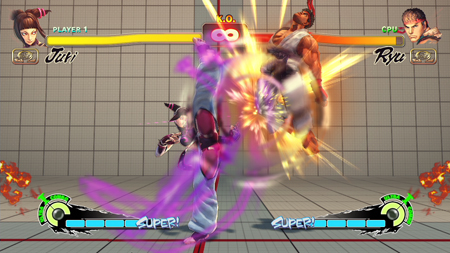
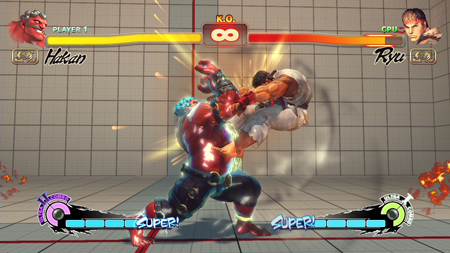
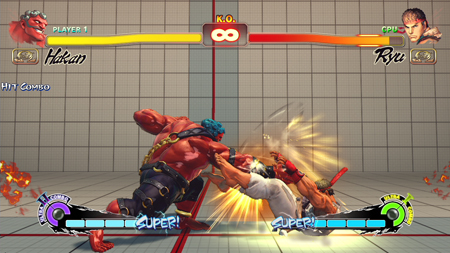
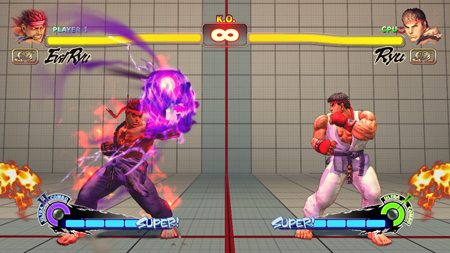
Next week we’ll be covering Hakan, Juri, Evil Ryu, Oni, and Poison. The theme? Um, new…er Challengers? Second Wave of Newcomers? The New New Kids on the Block? Something like that!

See you next time!

EN

Resident Evil producer walks us through an updated room

Nov 20, 2014 // Minish Capcom

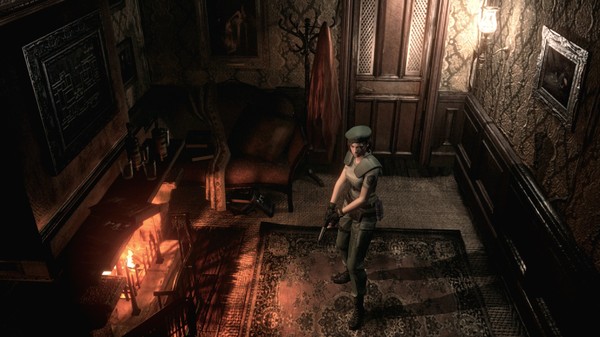
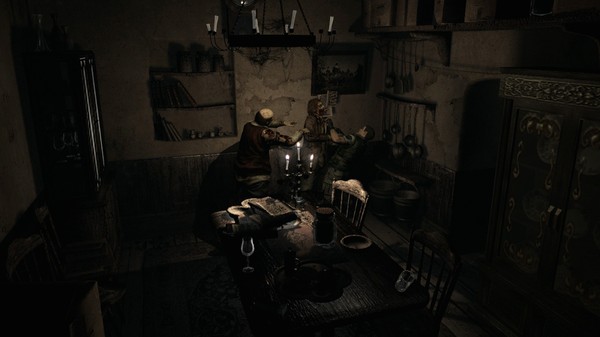
Barely 24 hours after new screenshots debuted , we have a brand new video that producer Yoshiaki Hirabayashi and I put together to show off the enhanced Crimson Head / death mask room.

As Hirabayashi-san mentions in the video, this area was a special case that warranted a closer look. Hope you enjoy the new footage  and  look forward to the game. It’s shaping up nicely and I gotta say, it looks great IRL. We’ll have more footage and images soon 🙂

Also check out the previous video if you missed it!

EN

Suit up with this dapper new Phoenix Wright T-shirt

Nov 19, 2014 // GregaMan

Phoenix Wright: Ace Attorney  fans can now shout their objections in style with the Capcom Store’s release of this dandy new T-shirt , which replicates the snazz of Phoenix’s three-piece suit (not included: pants).

Why spend dozens of dollars getting a real suit pressed and dry-cleaned when you can grab this shirt in Medium, Large, or Xtra Large for just twenty-five US clams? And then hey: you can use some of that money you saved to pick up the  Phoenix Wright: Ace Attorney Trilogy when in drops on the 3DS eShop on December 9th/11th (NA/EU)! 

Meanwhile, I’ve just tossed up a raffle that will earn one lucky winner one such shirt of their choice of size (M/L/XL), plus a bonus  Dual Destinies “Objection!” finger for good measure. Tickets are 250 Unity Points a pop and the raffle ends this Friday. Good luck, and may the best attorney win!

Note: The raffle shirt has an  Ace Attorney Trilogy logo on the back. However, the one available on the Capcom Store does not! That makes this raffle  extra special,  but also makes the Store version more “evergreen.”

Close-up of the badge. Don’t leave home without it.

Hey, it’s not a clip-on.

What the heck, here’re some more glamor shots of Yuri.

That is all.

EN

Felyne cookies looking delicious and mischievous

Nov 18, 2014 // Yuri Araujo

Just when you thought we had a Felyne version of everything imaginable , expert bakers and MH fans manage to stretch that list even further.

Thanks redditor Tiramisu for baking and sharing these awfully cute Felyne cookies!

EDIT: I just noticed Tiramisu posted both the recipe AND a diagram for baking these cookies  right here .

Btw, these go  purrfectly with  this cup of coffee:

Someone get Japan on the phone, quick!

EN

Watching this DmC vid may make you a better gunslinger

Nov 18, 2014 // GregaMan

All right, this video’s a few months old already, but it totally deserves a highlight. I just let out a giddy squeal at my desk thanks to that insane  finisher at 3:07. That whole combo (starting at 2:42) is some kind of wonderful–seemingly only possible when Dante is on a ledge and the enemy is off. Also look for very unique use of the Kablooey throughout.

Give it up for YouTuber 墳月”  and let’s hope we see more videos from that channel soon!

EN

Next-gen and comparison screens for Resident Evil

Nov 18, 2014 // Minish Capcom

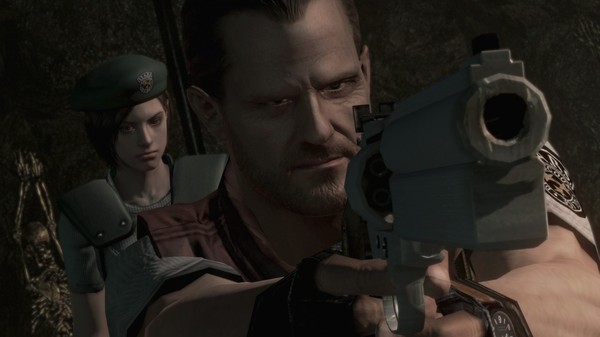
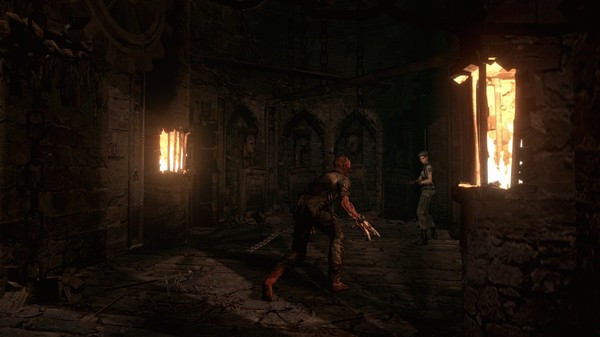
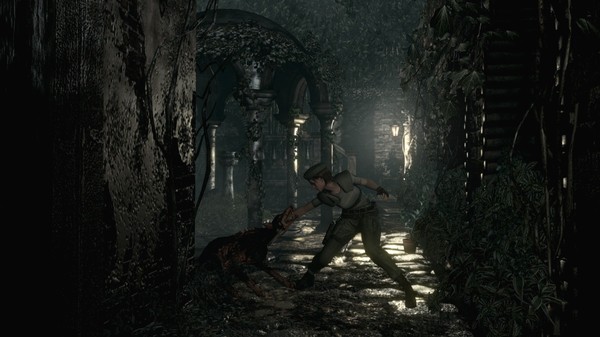
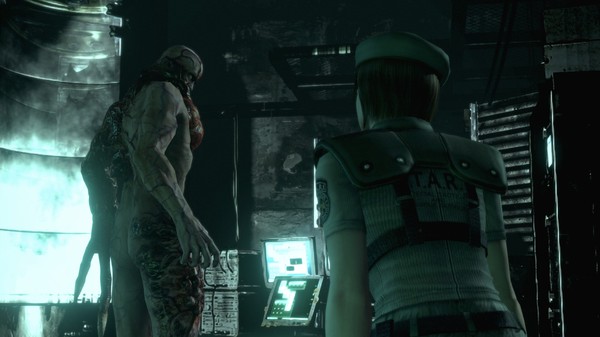
Feast your eyes on a barrage of new Resident Evil screenshots, plus a pair of comparison images that pit the 2002 original against the 2015’s enhanced update.

About the pics: I grabbed the original game screens via component cables and then cropped the 4×3 screen so it matched the 2015 version’s widescreen mode. Don’t forget that the 2015 version allows for either 4×3 OR widescreen!

We’ve also got a large assortment of new next-gen images – view the gallery for the whole batch!

Resident Evil launches early next year for Xbox 360, Xbox One, PS3, PS4 and PC!