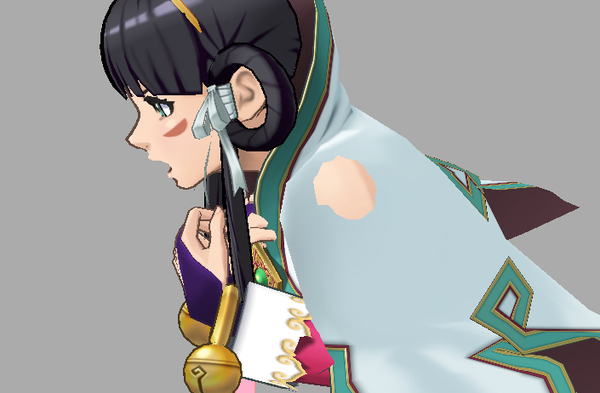
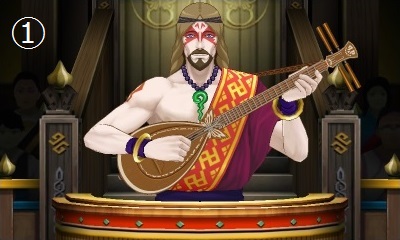
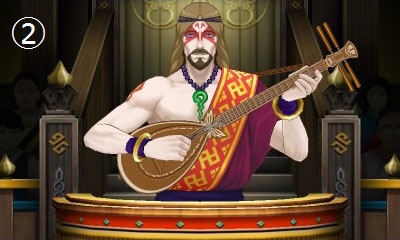
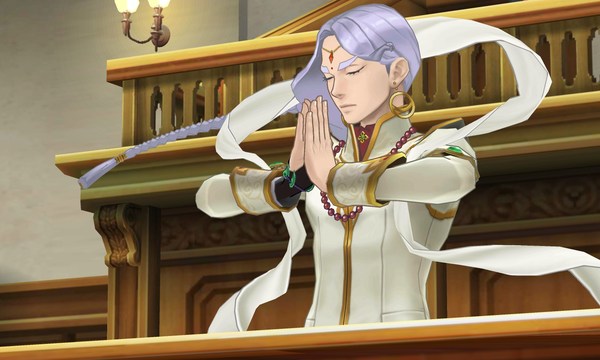
Hello, and welcome to the final development and localization blog for Phoenix Wright: Ace Attorney – Spirit of Justice. It’s been a wild ride, and these last 8 weeks have been a blast! And what better way to end than with the release of the full-length Special Episode, “Turnabout Time Traveler?” I don’t want to say too much about it since Mr. Eguchi will be telling you all about it in a bit. In addition, we’ll have some final words from Mr. Yamazaki, and then I’ve got some extra cultural info for all of you regarding Episode 4 and rakugo ! Are you ready? Because here we go!
First up is Mr. Eguchi, the main writer of the Special Episode. If you haven’t played it yet, I hope his summary will convince you to check it out!
——————————————————
Welcome to the Special Episode: “Turnabout Time Traveler”!
Hello to all you Ace Attorney fans out there! I’m Masakazu Eguchi of Mr. Famous fame!
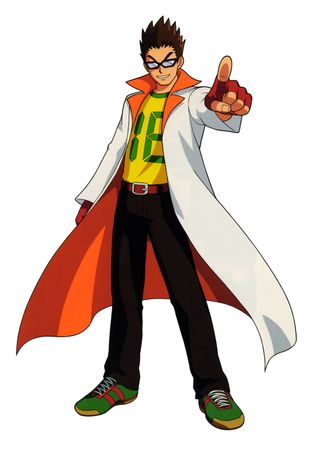
What? You have no idea who I am? Oh, sorry…
As fate would have it, I was able to write for the Ace Attorney series this time for Spirit of Justice. The Ace Attorney series features a different kind of charm and style from what I’m used to, so writing for it made me face a variety of writing challenges that are very different from the RPGs I am used to writing, so my experience on this title was invaluable to me.
Yup, I sure faced a lot of things during my time on this title. Even though I made sure to go on a run every morning and managed to lose 10 kg (22 lbs), once things got really busy, all I had time to eat was tsukemen (ramen in dipping sauce). So before I knew it, I’d regained 7 of those 10 kg (15.5 lbs)… And when all I needed was for the doctor to remove a polyp, I ended up getting hospitalized for the first time in my entire life….
All that’s coming to mind right now are things completely unrelated to Ace Attorney… Oops. I’m sure you’re not here to hear about my personal life, so I’d better get to my three-part detailed thoughts and analysis on what I’ve learned through my two years of writing for Ace Attorney!
…What? You don’t want to hear that much, either?
Then I’ll talk about the main game. There are so many interesting things I’d love to share… Hmm… What should I start with…?
…What? No spoilers? So that’s no good either?
All right, then what can I talk about? Hmm…
How about the DLC Special Episode “Turnabout Time Traveler”…? Yeah! I can talk about that! I can talk about the Special Episode that was released yesterday! You really must get it! I put everything I had into writing it, so I’m counting on you to catch my hot fastball!
So, would you like to know what kind of story it is? Yeah, I bet you do!
…What? But without any spoilers?
All right, and don’t worry – I joke around a lot but I’m actually a really tight-lipped person.
Now then, let’s talk about the true ending of “Turnabout Time Traveler”…!
…I kid, I kid!
OK, OK, I’ll get serious now, so please stop giving me that death stare!
All right, let’s start again with a little about the Special Episode!
***********************************************
…But before that, I just want to warn you that you have to clear Episode 1 “The Foreign Turnabout” before you can play “Turnabout Time Traveler.”
**********************************************
Now first, an overview of the case.
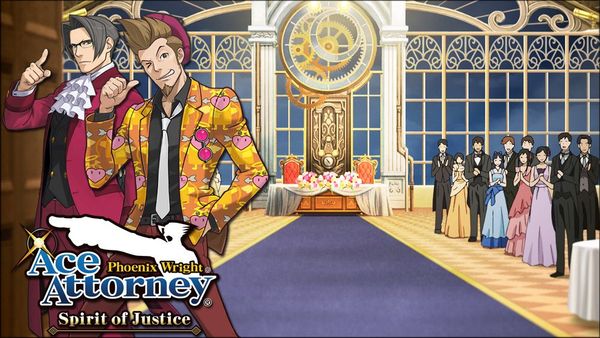
The crime takes place inside a wedding banquet hall, but it’s no ordinary banquet hall – it’s actually located on an airship!

This is completely unrelated, but as an aside, it was really tough working on this episode because sometimes I would type ã‘ã£ã“ã‚“ ( kekkon ) with the intention of producing the kanji for “wedding” (çµå©š), but I would wind up with the word “blood spatter” (è¡€ç—-) instead. You really have to watch out that you’re selecting the right kanji when writing for the AA series.
[Note: When you type in Japanese on a PC , the most common input method is to type the word you want in romaji (Roman letters), and then hit the space bar to convert it into the kanji you want. But oftentimes, your OS will remember which kanji you chose the last time instead of picking the more logical kanji for the sentence and set that as the first option. So if you’re not careful and just hit “Enter” to accept the conversion, you could accidentally choose the completely wrong word.]
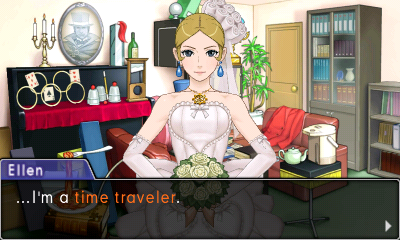
The defendant this time is the bride of the ball, Ms. Ellen Wyatt, and – get this – she claims to be a time traveler!
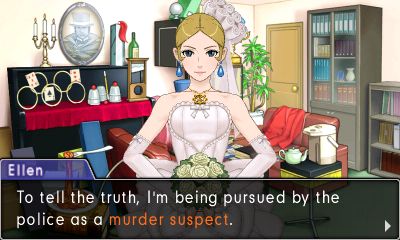
So, this case involves a murder in a flying banquet hall, and the defendant bride is also a time traveler…! Yes, the whole thing already smells a little suspect, doesn’t it?
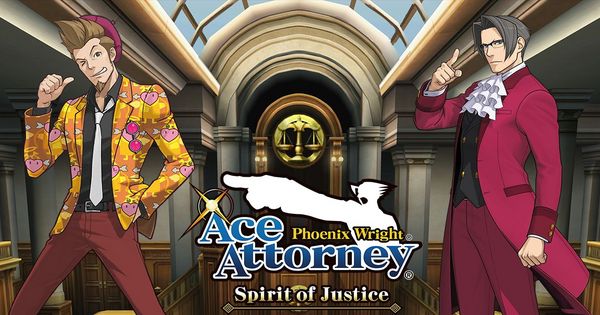
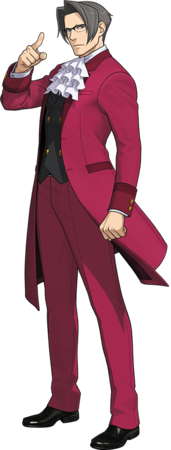
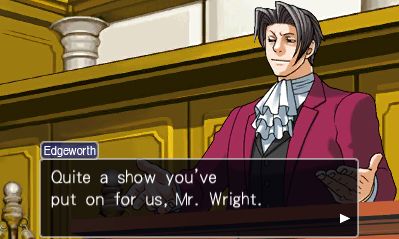
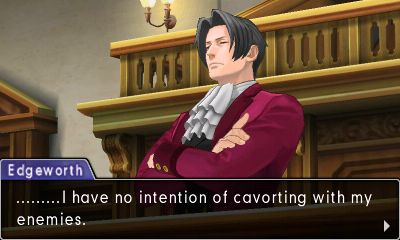
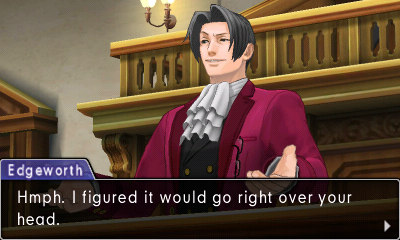
Well, the one defending Ms. Wyatt will be our beloved Phoenix Wright, while the prosecution will be handled by his eternal rival, Miles Edgeworth!
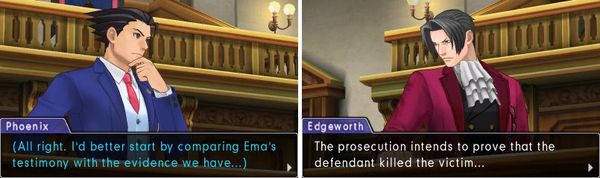
I bet that got your blood pumping!
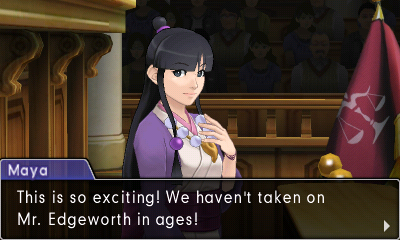
But that’s not all! After all that time away in Khura’in, Maya Fey will finally be back on her home turf as Phoenix’s assistant! Plus, when something smells, you know who’s sure to be lurking nearby… That’s right – Larry Butz also makes his long-awaited return!
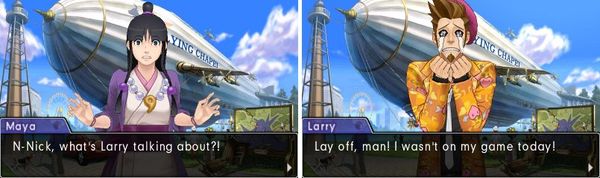
Sorry for yet another aside, but I’ve gotta say that Larry is one crazy guy. He got into all sorts of trouble in the previous games, but boy does he get up to stuff in “Turnabout Time Traveler,” too. But you’ll forgive his crazy antics since, well, it’s Larry, right? There aren’t many characters like him, are there? So, thank you, Larry for being just the troublemaker I needed you to be!
With the gang all finally reunited, it’s time to party as they fly, move, break, and mend things in their latest adventure!
And what of the time traveling mystery? Well, I encourage you to pull back the intricate veil on that and discover the truth for yourself!
Hmm… I wonder if that description was enough to convince you to download this Special Episode…?
But really! Rest assured! True love and great sadness resides in the shadows of the gorgeous wedding reception. Tears will spill and fall. And strong hatred and murderous intent will even make an appearance!
I can’t write any more without getting into huge spoilers territory, so I’ll have to leave it here. And that about wraps up our time together here today. I hope you’ve enjoyed it and I’ll see you in Spirit of Justice !
——————————————————
HOLD IT!
Not so fast, Mr. Famous! You have some things to answer for! Mainly, all that rakugo in Episode 4!
But just in case someone hasn’t finished playing episode 4 yet, let’s have a few closing words from Mr. Yamazaki first about the ending of the game and the future of the Ace Attorney series before I head into spoilertastic territory!
Take it away, Mr. Yamazaki!
—————————————————–
Fifteen-Years’-Worth of Thanks
Hi everyone, this is Takeshi Yamazaki, the director of Spirit of Justice .
This is the last installment of these dev blogs, and I want to thank you for reading each and every one of them. I sincerely hope that through these blogs, you have been able to see the strength of our devotion to Spirit of Justice and how we breathed life into the game.
This year marks the fifteenth anniversary of the Ace Attorney series in Japan, and the tenth in the West. I was but a fan of the series when I first started working on these games, and all of a sudden, ten years have passed.
Looking back on the series, the first episode of the first game featured a trial that centered on a murder that was committed in the course of a burglary. Now, in the sixth mainline game, we’ve come a long way and now find ourselves telling a story centered on the revolution of a foreign nation’s court system.
Over the course of these fifteen years, Ace Attorney has continued to evolve as a series with new gameplay mechanics, a transition from 2D to 3D graphics, and the ever-expanding cast of new characters and their dramatic stories. In addition, the dev team has changed and grown throughout the years. From the director and art director to the new people who continue to join our team, each change has brought fresh new ideas and new life to the team as a whole. Yet, despite this long history of changes, there were things that we absolutely could not change – things we as the dev team had to do our best to preserve no matter what – and these things can best be cast as the answers to the following questions:
1. What do people play Ace Attorney for?
2. What makes Ace Attorney, Ace Attorney?
When we first started working on Spirit of Justice, the team’s core members got together to re-evaluated what these “absolutes” of the AA series are by re-analyzing the core concepts behind this series of games. Over a series of meetings we laid out what these core concepts were, and we then layered what new concepts we wanted to see and work with in Spirit of Justice on top in a concept sheet like this.
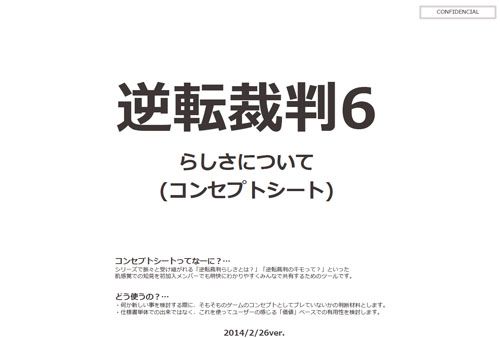
What is
Gyakuten Saiban 6
(Concept Sheet)
Hmm… Just showing you a picture of the cover isn’t all that interesting, is it? But what’s written inside is the super top secret recipe to our Ace Attorney sauce, so I’m afraid this is all I can show you!
But I will share with you what one part of the concept sheet says. In the “What is the theme of the experience that we want to impart?” section, there are two key phrases: “The Thrill of Turning Things Around” and “Revolution and Succession.”
The first is obviously something you are all very familiar with, but the second is a new theme we wanted to tackle in Spirit of Justice. Ever since we announced this game, we’ve been saying that its theme is “revolution,” and yet, there was actually a second theme of “succession” we’d kept hidden behind the scenes.
I’m sure there are many of you who have finished the main game by now. How did you find it? Were you able to feel and experience the themes of revolution and succession? I would be ecstatic if you could.
================================
There is just one more thing I want to talk about regarding the ending of Spirit of Justice. I promise not to spoil anything as I talk about it though!
I struggled a lot with what kind of ending to give to this game, but there was one big thing I was sure of, and that was that I wanted the game to end in a way that would leave the series as open as possible for the future. One of the reasons for this is because Spirit of Justice is a sort of culmination of all the various threads of the Ace Attorney series.
Simply put, I wanted to leave this series in a place where, when the next installment is made, we can take it anywhere we want. I wanted to leave this game open-ended so that we could pick up the next game with whoever we wanted as the protagonist, have it be located wherever we wanted, and address any themes we wanted.
The future of Ace Attorney lies before us, its potential is as wide and infinite as the oceans. Where the series will go is up to you, the players, so please definitely let us know what you’d like to see.
Don’t worry, we’ll be sure to bring that secret Ace Attorney sauce with us into the future, too.
I sincerely hope you’ll continue to support the Ace Attorney series, and that you’ll watch this space.
Thank you for reading to the very end! Until we meet again!
————————————————
Thank you, Mr. Yamazaki! That was a really great way to end these blogs. As a player myself, I think you and your writers have accomplished what you set out to do.
Now, before I get to the next section, I must warn you that it is full of spoilers for Episode 4 “Turnabout Storyteller,” so if you have not finished it yet, read at your own risk. That being said, I just want to thank everyone who has read up to this point. Ace Attorney sure has come a long way, and it couldn’t have without all of you.
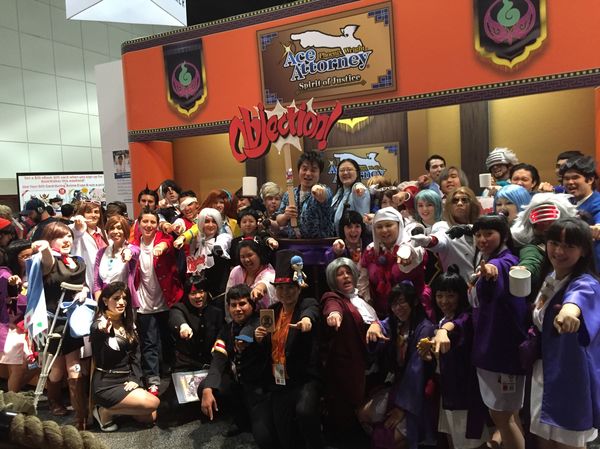
I especially want to say a big thank you to everyone I met at Anime Expo this year. It was an amazing experience seeing you all! It was a great reminder that at the end of the day, it’s all about how much fun YOU, the fans, have with this series, and I couldn’t have asked for a more fun-loving, talented group of fans than all of you.
Thank you for all your support and I hope you’ll continue to enjoy the Ace Attorney series in the years to come.
Be sure to come back to this entry after you’ve finished Episode 4, now, you hear?
Until then!
SPOILER SPACE
.
.
.
.
.
.
Okay, now, if you’re here for more background on Episode 4, have I got a treat for you!
Mr. Eguchi and I worked on a number of Mega Man titles together back in the day, so imagine my surprise when I found out he was writing for Ace Attorney! It was like saddling up with an old battle buddy again, because… well, it was! As such, he was nice enough to let me grill… I mean, ask him about rakugo and find out some info that isn’t readily available in English.
*last week at the office, Mr. Eguchi stops by at Janet’s desk after being in meetings all day*
Eguchi: You said you wanted to interview me about Spirit of Justice ?
Janet: Yes. So. Rakugo…
E: Yes? *innocent smile*
J: Why did you decide to do an entire episode based on rakugo…?
E: I’d really gotten into rakugo 2 or 3 years ago when I started listening to them during my commute to and from work.
J: Oh, and because each routine is typically around 20-30 minutes, they’re like small, self-contained podcast episodes?
E: Exactly. At the time, we had wanted to do an episode that was based around Athena, and there is this great pun regarding Time Soba (Toki Soba) that I wanted to make, and that became one of the reasons why the episode is centered on rakugo.
J: Dare I ask what pun it was you wanted to make?
E: It was a pun on 感情 (emotions) and 勘定 (counting/calculations). [*both kanji are pronounced “ kanjou.”]
J: Oh, no, you’re not talking about this joke, are you?
Athena:
“撂ソピã¨ã‹ã‘ã¾ã—ã¦ï¼ “ココãƒã¡ã‚ƒã‚“ã®ã‚«ã‚¦ãƒ³ã‚»ãƒªãƒ³ã‚°” ‥‥ã¨è§£ãã¾ã’ï¼
Is there something interesting about “Time Soba”?! We’ll find out soon enough through my therapy sessions!
ホラã€å¤-神ã-ã‚“ï¼
Come on, Simon! [Your line…!]
Blackquill:
ãƒãƒƒï¼ã€€â€¥â€¥ãã®å¿ƒã¯ã‚¡â€¥â€¥ã€‚
Tsk! …And why would you do such a thing…?
Athena:
ã©ã¡ã‚‰ã‚‚‥‥ “カンジョウã¯ã”ã¾ã‹ã›ã¾ã›ã‚“ï¼”
Because you can’t leave either thing up to kanjou (emotions/calculations)!
[*This joke in itself relies not only on the pun, but also a standard joke pattern (like how a knock-knock joke has a certain structure). For those of you who can read Japanese, here’s a longer, more detailed explanation of the exact joke structure. In the English version, this untranslatable pun was localized as the “seven ate nine” joke to keep it relevant to the Time Soba story.]
E: Yup, that’s the one. And because the Time Soba and Soba Glutton (Soba Sei) stories were featured rather prominently, they lent Episode 4 its other defining feature, soba noodles.
J: Speaking of rakugo stories, there are the famous ones like Jugemu and Shibahama , that were referenced in Episode 4, but there are also quite a few that are either very hard to find English translations for or have never been translated. Can I ask you to tell me about one of the ones in Episode 4?
E: Sure.
J: Let’s start with Soba Glutton. What’s this story about?
E: Well, this story relies on you knowing what the jagansou herb (蛇å«è‰ or 蛇眼è‰) does if you want to figure out the punchline ahead of time. This fictional herb has a certain property, you see, which is laid out in a separate story, but for our purposes, I’ll explain it as I go.
So, long ago, there was this man named Seibei who was a glutton for soba. One day, a bunch of people at a local soba shop he went to were watching him eat and bet him that he couldn’t eat 20 plates of soba. (Chilled soba with dipping sauce is served on plates , unlike the hot soba in Episode 4, which is served in a bowl of broth.) They even offered him a cash reward if he could. Seibei easily demolished those 20 plates and was paid per the bet.
The next day when he went back to that shop, the now rather annoyed customers bet him he couldn’t eat 30 plates of soba. To their surprise, he polished off all 30 plates and received double the money he had gotten the day before.
One of the customers felt bad for the others and explained, “That man, Seibei, is known as the ‘Soba Eating Machine Seibei,’ or ‘Soba Sei’ for short.”
The next time they all meet, the very, very angry customers again challenge Soba Sei, but this time to eating 50 plates of soba. Knowing that not even he can eat that much, Seibei declines and pushes the challenge off to another day as he runs out of the shop.
This is where things get interesting. While Seibei was out in the mountains, he came across a giant, python-like snake up in the trees. The snake had its sights set on a hunter, and quick as lightning, it ate the hunter and swallowed him whole. Seibei watched the snake with its overstuffed belly from afar and saw it lick at a yellow herb. As it did, its stomach began to shrink. And then, with its stomach nice and flat again, it slithered happily on its way.
Seibei concluded that this herb must have the power to aid in digestion, and thought that with this, he could go back and take on that soba challenge. So he took some of the herb with him and headed back into town.
Boasting he could finish 70 plates, he took to plate after plate of soba. By around his 50th plate, he was beginning to feel a bit stuffed, so he chased everyone out of his private booth and slid the screen door shut. Now that he was alone, he took out the jagansou herb and started to lick at it.
After a little while, the people outside of Seibei’s room began to grow restless and curious. What was going on in there? They decide to open the door to the quite room.
What they found was not a man, but a giant pile of soba dressed in Seibei’s clothes. Turns out, jagansou’s special property is not that it aids in digestion as Seibei thought, but that it’s great at digesting humans…
J: Wow, that’s a surprisingly gruesome ending! And as you said, I guess if you knew what the herb did in advance, you’d know where this story was headed once you hear that Seibei was going to use the jagansou.
E: Yes. A lot of the stories in rakugo are connected like this. They’ll reference objects or plot devices from other stories, and even use the same characters.
J: Oh, that’s right! You mentioned that Uendo’s Japanese names were all references to rakugo archetypes.
E: Yes. Ippachi (Patches in the English version), Kisegawa, and Sadakichi Isoda (Owen). These three characters often appear in rakugo stories. Ippachi is your standard mood-maker character – the always cheery and trying to keep the party alive type. Kisegawa is a courtesan type character, while Sadakichi is usually a child from a poor family who has left his home in order to work and live at a store or theater that will take him in. But he’s not an apprentice, per se – more like a child worker.
J: That’s really interesting, because those three traits come across really well in the character animations, don’t they! In English, I’m afraid I could only keep the name Kisegawa because I didn’t want Owen’s name to come out of nowhere when the player solved the karuta dying message trick. It would’ve been strange if Uendo had 3 really Japanese names, and then this English name “Owen.” I tried to give his names a little balance and provide some foreshadowing with “Patches.”
Actually, I also recall you mentioning that the reason Sadakichi has the last name of “Isoda” is because of the karuta trick.
E: The karuta trick came about as a way to lead the player and the characters to Uendo’s fourth personality. I had the message for “Soba No. 4” よんã ã„ã‚ãã° (yo n da i me so ba) spelled out, but I needed it to point to a fourth personality. The only way to rearrange those letters into something reasonable was よã°ã‚“ã‚ã„ãã (yo ba n me i so da), and that’s how we ended up with Isoda as Sadakichi’s surname.
J: Ha ha, I guess the karuta cards were a pain for you, too. In the English version, I think I just got lucky. I knew I had to use the same 7 cards as the Japanese, and that 3 of them would be spent spelling “No 4” and “4th” so it was fortunate that as we were figuring out what to name Bucky, his last name turned out to be Whet, and that with the leftover letters, we were able to get Owen, which is a suitably cute name for a 5-year-old.
Speaking of things I couldn’t keep in the English version, there were references to two other stories that we didn’t have the space to explain in the game itself. One of references that formed the basis of the “XYZ is scary” running joke in the Japanese version of this episode was related to a rakugo story called Manju Kowai (lit: Manju are Scary). That story was famous enough for any Japanese player to get, but the other story was a stumper, even for Japanese players, right?
E: Yes, even Japanese players had a tough time with the mizu castella (水カステラ – lit: water castella/liquefied castella) reference. Some Japanese people knew that it was related to saké, while a lot of people probably just figured it out from context.
J: I see. Unlike the English version where we can directly mention alcohol and still maintain a T rating, in the Japanese version of the game, you couldn’t directly mention alcohol at all, right?
E: Right. So we used the word mizu castella instead, but this was also fortunate since it’s a reference to another rakugo story. Want to hear it?
J: Of course!
E: Long ago, a local lord wanted his entire household to stop drinking, but he couldn’t do that if they could just go out into town, so he banned the sale and consumption of alcohol in his entire region, and set up guards at checkpoints to check for smugglers.
One day, a man who desperately wanted a drink tried to smuggle some by the guard at a checkpoint near his home. The guard, doing his duty, asks what was in the urn on his back, to which the man replies, “Oh, you know that new popular castella cake thing from the West? Well, this is a liquefied version of that.”
The guard looks over at the man, half skeptical, half wondering what the liquefied version of a cake would taste like, and asks to take a sip for himself. One sip quickly turns into big gulps, until all of the man’s alcohol was gone.
“Let that be a lesson to you,” the guard said as he sent the man on his way.
A few days later, the man tries again. “Oh, it’s just some oil,” he tells the guard. Naturally, the guard is on to this man, and asks to try some of it for himself. Soon, the man is left again with nothing but his dry, empty urn and his wounded pride.
A few days after that, the man is more than mad at this guard who’s been drinking up all of his hard-earned saké. So he decides to get his revenge on the guard this time by filling up his urn with urine.
As expected, the guard asks what’s in the urn, and the man answers honestly, “Oh, just some pee.”
“Is that so?” the guard answers sarcastically. “Then you wouldn’t mind if I had a sip or two, right?” he says as he dips his cup into the urn and scoops out enough to fill it to the brim. The man watches as the guard takes a big gulp, and laughs as the look on the guard’s face twists into a grimace with the sudden realization.
“You ****! This is piss!”
“Isn’t that what I just said it was?” the man said with a smile, as the freeloading guard was forced to admit his defeat.
J: Ha ha ha! I bet that’s the last time that guard messed with that man, huh!
E: Yeah, this story is kind of like an inversion of the story of “The Boy Who Cried Wolf.” It’s really interesting, actually. Rakugo has so much to teach us about how to construct fascinating and amusing stories. Like in the case of “Kinshu Banya” (ç¦é…’ç-ªå±‹ – lit. Alcohol Prohibition Guard), the story sets it up so that the audience knows just what the guard will do that third time, and can therefore gleefully anticipate the punchline, leading to a bigger payoff when the guard finally makes that scrunched up face and chews the man out.
J: Coming around full circle, in terms of setting up the story, I know many people also wondered why this episode was only one trial long.
E: We wanted to give the player a little bit of a breather between Episodes 3 and 5, so we decided to do one fun episode that still tied into the theme of succession. In rakugo, as with a lot of arts, a performer’s stage name is a big deal. Inheriting the stage name of your master or someone you admire is a huge honor.
Furthermore, another reason we went with rakugo was because since there is no investigation segment, we needed a setting that would be easy to explain and show in just a few pictures. So a theater was the perfect place for that.
J: And what about the addition of Blackquill and his sudden love of soba?
E: We needed a reliable witness – someone who the player and Athena could count on to have no reason to lie, and Blackquill fit the bill. So because he knew Taifu in the story, he became a character who loves soba through his association with Shisho and his Toneido theater troupe.
J: Glad I kept him as a Japanophile in the localized version, then! You have no idea how grateful I am that Blackquill made an appearance in this episode!
E: Ha ha, he was helpful even for me as a character to convey information through.
J: Well, I know you’re busy, so I should let you go. Thank you very much for your time and the very funny retellings of these classic rakugo stories!
E: You’re very welcome. I hope more people have come to love rakugo as a result of Episode 4 and this interview. It’s a really fun theatrical art and the stories are all really interesting.
J: I’m hoping rakugo will take off in the West, too! Here’s to these timeless stories!
———————————
If you would like to know more about rakugo, I wholeheartedly recommend Showa Genroku Rakugo Shinju (in case you were wondering what to do with your crunchyroll subscription now that the Ace Attorney anime is over!). It is an amazing manga series with an equally as amazing anime. In fact, I think the anime has a slight advantage since you can hear the wonderful performances of each story. Here’s a pretty comprehensive list of all the rakugo stories the anime has featured so far. Their performances of Time Soba (ep. 2) and Shibahama (ep. 12) in particular are amazingly well done.
Otherwise, I know there isn’t much rakugo in English, but there are a few English performers on YouTube. As with any type art, each storyteller has their own strengths and style, so I hope that maybe you’ll find one that really resonates with you.
While we’re on the topic of Episode 4, I’d like to leave you with just a few more spoiler-filled pieces of trivia.
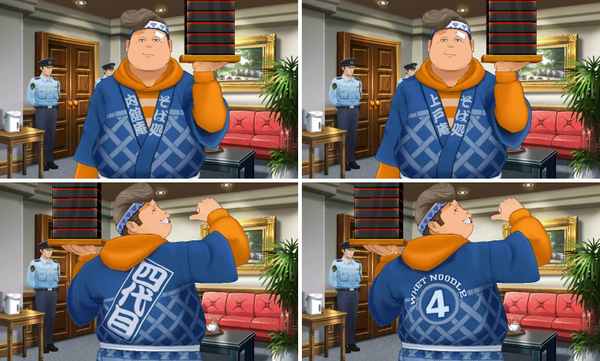
First, I want to go back to something I mentioned last time : the back of Bucky’s happi coat. The other reason why we had to change it was that from a game design perspective, him drawing attention to it and you being able to read what it says is meant to reinforce the idea that he is “Whet (Noodle) No. 4” or the “Yondaime” (四代目), which is crucial in making the connection between the dying message and Bucky himself believable. In deciding how to localize his happi , I thought it would be neat to create a contrast between the front and back sides of the coat, so the back side was decidedly more “American sports jersey” to go along with his orange hoodie and battered skateboard, while the front remained Japanese for that authentic soba shop feel.
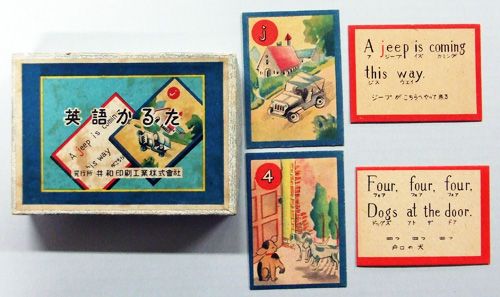
Speaking of karuta cards, I bet you thought I made up Taifu Toneido’s special English cards, but in fact, English ones do really exist . They’re used as a way to teach Japanese speakers English words and even idioms! The set above is from right after WWII, when demand for English karuta cards began to really take off. There are even special events using them and special English version cards for different cities around Japan !
Lastly, I want to expand on something Mr. Eguchi mentioned about alcohol and Ace Attorney. I think a lot of people have the wrong impression that it’s only the localized version that mentions grape juice as a way to censor the game somehow, when that couldn’t be farther from the truth. As Mr. Takumi said once about “grape juice in Apollo Justice: Ace Attorney ”:
When we were making AA3, Godot was originally going to drink bourbon whiskey, but we changed his drink of choice to coffee, in part, to stay within the limits of the CERO rating we were going for. So when we made AA4, we made Phoenix’s favorite drink grape juice from the get-go because of what we learned from our experience with Godot.
Japan’s CERO rating system is far stricter on mentions of alcohol than America’s ESRB or Europe’s PEGI rating systems, and for a series that strives to maintain a B or lower rating in Japan, it has put the dev team in the unique situation of giving one of its main characters a penchant for grape juice instead of what you might assume to be wine based on the shape of the bottle he tends to drink out of.
But for Episode 4, since there was no way for me to use mizu castella in the game as a euphemism without literally 3 notebook pages of explanation, and since the mention of alcohol wasn’t going to change the rating, that’s why I decided to specifically use the word “saké” in the translation, but kept what a certain someone drinks in Episode 5 as grape juice.
—————————————————-
And now, we’ve really come to the end of these blogs.
I’ve really enjoyed translating and writing these, and sharing with you all these cultural notes about Japan. I hope they’ve inspired you to do some reading (and maybe traveling?!) of your own. As I always say, the more you know, the more the world opens up to you. So I encourage you to stay curious, learn about one another, and dream big!
Thank you again for reading and for your support of the Ace Attorney series.
Until we meet again!
Catch up on previous blog entries here!





 (From Phoenix Wright: Ace Attorney Trilogy )
  ( From Phoenix Wright: Ace Attorney Trilogy )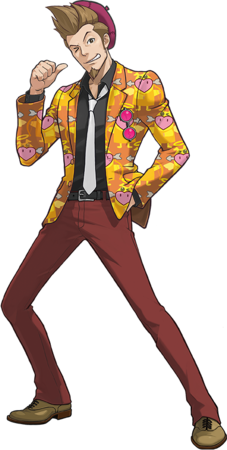
 (From Phoenix Wright: Ace Attorney Trilogy )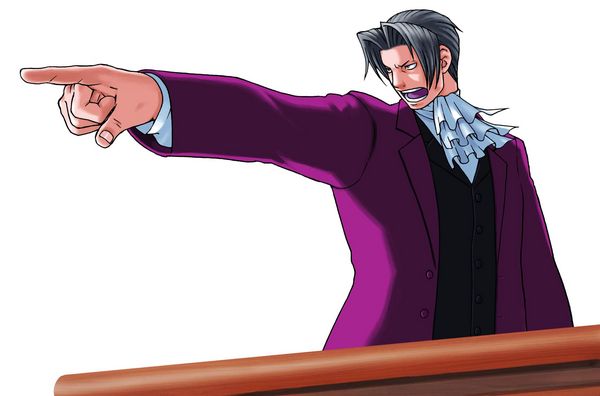
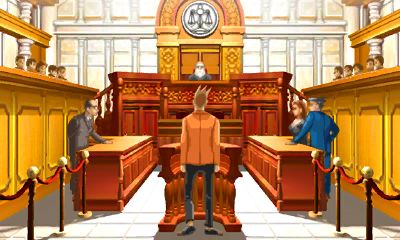
 (From the Turnabout Time Traveler DLC case for Phoenix Wright: Ace Attorney – Spirit of Justice )

 (From the “Apollo Justice: Asinine Attorney” DLC)
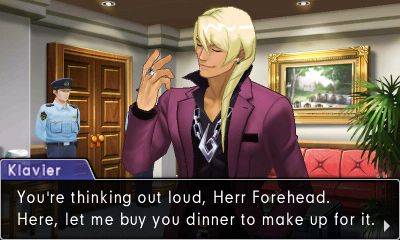 (From the “Apollo Justice: Asinine Attorney” DLC)
  (Apollo Pixel Art theme)
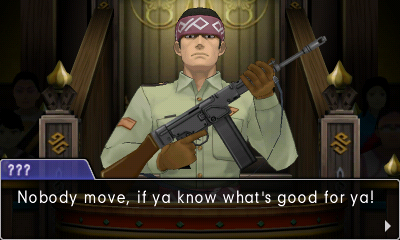 (From the “Phoenix Wright: Asinine Attorney” DLC)

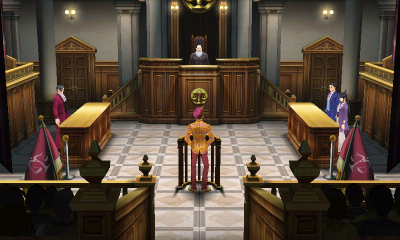
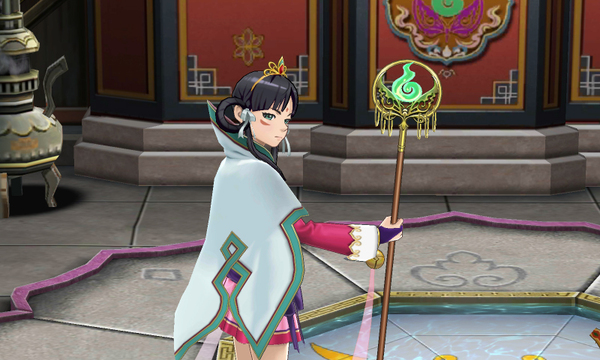 A cutscene where a character could be shown from any angle, including their back or full body